

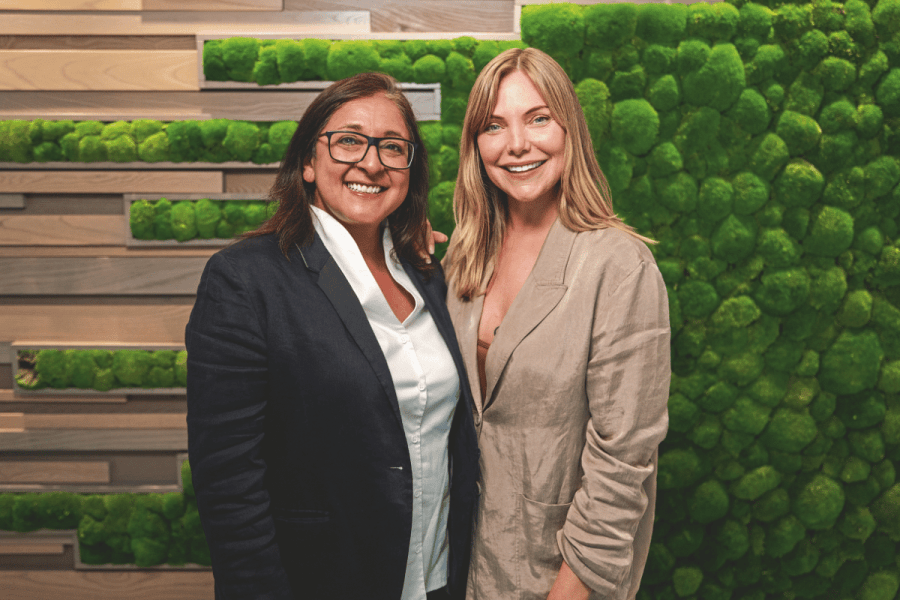
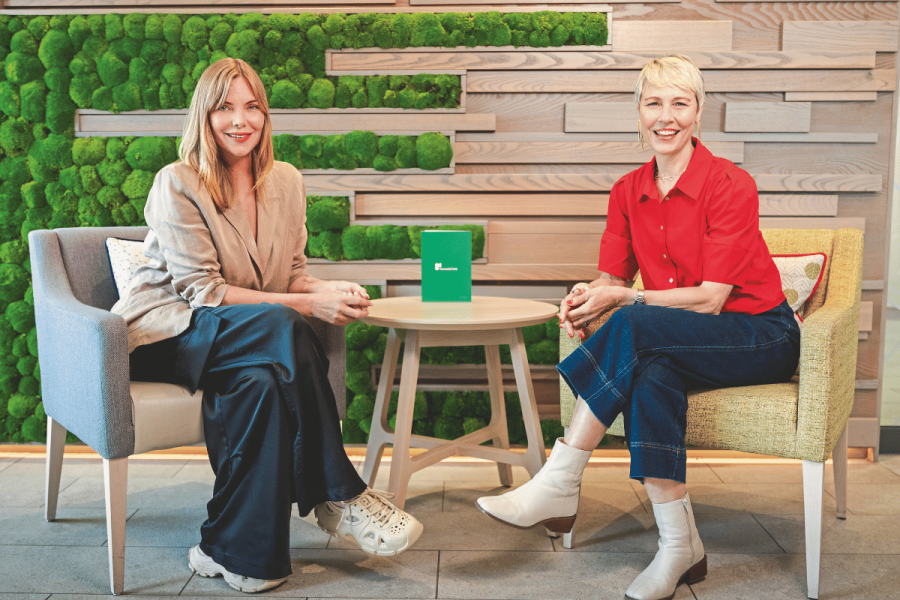
Actress Samantha Womack, 52, talks to Jo Ebsworth about the importance of early diagnosis with breast cancer, and why knowing your breast density can give you a better idea of your risk.
Words: Jo Ebsworth. Images: Genesis CarE.
I was diagnosed with breast cancer at the age of 49. I didn’t have a routine NHS mammogram because you don’t get called for one until you’re at least 50, but I just felt like something wasn’t right. I didn’t have a lump or any kind of symptoms you would attribute to breast cancer, such as puckering or skin discoloration, but I kept having this niggling feeling.
I don’t know whether that was my body trying to communicate with me or not, but I decided to pay privately for an ultrasound between two performances of The Lion, The Witch and the Wardrobe [in which Samantha starred in 2022] in the West End. And thank goodness I did.
They immediately discovered an irregular shape at the check-up. That proved to be an aggressive grade-3 tumour that had already started moving to my lymph nodes, so I had five lymph nodes taken out and began an intense treatment plan of chemotherapy and radiotherapy. I finished my treatment about a year ago and, so far, touch wood, everything is great. But I know only too well how having the right information, following your instincts and knowing how to ask the right questions is key to early diagnosis. Because early diagnosis makes a huge difference, and if I’d waited another three or four months, the outcome might have been very different.
Cancer can be treatable, particularly with breast cancer if you find it early. But it’s a different story if it’s a fast spreader and it’s been left too long. What I find crazy is we know breast cancer numbers are on the rise, and we also know that breast cancer is also affecting young women now. We’ve seen it recently with members of the royal family and Jessie J that there’s a lot of cancer around, and that cancer isn’t something that happens to you when you’re past 50. So, why aren’t we taking those steps forward to get ourselves checked out if we want peace of mind?
Mammograms are actually recommended from the age of 40. This is because breasts are naturally more dense before they are 40, which makes it harder to spot something out of the ordinary. I’m sure at some point the NHS will have to change its age range for screening women, but these things take time to happen. In the meantime, you don’t have to wait for your routine mammogram at 50 if you think there are signs you should be worried about, or you have an intuition that something is wrong.
There are questions we can ask that will let us know whether we should get our breasts checked more regularly, and you should absolutely ask what your breast density is, because it’ll make a difference to how vigilant you should be in terms of grading your risk of cancer.
I only heard about the term “dense breasts” through GenesisCare. Through their Keep Abreast of Your Breast Density campaign, they are encouraging women to ask about their breast density following a mammogram, because if you have dense breasts, then getting an all clear doesn’t necessarily mean you are cancer free.
While information about breast density is given to women in the States, women in the UK are not currently being told what their breast density is, so they don’t know if they need to investigate further, and cancer is being missed. But GenesisCare is leading the way in making sure that all women are being told their breast density within their mammogram reports.
The term “dense breasts” sounds a bit strange. It indicates how well breast tissue can be seen on the mammogram. There are four different categories, A, B, C and D, and these categories relate to how much fibrous tissue there is in your breast, which has nothing to do with what your breasts look like or what your body type is.
If your breast density is grade A, that means it’s fatty, so it’s very easy to spot a tumour when you have any checks or a mammogram. But as you go up the grading system to B, C and D – with D being extremely dense, which means there’s lots of fibrous glandular tissue in the breast – it can mean you can’t always see a tumour, because the cancer shows up as the same colour white as dense breast tissue fibres. That makes it hard to differentiate between the two.
Around 80 per cent of women don’t realise that a clear mammogram doesn’t always mean they’re cancer free. More importantly, approximately half of women aged 40 or above have dense breasts, and those with extremely dense breasts are six times more likely to get breast cancer. So, dense breasts are clearly something we should be asking about.
If we know we are category D, and we get a clear mammogram, we should be able to know what to do about it and be able to ask for further investigations such as an MRI, which looks at the breasts in greater detail. These are not offered in many hospitals, but if we’re concerned, we shouldn’t have to wait. We need to ask questions and be courageous with our own bodies.
I’m a mum, and I just bought a lovely new home in Valencia for a new start. But I feel like it could have easily been a very different story for me. As women, I think we can sometimes push our intuition to the back of our minds because we always put others first. And I think that’s gorgeous. That’s what makes us great parents and caregivers.
But it can sometimes be to the detriment of our own health. I always say we don’t think anything about paying a few hundred quid to get the car serviced because we need it to get from A to B. But what’s weird is our bodies are the vessels we travel in all the time, and I don’t know why we don’t pay them the same attention. However, when you have a mammogram with GenesisCare, you will automatically be told what your breast density is, so you know what your risks are and how to grade your own breasts in terms of regular check-ups.
I’m an avid supporter of the NHS. My stepfather’s been a GP for years, and while they do the best they can with the limited resources they have, I think it’s maybe financially impossible for them to offer every woman over the age of 40 a mammogram and then an MRI for those with dense breasts. That’s why it’s our job, as women, to think, ‘the NHS and the people who work there are wonderful, but I can’t rely on waiting until I’m 50 to get checked out’.
And actually, getting private tests done earlier, as I did, can help to take the pressure off the NHS. I went straight back to the NHS for my chemotherapy and my radiotherapy, and they were absolutely wonderful. But this campaign is about giving information to women so that we can make an informed decision about when to get checked, what questions we need to ask, and how regularly we should get checked. Really, it’s up to us.
Samantha Womack is partnering with private cancer care provider GenesisCare to encourage women to Keep Abreast of Your Breast Density. For more information on Dense Breast and Rapid Breast MRI scans, please visit genesiscare.com/uk/breast_density_awareness.