

If you hadn’t heard, gut health is in – and demand for gut-healthy foods high in microbes are becoming quite the dietary fashion. But how do you make a meal that contains all the good stuff? Enter: fermented foods…
Words: Amy Dowrick | Images: Shutterstock
“Every health outcome that you want to think about is related to microbes”, says Gabriel Vinderola, professor of microbiology at the National University of Literal in Argentina. “Fermented foods are the safest way to get your portion of microbes.”
According to a 2022 study, it was reported that people who have a high diet in microbes have less depression, less constipation and they live more – with less probability of having a heart attack.
“All these little studies over the last 20 years have showed that people who have regular fermented foods have fewer common diseases,” says epidemiologist, medical doctor, and science writer, Tim Spector. “They have less heart disease, less diabetes, less autoimmune disease, and less allergies.
“And short term you can improve things like irritable bowel syndrome and even mental health,” he adds.
But what is fermentation, and why should you be adding fermented foods to your kitchen cupboard?
What to know about fermentation
Gabriel compares it to ‘cooking without fire’.
“Fermentation is the transformation by microbes that will help you with digestion,” he says. “They will produce metabolites and molecules – all substances that will impact your immune system.”
“More than 70% of your immune system is in your gut, so I will always say that fermented foods will provide you a universe of microorganism that will crash with your immune system in a very positive way.
“Our immune system needs training, and this training is done by our gut bacteria, but also by the bacteria and the yeast that come with fermented foods,” he adds.
Bacteria aren’t always the bad guys that give you stomach bugs, colds and flus – good bacteria in fermented foods can tick all the boxes for a heightened immune system.
“There’s definitely nothing to be scared of with bacteria,” says Adam Goldwater, director of Loving Foods Fermented. “In a fermented food, if it’s produced properly, the good bacteria are really beneficial for human health and prevents the growth of any of the bad bacteria that would do you harm.”
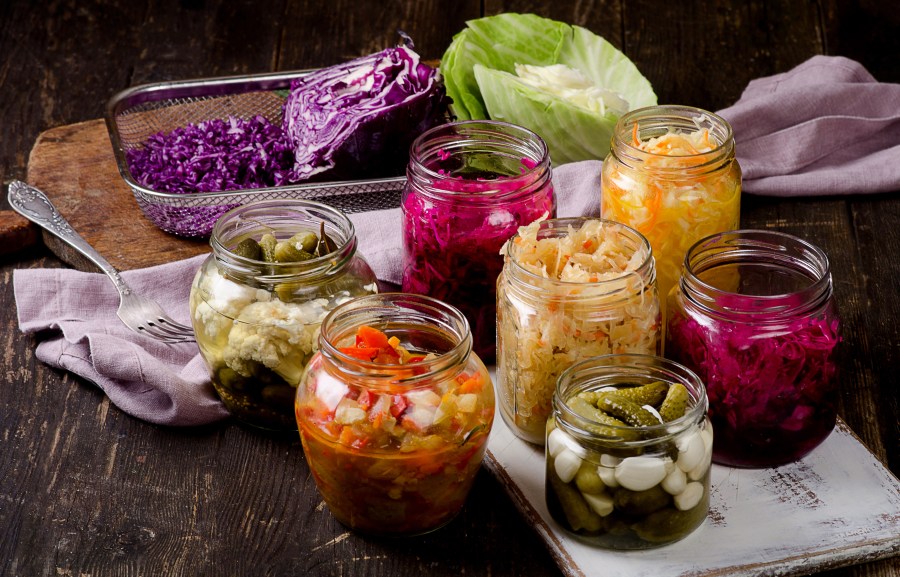
5 fermented foods to get microbes from
If you’re looking for some surefire ways to get your microbial diet kicking, consider the Four K’s: Kefir, Kimchi, Kraut, and Kombucha:
Kefir
With a tangy taste and yoghurt-y texture, kefir is essentially fermented milk with an impressive microbe content (between 25 and 45 different types, to be exact).
“It’s basically a biofilm of bacteria in yeast living together in happy harmony,” says Fermentologist Caroline Gilmartin.
“It’s a soured milk product into which you have grown a massive population of Lactobacillus and other associate microbes – so lots of metabolites that are also very good for your health,” she adds.
Multiple studies also point to the positive effects of kefir, including better levels in blood cholesterol, blood sugar, blood pressure, weight and inflammation, while also increasing serotonin levels and gut microbiome composition.
So, for something that can be kept in the fridge door, it’s a no-brainer.
Kimchi
A traditional Korean staple dish made from salted, fermented vegetables, kimchi has a spicy, pungent flavour with plenty of acidity and sweetness.
Packed with lactic acid bacteria, the food is similar to sauerkraut, with over 100 varieties to pack a punch – ensuring no two gut-friendly dishes taste the same.
(Sauer)kraut
Like kimchi, sauerkraut has also been fermented by lactic acid bacteria, allowing finely cut raw white cabbage to aid digestion all while giving you an antioxidant boost.
Eaten both raw and cooked, you can try it on hot dogs, in sandwiches and even enhance your salads with a gut-friendly topping.
Kombucha
No stranger to the health buzz, you may have noticed cans of kombucha gracing the fridges of edgy cafes and bar menus.
A fizzy, sweetened black or green tea drink with a tangy, vinegary taste, these drinks are packed with probiotics, organic acids, antioxidants, and vitamins.
And the list goes on. Sandor Katz, Food Journalist and self-proclaimed ‘fermentation revivalist’, even says that “any vegetable could be fermented. There is nothing that any of us have ever eaten in our lives that cannot be fermented.”
How much?
“Get a portion of fermented foods every day,” says Gabriel. “The science tells us that with a portion of 100 grams, that’s a very good starting point.”
Fermented foods seem like a no-brainer for immune-system support, and, as Tim mentions, “this means it’s better at fighting aging, cancer, infections, and preventing allergy and autoimmune disease.”