
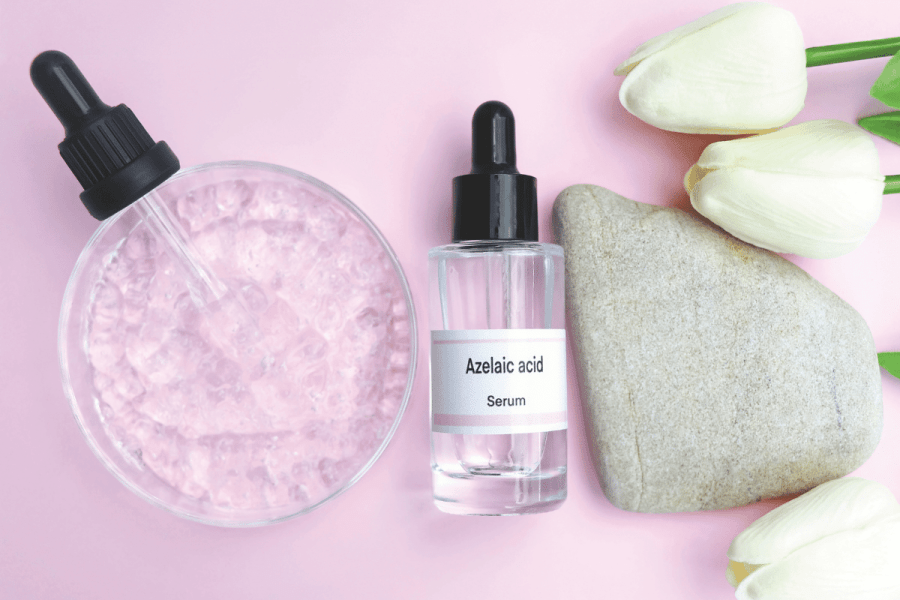
We asked three skincare experts about one of the hottest new exfoliators in town, and how it can transform your complexion.
Words: Katy Sunnassee. Images: Shutterstock.

Dr Nyla Raja, dermatology GP, founder and medical director of Dr Nyla Medispa (drnyla.com)
Q. What is azelaic acid and what does it do?
‘Azelaic acid is a naturally occurring dicarboxylic acid derived from grains like barley, wheat and rye. It’s known for its gentle yet effective ability to target multiple skin concerns.
‘Its primary function is to reduce inflammation, unclog pores and regulate skin cell turnover, making it an ideal choice for those dealing with acne, hyperpigmentation or rosacea. It’s also a powerful antioxidant, meaning it protects the skin from free radical damage, helping to maintain a more even, healthy complexion.’
Q. Is azelaic acid an exfoliant?
‘Azelaic acid is not a traditional exfoliant like AHAs or BHAs, but it still supports skin renewal. While it doesn’t work by physically sloughing off dead skin cells in the same way as glycolic or salicylic acid, it helps regulate the skin’s renewal process and has mild keratolytic properties.
‘This means it encourages dead skin cells to shed at a normal rate, preventing build-up that can lead to clogged pores and dullness.’
Q. How long does it take for azelaic acid to work?
‘Patience is key when incorporating azelaic acid into your routine. Unlike harsher actives that deliver immediate but sometimes irritating results, azelaic acid takes time to show its full effects.
‘Most users will see improvements in redness, breakouts and pigmentation within six to eight weeks of consistent use. However, for deeper hyperpigmentation, it can take up to three months to see significant results.’

Kimberley Medd, clinic lead at Face the Future (facethefutureclinic.co.uk)
Q. How should I introduce azelaic acid to my routine?
’Start by using azelaic acid once a day, ideally in the morning after cleansing, and follow with a hydrating moisturiser and SPF. If your skin tolerates it well, you can gradually increase to twice daily.
‘It’s a versatile ingredient that pairs well with most actives, but if you’re using stronger exfoliants like AHAs or retinoids, introduce them on alternate nights to avoid potential irritation.’
Q. Can you use niacinamide with azelaic acid?
‘Niacinamide and azelaic acid are a powerhouse duo for skin health. Both ingredients have anti-inflammatory properties and work synergistically to calm redness, regulate oil production, and strengthen the skin barrier.
‘Using them together can enhance the brightening and soothing effects without causing irritation to the skin.’
Q. Can I use azelaic acid with vitamin C?
‘While both ingredients target pigmentation and boost skin radiance, layering them incorrectly can lead to sensitivity. If you want to use both, opt for azelaic acid at night and vitamin C in the morning. Additionally, using a vitamin C derivative rather than pure ascorbic acid can help avoid potential conflicts.’
Emma Coleman, senior Magnitone ambassador, clinic director and dermatology nurse (magnitone.co.uk)

Q. Are there any side effects to be aware of when using azelaic acid?
‘Azelaic acid is generally well-tolerated, but some people may experience mild irritation, redness, or a tingling sensation when they first introduce it.
‘This is usually temporary and can be minimised by starting with a lower concentration and using it every other day before building up to daily use. If irritation persists, pairing it with a barrier-supporting moisturiser can help.’
Q. Can azelaic acid cause purging of the skin?
‘Some users may experience a temporary worsening of breakouts when first introducing it. This is known as purging and occurs when an active ingredient accelerates the skin’s renewal process, bringing underlying congestion to the surface.
‘To minimise the risk of purging, start with a lower concentration, using it a few times a week before increasing frequency. If irritation persists beyond 6-8 weeks, it may not be purging but rather a reaction, in which case it’s best to reassess usage.’
Q. What ingredients or products should you avoid when using azelaic acid?
‘To prevent unnecessary irritation, it’s best to avoid layering azelaic acid with strong exfoliants like high-strength AHAs or benzoyl peroxide in the same routine. These combinations can increase dryness and sensitivity, especially if you have reactive skin.
‘If you’re using retinoids, it’s also a good idea to introduce them on alternate nights to allow your skin to adjust.’
Try these
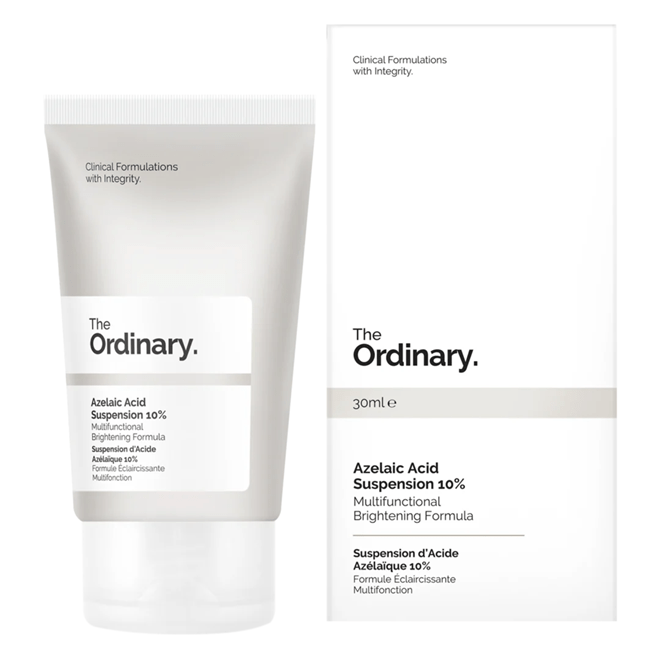
– The Ordinary Azelaic Acid Suspension 10% (£11.10, lookfantastic.com)
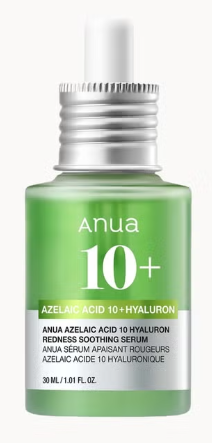
– Anua Azelaic acid 10 Hyaluron redness soothing serum (£22, lookfantastic.com)
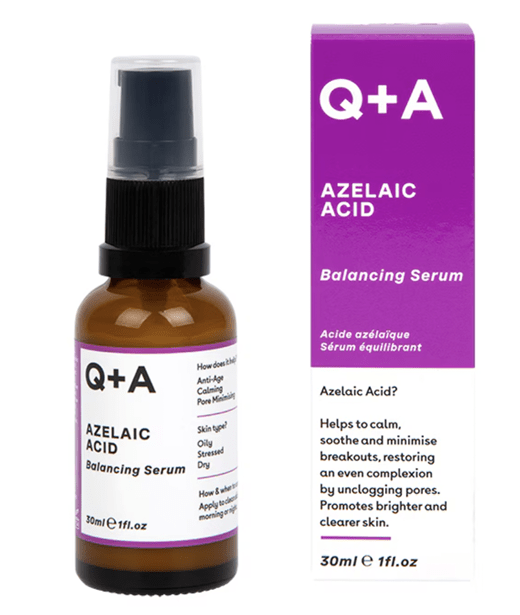
– Q+A Azelaic Acid Balancing Serum (£9.95, facethefuture.co.uk)