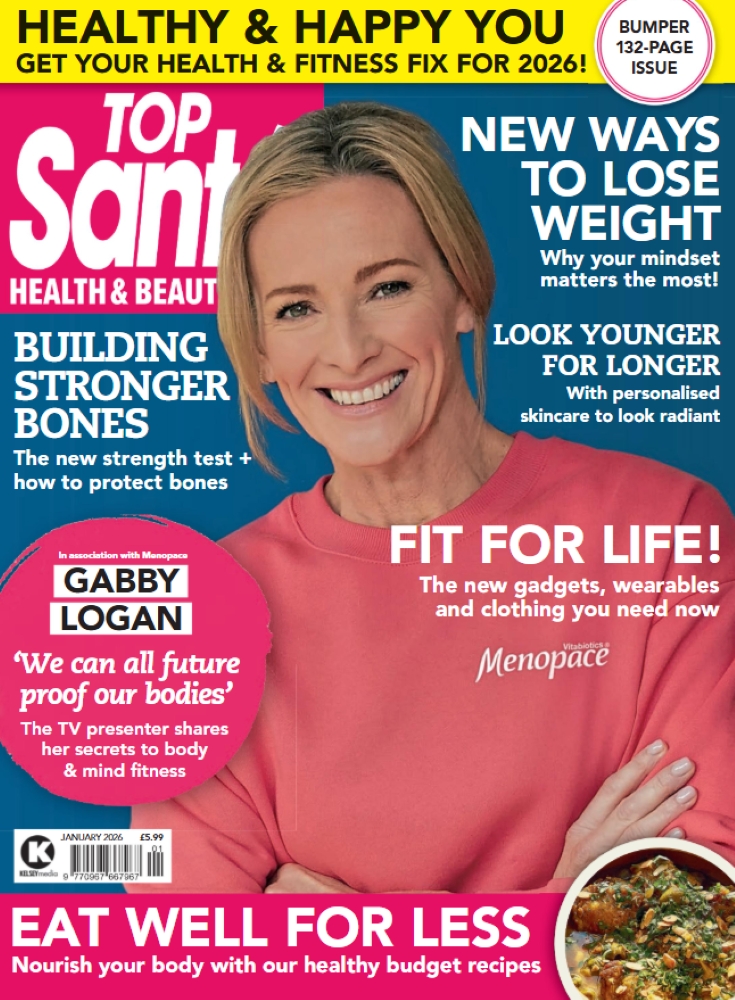

Broadcaster, podcast host and Menopace ambassador, Gabby Logan, talks to Joanna Ebsworth about the confidence-boosting power of strength training in midlife, and why any movement is a step in the right direction.
Words: Joanna Ebsworth. Images: vitabiotics.
People’s ideas about midlife have changed so much in recent years. Until about five or 10 years ago, I think the perception was that this period of life was in some way a downward slope, and that you were entering an era where you had to slow down; not in a good way, and not because you are actively choosing to do less, but because somehow you are going to be slightly decrepit due to your age and melt into the background.
But when I approached this period of life, I didn’t feel that way at all. I felt I had so many things I still wanted to do, and I was very much about taking on new projects and trying new things. The only issue was my body was changing so much – much more than I’d anticipated – and I just didn’t understand anything about perimenopause and menopause.
I realised I wanted to be armed with knowledge. Because knowledge is power, and I think I also wanted to feel more in control of what was happening to me. I’d find myself thinking, ‘Why don’t I feel as good any more even though I am training?’, and ‘Why is this food suddenly making me feel bloated?’ I wanted to know why I couldn’t process a glass of wine in the same way I used to, and why I became short tempered about little things, and why I wasn’t sleeping well.
That’s partly why I started my podcast, Mid·Point, so I could have conversations with brilliant guests and experts who wanted to share their knowledge and wisdom with me. And all my learnings made me realise that I couldn’t keep doing the same things I’d been doing for the past few decades and expect to see the same results.
(Read our previous chat with Gabby Logan all about her podcast and why she feels better now than in her 20s here!)
Before midlife, I answered any health issue with, ‘Exercise more, eat better’. But then I had this “reverse eureka” moment that led me to realise that exercising and eating better is very different in midlife. So, how I eat now is not how I ate before. I try to choose foods that work better for me, because blood sugar levels spike differently for menopausal women.
And I also try to have some kind of protein at breakfast, whether that’s having some high-protein Greek yoghurt or a piece of salmon or eggs, because it works better for me and my body. Even though I exercise regularly, I don’t have the same kind of appetite I used to, so my metabolism has clearly changed. Therefore, I honour it by eating smaller portions.
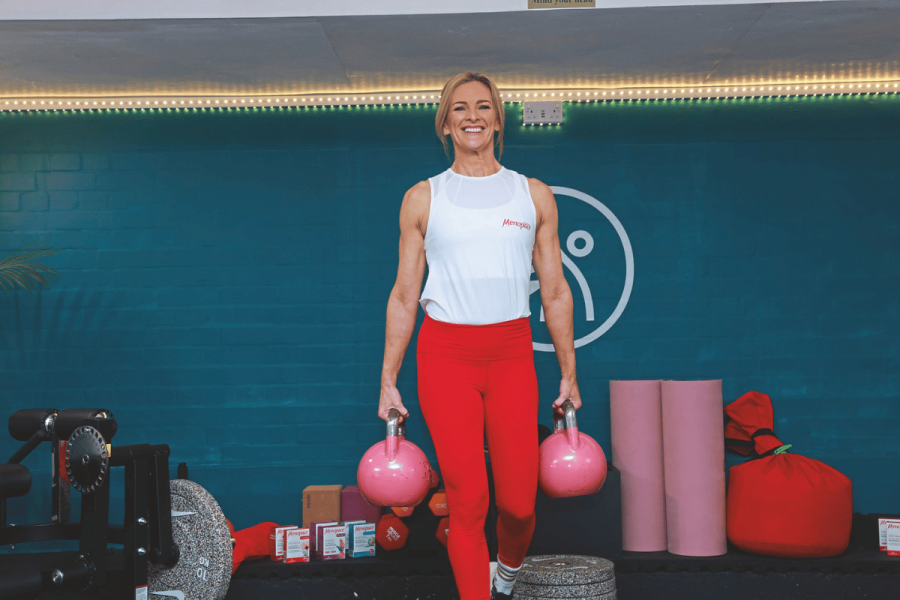
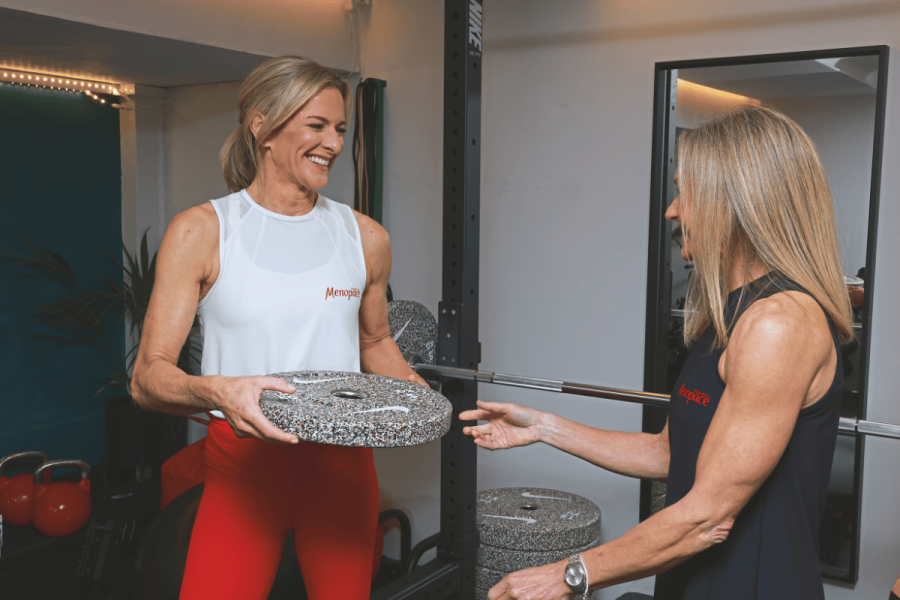
I’ve also really upped my strength training. Every physical expert I’ve talked to about midlife fitness has said we should be keeping strength training at the front and centre of whatever we are doing, and that’s what I’ve been trying to do, even though I’ve been doing strength training since my early 30s.
As I moved into my late 40s and early 50s, I tried to maintain a good balance of activities, with walking, Pilates and weight training. I love Pilates and could do it every day, but I know I can’t because I need to get in at least two strength training sessions a week where lifting more than just my own bodyweight is a priority.
I’m so passionate about promoting the benefits of strength training for women in midlife. Oestrogen levels deplete during peri/menopause, which makes it harder for us to retain muscle, so building strength is vital for keeping your muscles strong, and for supporting the structure of your body by looking after your bone health and bone density.
One of the reasons I love strength training is it really helps to promote back strength and prevent you from hunching over. That’s important, because bad posture is a real sign of ageing, whereas keeping your shoulders back and having a strong core means you’re less likely to have back and hip problems. I also think being physically strong is multifunctional because it has a psychological impact. It helps us to feel more energetic, gives us more emotional resilience, and boosts our confidence so we can live life to the fullest.
I once had a PT who was very strict about teaching me how to lift weights correctly. Because of him, I’ve always felt confident enough to follow workout programmes on my own. But then I realised more recently that I wasn’t making any progress or getting stronger, probably because I was repeating the same stuff over and over.
So, I decided to get another trainer involved about six months ago. He created an online programme for me that suits me down to the ground because I can’t always get to a trainer with my work, and I can do it anywhere in any gym when I’m travelling. It’s so important to keep challenging your muscles to avoid plateauing, and by switching things up, I’ve managed to build more strength. I’m feeling really strong right now!
Movement is about so much more than weight loss or burning calories. It’s about living the best quality older life I can, and that’s why I don’t want to live in a way that isn’t as healthy as it can be. I want to be active and doing things with everybody in my life that I love. I guess my point is this: do you want to just live for the sake of living?
Or do you want to live a life that’s really full? I still want to pull a dress on when I’m 70 and feel smart, and I definitely don’t want to feel like I’m dressing to hide a failing body that is breaking down. I know you can’t change some things that might prevent you from doing as much movement as you’d like, such as getting arthritis, but I want to prevent what I can and maybe decrease the inflammation markers that lead to arthritis. I also want to show women that we can do things in menopause to help ourselves, and we don’t have to accept all the changes that might happen to us.
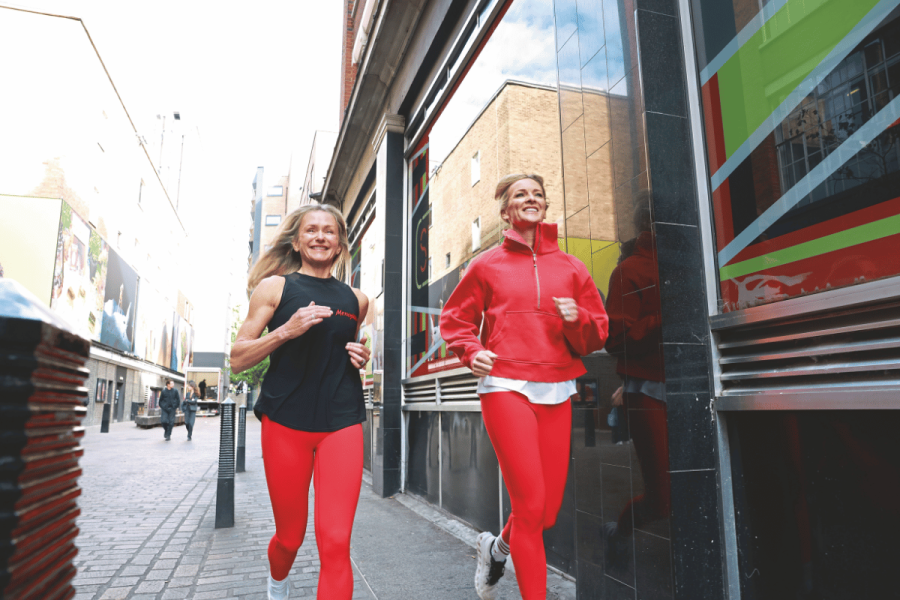
Our lives are so much more sedentary now. And that’s why I like to move as much as possible when I can. When I’m in London for work a few days a week, I’ll get the tube across town, but I never stand on the escalators. I’ll always walk up them, and I’ll often get off a few stops early and walk if I have a spare 10 minutes. I think it’s all about incorporating movement where you can and thinking, ‘OK, it’s a nice day, why don’t I just walk to that place instead of jumping in a cab.’
Recently, I was reminded by someone that we should all really try to walk after dinner for 10 minutes because it’s much better for your digestion, so my husband Kenny and I try to do that around the garden, or we’ll take our dogs out for a wander. It’s not about getting the steps in; it’s about promoting digestion, like the Victorians used to do post-dinner.
Generally, I think our levels of movement are diminishing. We sit down more, and our hobbies increasingly involve sitting, whether it’s scrolling on our phones or consuming box sets. That’s why I like playing paddle with my girlfriends. It’s not the biggest cardio workout for me because we don’t play at a high enough level, but if I’ve already worked out in the morning, I know that’s another hour of movement, and I’m also having fun and socialising and developing a skill.
I think movement is something you’ve got to consciously think about, which is why I always schedule my workouts into my diary. Also, if I realise I haven’t moved much after a day of interviews or recording podcasts, I’ll lace up my trainers and head outside instead of sitting on the sofa, just because know I’ll feel better for it.
It’s never too late to build a strong body for life. The key is just to start, even if you didn’t exercise in your 20s and 30s, because a few bicep curls using some light dumbbells can soon turn into holding a plank. And before you know it, you’ll be adding in some shoulder taps, and building up to crunches, and then the next thing you know, you’ll be doing a full V-sit exercise!
Adopting a Couch to 5K mentality, where you build things up slowly over the weeks and write down your progress, is really useful, and that’s why I’m encouraging women to take the Menopace Strength Test. It’s a really valuable tool that helps women in their 40s, 50s and beyond understand where they are in terms of their fitness, so they can build strength to support their body and mind.
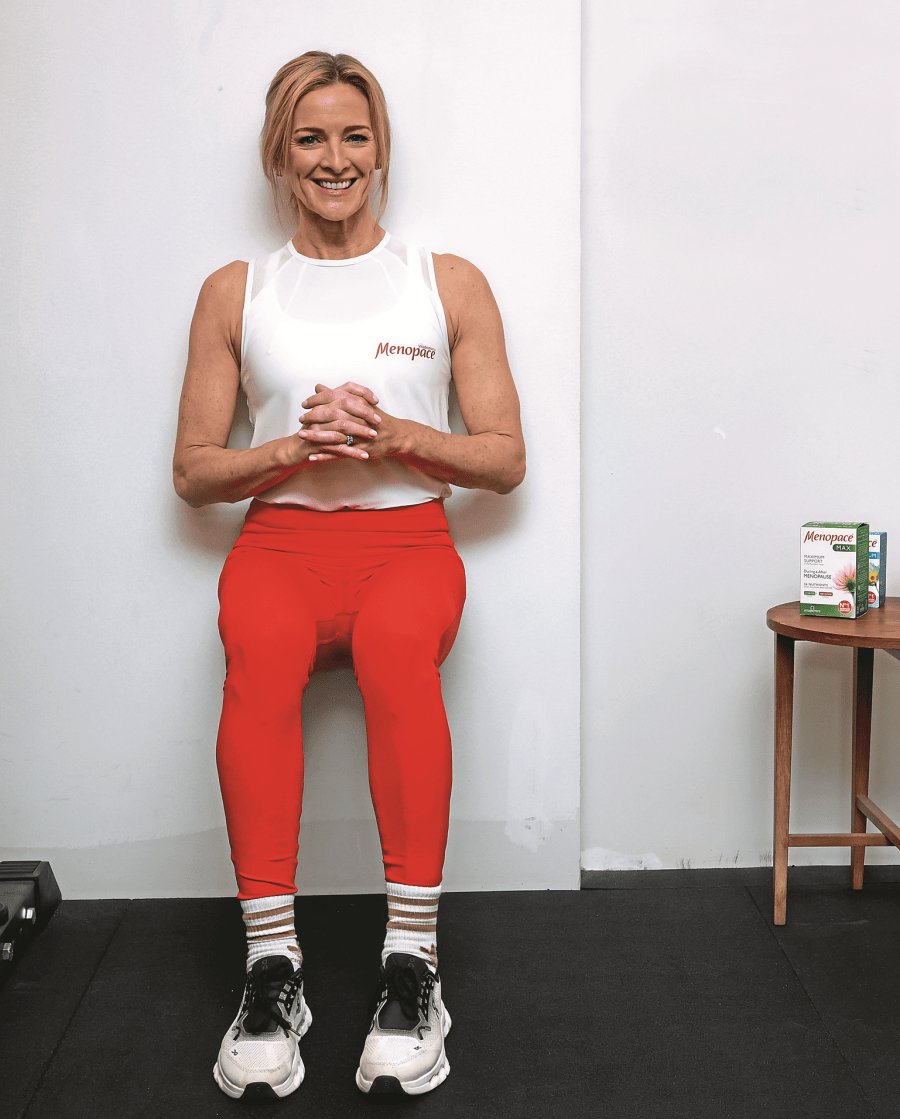
I will say it does take a little bit longer to see results when you’re older. It’s not like when you’re an 18-year-old starting a new sport or training regime and you see changes really quickly. But the results are really worth it if you keep going. You’ll probably accrue the mental health benefits before you see the physical changes, but you’ll still feel good about them!
The key is to commit and stick to it. Don’t quit because you’ve missed one session – the next day is a new day, so start again. It’s the same with food. Just because you might have had a Crunchy bar on a Thursday afternoon, it doesn’t mean that you’re going to start Friday morning off by eating a doughnut. You can start again the next day.
Also, remember to be a bit kinder to yourself. Keep in mind that you’re not trying to train for the Olympics, or get a record time in a half marathon, or swim the channel. You’re just trying to be the best you can for life, and doing even a little bit will always be better than nothing. One expert I’ve spoken to told me his study showed that even a tiny amount of exercise can have such a big impact on longevity.
So, it’s about encouraging people to realise you don’t have to come from a background of running marathons and triathlons. You can be in your 60s, and exercise can still have an impact if you start now. Anything is a step in the right direction, and the more you keep going, the more your body will benefit over time.
Gabby Logan is an ambassador for Menopace, the UK’s No.1 and most trusted menopause supplement brand*, for women before, during and after menopause for comprehensive daily nutritional support.
- Sources: Nielsen GB ScanTrack Total Coverage Value Sales 52w/e 12 July 2025. A 2025 survey of 1,000 British women, conducted by One Poll, revealed that 25% of peri menopausal and post menopausal women aged 50+ who have taken a menopause supplement trusted Menopace more than any other brand.