
According to experts, this new trend could be a game-changer when it comes to drifting off better at night. Here’s how to try dark showering safely
Should you shower in the morning or at night? It’s a question that ignites debates far and wide, but if you’re in the 57% of Brits (according to a 2025 poll) who prefer to shower in the AM, it might be time to try something new – especially if you struggle to sleep.
‘Dark showering’ is a trend increasingly cropping up on social media, claiming to have relaxing and sleep-enhancing properties. But what is it?
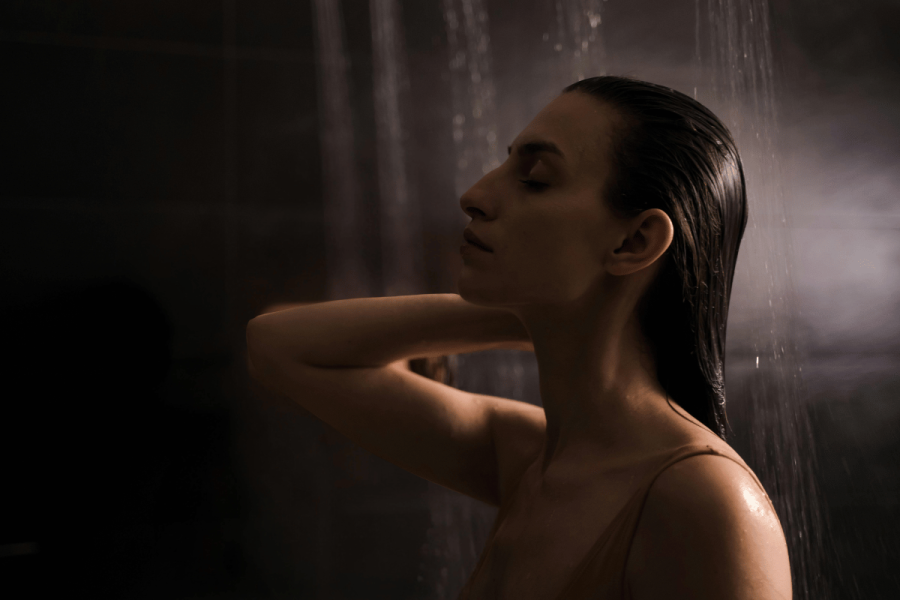
While it may sound somewhat sinister by name, dark showering is exactly what it sounds like – essentially, showering at night, with almost no light available.
Where does ‘dark showering’ come from, and why does it work?
Dark showering is a practice with roots in Indian Ayurveda, Japanese culture, and ancient Roman and Greek bathhouses. But now, TikTok users are discussing the surprisingly relaxing powers of showering in the dark. But why does it have such an effect?
‘Our bodies are governed by our circadian rhythms, which are massively influenced by light exposure, both natural light and artificial,’ says Dr Deborah Lee, a GP working with ComfyBedss.
‘A lot of bathroom lights are extremely bright, and blue-toned LED lighting can suppress melatonin and signal to the brain that it’s still daytime.’
‘When we dim out lights in the evening, the brain will start producing melatonin, the hormone that helps us feel tired and ready for bed.’
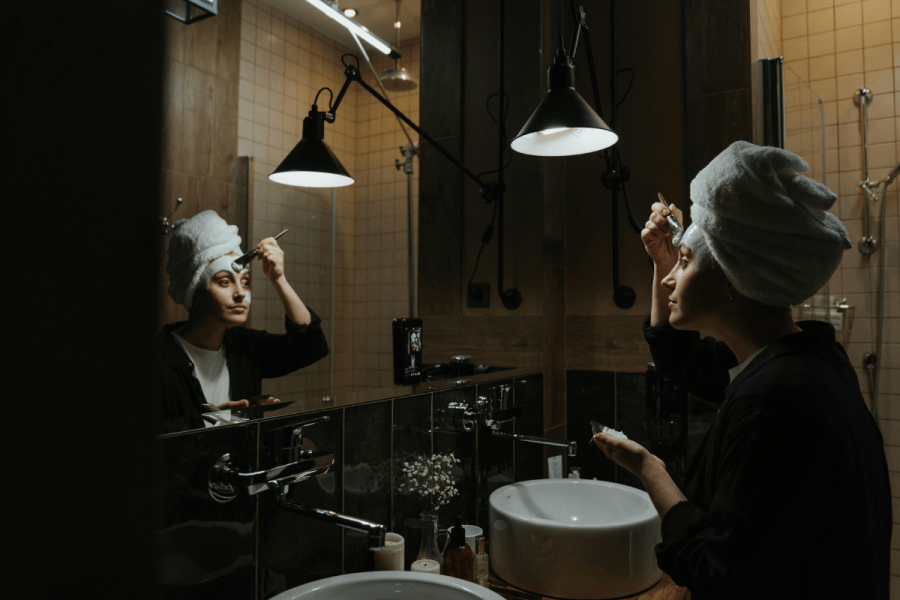
How to have a dark shower
The most essential aspect of dark showering is in the name. Experts recommend turning off any bright lights and keeping the room as dark as you can manage – while staying safe and avoiding any trip hazards, of course.
Try lighting some candles in safe areas or using a portable night light to add ambience.
Dr Deborah Lee says that ‘darkness encourages relaxation and mindfulness, and without bright lights, the nervous system can shift from a more alert to a state of calmness. It can signal a ritual to your body that it is, in fact, the end of the day, and your body should start preparing for bedtime.’
While the ambience is the focus, it’s very important to use non-slip mats and clear the bathroom of anything that could cause you to trip and fall.
Before you hop in the shower, be sure to let your eyes adjust to the room and make sure that the lights aren’t so low that it’s dangerous to move around.
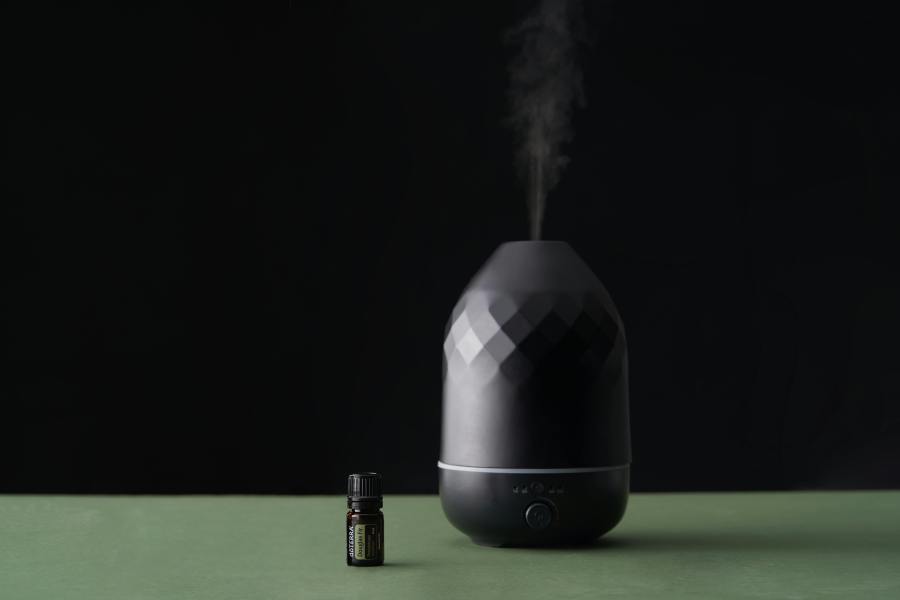
To really boost the relaxing benefits of a dark shower, try placing a calming oil diffuser in the room, or any other soothing lavender or sandalwood scents.
You can also try playing calming music or ambient sounds like a grassy meadow, ocean sounds, or thunder; whatever works best to give you a sense of calm in the evenings.
While you’re in the shower, try to focus on the sensations of the water hitting your skin, the steam and your breathing, and try to take your time with each step of your shower.
If you usually scrub your scalp and wash your hair as fast as possible, try slower, more deliberate movements. Why not give yourself a massage while you’re there?

What to avoid when dark showering for maximum benefit
Aside from the obvious safety precautions, there are also certain things to avoid to make the most of dark showering.
One thing that Dr Deborah Lee notes is important is not having the water running too hot.
‘When we take a shower, our body temperature will rise slightly, and when it’s too hot, it can raise the heart rate and signal alertness. A comfortable, warm shower, for around 10 minutes, will be sufficient.’
She also notes that the timing of the shower is key – not too early in the evening, but not less than an hour before bedtime.
‘This will allow the body temperature to rise and then gently fall again before you actually get into bed and plan to go to sleep. If you shower immediately before getting into bed, you might not give your body enough time to cool down properly.’