

Author Sandra Parsons reversed her biological age from 60 down to 20 all through effective lifestyle changes that don’t cost the earth. Here, she shares some of them so you too can benefit!
Words: Sandra Parsons. Images: Shutterstock; Lezli + Rose for images of Sandra.
Imagine being 100 and feeling like a lithe, energetic 60-year-old. Or turning 80 and being in the same shape as a fit 50-year-old. Some of the world’s most brilliant and respected longevity scientists believe this is entirely achievable – not in some utopian future, but right now. I happen to believe the scientists are right.
What’s more, achieving it doesn’t involve weird injections or expensive equipment, merely changing some simple habits. How do I know this? Because after several years of changing my own habits, I took one of the most accurate tests available to find out my biological age. My actual chronological age was 60. My biological age was 20. That’s right. I was 60 on the outside and 20 on the inside.
The secret of how I got to be four decades younger isn’t really a secret at all. It’s just the result of having read dozens of books and papers from the world’s leading longevity scientists over the years and adopting the best of their suggestions. I passionately believe that it is possible to age not just gracefully but with increased vitality and zest for life.
Entering my 60s I feel more alive than I ever have, fizzing with enthusiasm and energy. According to David Sinclair, professor of genetics at Harvard Medical School and one of the world’s leading experts on ageing, only 20 per cent of our longevity is down to our genes. The rest is down to our environment and behaviours
All in the genes
To understand why we age, we need first to have a short lesson in epigenetics. We each have about 20,000 genes. And the information within our genes needs to be read in order for our cells to be able to use it properly.
This “reading” of gene information is the function of the epigenome. And it is changes within the epigenome that, according to a new theory conceived by Professor Sinclair, are the real reason we age.
Basically, as we go through life, some of our genes begin to change their structure because of epigenetic disruption – change or damage at a cellular level, caused by things like a poor diet, excessive stress or environmental pollution.
Epigenetic changes, just to be clear, are down to us. They are changes that happen not because our DNA itself has changed, but because outside factors – such as how we eat, sleep and move – have disrupted the way our genes work.
Effectively, the gene information that our cells receive and depend on becomes confused. I have identified three key areas of life that can help you stay young. None of them require complicated calculations or planning. Rather, they are about doing what comes naturally to us…
1. EAT 10% LESS
The most comprehensive and extensive study ever done on caloric restriction in humans shows that you only have to cut your calories by 10-12 per cent to drastically reduce your biological age, and improve everything from your cardiovascular health to your risk of diabetes and dementia. Ten per cent is the equivalent of a small portion of McDonald’s fries, or three small chocolate chip cookies.
As if that weren’t enough, the people who took part in this two-year study lost on average 7.5kg – well over a stone – in the process. Those in the control group, on the other hand, very slightly gained weight (0.1kg, or 3.5oz). The study was called the Comprehensive Assessment of Long-term Effects of Reduced Intake of Energy or CALERIE for short. In it, more than 200 men and women aged 21-50 took part.
None of them were clinically obese, but they weren’t super slim either: they had BMIs (body mass index) ranging from 22-28. To put this into context, someone who is 170cm (5ft 7in) tall and weighs 70kg (11 stone) has a BMI of 24. And the health benefits were extraordinary.
They included:
- A decrease in ‘bad’ cholesterol (LDL) An increase in ‘good’ cholesterol (HDL)
- A rapid reduction in blood pressure
- A profound improvement in insulin sensitivity and reduction in circulating levels of insulin
- A reduction in C-reactive protein (CRP) – high levels of CRP indicate inflammation, especially as an indicator of risk for cardiovascular problems
- Improved sleep, mood and libido
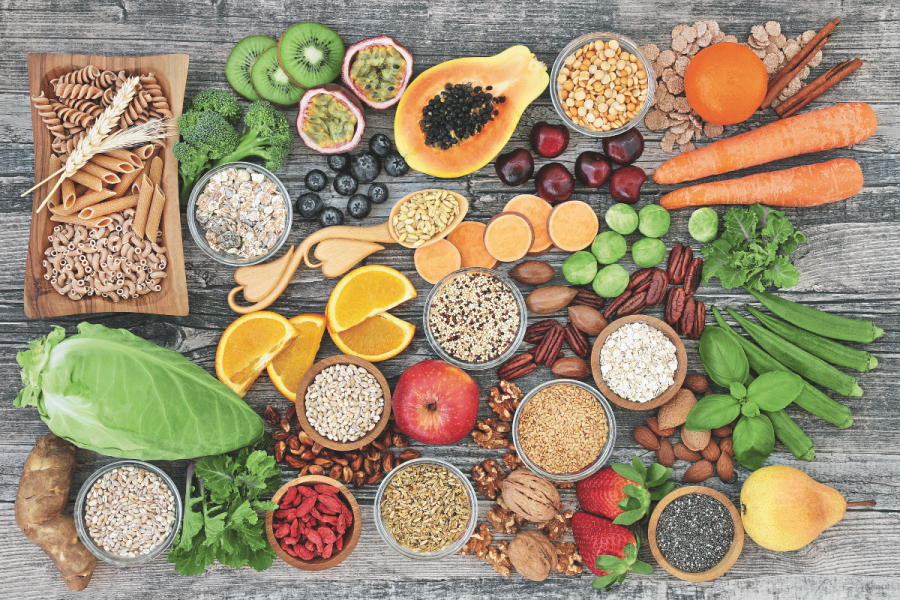
Two ways you can easily reduce your calorie intake by around 10 per cent is by, firstly, increasing your fibre intake. Eating more plants means you feel fuller for longer and so you eat less. In fact, fibre offers many of the same health benefits as caloric restriction.
It is the most anti-inflammatory food there is; it improves gut and heart health, blood sugar control and immune function; it lowers ‘bad’ cholesterol and the risk of several cancers, including colorectal, breast, pancreatic and bladder cancer; and it helps with weight management. A review of more than a dozen international studies showed that increasing fibre by just 14g a day leads to weight loss of 1.9kg (4lb) in less than four months – without changing anything else that you normally eat.
How? Because as soon as you increase your fibre intake, you also increase satiety, or how full you feel. The other way to reduce food intake is by practising an easy form of Time Restricted Eating (TRE), where you don’t eat anything (or drink anything other than water, black tea, etc) from the time you finish your evening meal until breakfast the next day.
This encourages the process of autophagy, where your cells die off so new ones can be recreated.
For example:
WEEK 1: Have a breakfast containing at least 8g of fibre on five days, and, on one day, do a 12-hour fast – for example, no eating after 8pm and not eating again until 8am.
WEEK 2: Have a lunch containing at least 10g of fibre on at least four days, and continue with the fibre-rich breakfast on five days. Increase your TRE to include a 12-hour fasting window on two days.
WEEK 3: Include at least 10g of fibre in your evening meal on at least three days (continuing the fibre-rich breakfast on five days and lunch on four days), and practise TRE on three days – you can choose whether to do this on your high-fibre days or not.
2. MOVE MORE
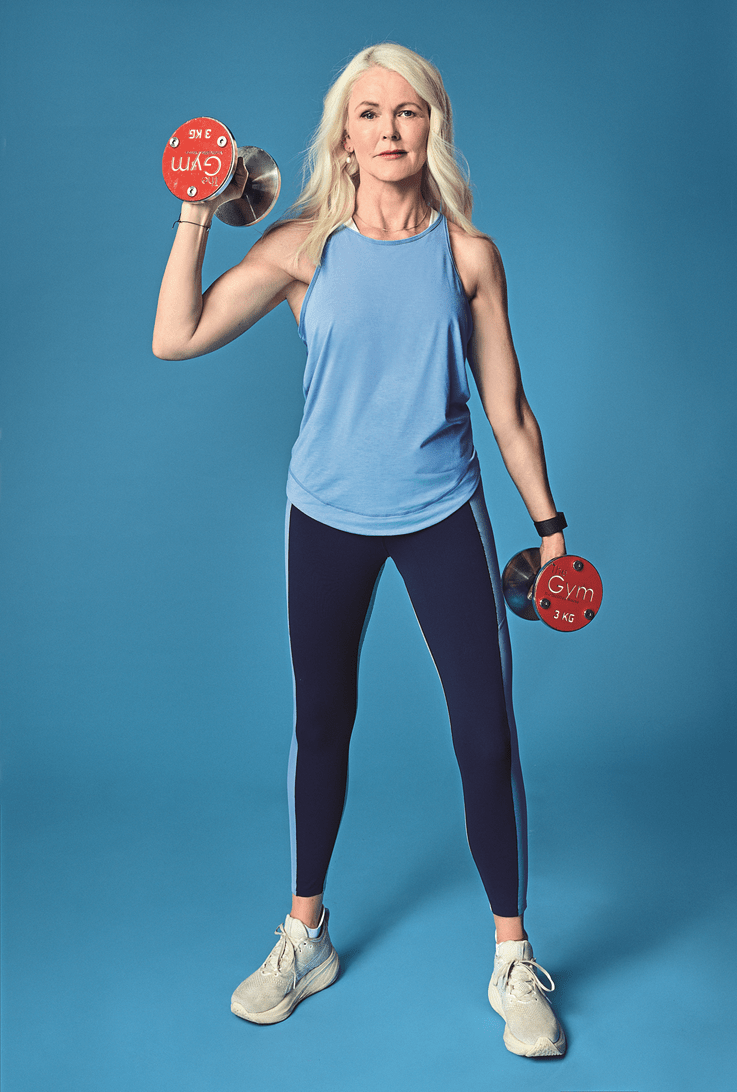
Exercise is as vital for your brain as it is for your heart. You don’t have to be remotely fit or sporty to start (I certainly wasn’t). And what’s more, you only have to walk a mile every day (around 2,000 steps) to reduce your chances of dying early by almost a third. According to Professor Bill Kraus, a cardiologist at Duke University in North Carolina, just walking briskly for 20 minutes a day – enough to get slightly out of breath but not so much that you can’t talk – is enough.
When you finish, you’ll realise you feel better than when you started. Your mood will have lifted, because exercise gives you a dopamine hit (the same hit people get from taking drugs) and that’s why if you do it often enough, it becomes addictive. The difference being that exercise is good for every single part of your body, including your brain, and considerably reduces your chances of getting every major disease, including dementia. ‘Here’s the math,’ Bill explains.
‘Moderate-intensity activity is about three miles an hour. Every mile is around 2,000 steps. So, if we are telling people to do 150 minutes, which is 2.5 hours of moderate intensity physical activity a week at three miles an hour, that calculates out to seven miles a week or around 14-15,000 steps a week, or around 2,000 steps a day.
‘On top of that, you do 5,000 steps a day just from daily living. Things like going from the bedroom to the bathroom, the kitchen to the front door, going up and downstairs, walking to the store for some groceries. That adds up to 7,000 steps a day. And 7,000 steps a day is all you need, not 10,000.’ And we need to be moving just to maintain our health and longevity.
‘You’re not reversing ageing by exercising regularly, you’re accelerating your decline by not exercising regularly,’ says Stephen Harridge, professor of human and applied physiology at King’s College London and co-director of Ageing Research at King’s (ARK). Prof Harridge believes that insufficient exercise is a ‘potent risk factor’ for all-cause and cardiovascular mortality, together with obesity, muscle loss, frailty, stroke, heart disease, diabetes and cancer.
Exercise, defined as structured physical activity, helps prevent all these, and should be prescribed as a medicine, he says, and is even more important than what we eat. ‘That’s not to say nutrition is not important – it is, very – but I think exercise tends to get put into a second division of importance, when it should be at the top.’
Dr Benjamin Levine, renowned sports cardiologist at the University of Texas Southwestern Medical Center, has long been fascinated by how exercise improves health in general and discovered that, even in late middle age, if you exercise in the right way you can actually make your heart younger. The heart, he explains, starts to shrink in late middle age – which he defines as starting from age 50 (and ending at 65).
And if you’re younger than that, don’t be too complacent – Dr Levine adds that the heart starts to stiffen in what he calls early middle age, from age 35 to 49. His study, a randomised controlled trial, took two years and involved a group of 53 men and women aged between 45 and 64, with an average height of 169cm and average weight of 75kg.

Crucially, they were all sedentary, defined for the purposes of the study as people who did not exercise consistently – and if they did exercise, did so for less than 30 minutes fewer than three times a week. They had no specific heart problems or disease. They were divided into two groups. The control group did a combination of yoga, balance and strength training three times a week.
The other group progressively worked harder with cardio, so that after six months they were training 5-6 hours a week. From months 6-10, their weekly training consisted of two high-intensity sessions, where they did four repetitions of exercising flat out at 95 per cent of their maximum capacity for four minutes, each followed by three minutes’ recovery (known as 4×4 interval training); one long endurance session of at least an hour; and one 30-minute base pace session.
These were supplemented by strength training sessions twice a week. After 10 months, the 4×4 sessions were cut down to just one a week and the training continued for another year. The results were astonishing: in the exercise training group their hearts got bigger and their arteries more elastic. Their hearts processed oxygen more efficiently and were notably less stiff; the hearts of the control group didn’t change.
A key part of the exercise regimen was the interval training, which was based on an old Norwegian ski team workout. By pushing as hard as possible for four minutes, the heart is stressed and forced to function more efficiently. Repeating the intervals makes both it and the circulatory system stronger. However, after a certain age, he found – around 70 – the heart can’t be changed in the same way.
This doesn’t mean you shouldn’t start exercising at the age of 70, he says – you will still reduce your risk of sudden cardiac death, you will improve the endothelial lining of the arteries so that the blood flow is more efficient, and you will at the very least preserve your aerobic capacity.
If you’re not sure where to start with strength training, try these 7 functional moves which are perfect for building everyday strength.

3. Rest more deeply
For huge numbers of us, getting enough quality sleep at night is a struggle.
The latest data shows that around one in three people in the West have problems with sleep at least one or two nights a week. And one in 10 say it’s a routine problem for them that happens more often than not. But there are things you can do to help. Just as we have time-restricted eating, there’s also time-restricted sleeping, which might sound counter-intuitive to begin with but hear me out…
The idea with this one is that you allow people to sleep a little, and once they’ve managed that, you allow them to sleep a little more, building up very gradually until they can sleep the whole night through. Dr Michael Grandner, one of the world’s top sleep clinicians, uses the analogy of a child who won’t eat vegetables.
You’d like them to eat 10 small pieces of broccoli but they won’t even eat one. But you keep persuading them to try and eventually they manage to eat one piece. The next day you say, I know you can manage one, today let’s try two. And they manage two and they say ‘but I’m still hungry’. And you say okay, can you manage three?
But until they’ve eaten whatever that day’s target is, they don’t get to eat anything else. And eventually they build up to eating all 10 pieces. Sleep restriction therapy is the same idea, says Dr Grandner, and again it’s tackling the problem that your bed has become a place where you are awake, rather than a place where you are asleep.
For example, if you spend eight hours in bed but only manage to sleep for six, then six hours becomes your baseline. So instead of going to bed eight hours before you have to get up, you delay your bedtime by two hours, meaning you only have those six hours in bed. The question then is, can you sleep for all those six hours?
The answer is probably not, at least at first, explains Dr Grandner. But if you stick to the process – only going to bed six hours before you must get up – then eventually you are so tired that you do manage to sleep for the whole six hours.
‘And now,’ continues Dr Grandner, ‘you’ve got a success.’ The next step is to go to bed six hours and 15 minutes before you must get up. And if you manage to sleep for that extra 15 minutes as well, then you add another 15 minutes on to that.
‘And then you wait. And then you slowly increase the time until you can’t fill it any more and that’s how much sleep you can regularly and reliably get.’ Studies show this works as well or better than any medication.
Dr Michael Grandner suggests these three critical changes to your sleep routine:

1. Don’t go to bed until you feel sleepy.
Dr Grandner likens this to not forcing yourself to eat if you’re not hungry. Just as it makes no sense to sit down at the dining table waiting to get hungry, so it is pointless to lie in bed waiting to feel sleepy. All you will do is make yourself stressed.
So, if you don’t feel sleepy – hold off going to bed. Do something distracting but peaceful, such as reading a book or listening to a podcast. Don’t work, or watch a film, or scroll through social media.
Activities like these are known by sleep scientists as arousal activities – they make your mind too active for sleep. It doesn’t matter how long that takes; you may end up going to bed two or three hours later than you would do normally.
The point is, if you only get into bed when you are actually ready to sleep, you are much more likely to fall and stay asleep. And don’t worry if that means you are getting less sleep than you think you need. A few (or even many) nights of less than the ideal amount of sleep really won’t matter in the long run.
2. Get up at your normal time, no matter how late it was when you went to sleep.
Maybe you have to be up for work in the morning, or to get the children ready for school, or go to an exercise class, or let the plumber in. Perhaps you have no commitments at all. It doesn’t matter: stick to the time you normally get up, no matter what.
3. If you are someone who regularly wakes up in the middle of the night, and, after trying for 25-30 minutes, you haven’t managed to get back to sleep, get up.
Go to another room and do something calming. Tempting though it might be to get a jump-start on the week ahead, definitely don’t do anything connected to work (unless it’s to make a plan that will help you with something and therefore make you feel calmer). If you are anxious, you could write down your thoughts.
What you are aiming to do is distract yourself from the anxiety of not being able to get back to sleep, and from any spiralling thoughts about how tired you’re now going to be in the morning. Do not get back into bed until, or unless, you feel really sleepy.
For more help, read our ten top tips for a better night’s sleep!
TRY YOGA NIDRA
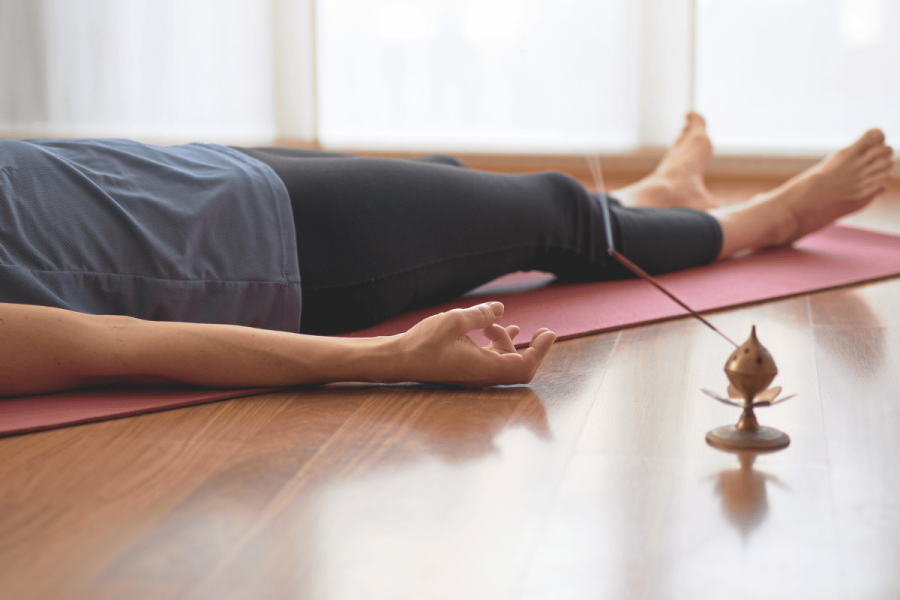
You used to only be able to experience yoga nidra by going to a session at a yoga studio, but there are now many free yoga nidra sessions available on YouTube, of differing durations, and I recommend you try several to find out which you prefer.
Two of my favourites are Ally Boothroyd, who has many free yoga nidras ranging from 20-90 minutes on YouTube, and Tim Senesi, whose 15-minute and 10-minute yoga nidras, free on his YouTube channel Yoga With Tim, are excellent when you’re short on time.
Depending on how long the session is, it might begin by asking you to focus on your right thumb, then your forefinger, middle finger, ring finger, little finger, the palm of your hand, back of your hand, wrist, forearm, right upper arm and so on through the entire right side of your body, and then the same again on the left.
Or it could begin by asking you to focus on the tip of your tongue then the roof of your mouth. One of the things that yoga nidra does is something most of us find very difficult, which is to switch our brain from one state to another. While most of us have no problem going from sleep to wakefulness, we find it extremely hard to switch from a state of focus to rest and back again.
Try self-hypnosis
This self-hypnosis tip can help you get to sleep or get back to sleep if you wake in the night:
1. Look up to the ceiling.
2. Keeping your eyes looking up to the ceiling, close your eyelids and at the same time, inhale.
3. Keeping your eyes closed, relax them to their normal position, exhale, and imagine your body is floating.
4. Now imagine you are in a favourite place where you feel really comfortable, perhaps lying on some grass in the sun or by a mountain lake. Imagine a large screen and let your worries play out along it, just letting them go.
Read more ways to keep yourself young and healthy in Age Less: How I reduced my biological age from 60 to 20… and how you can too (£14.99, New River).