
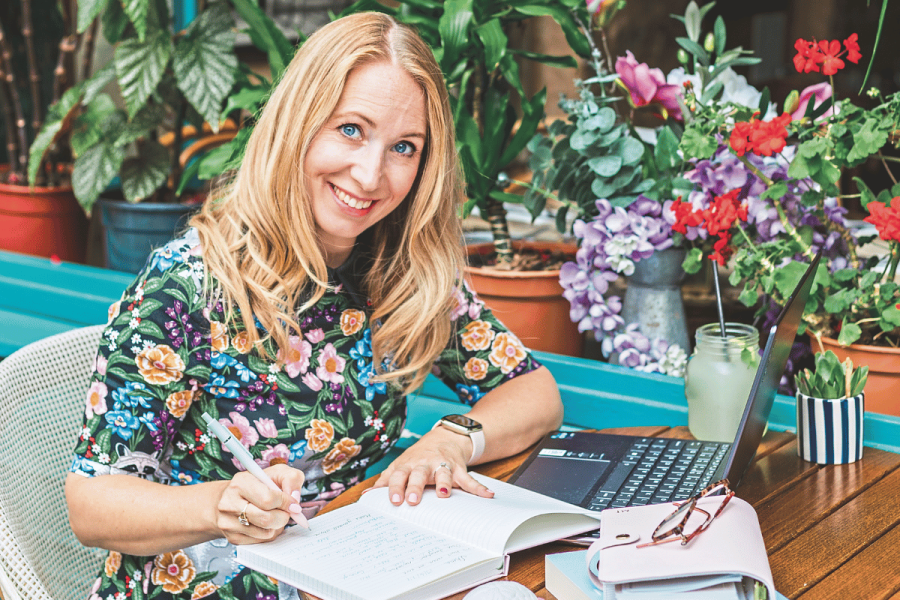
Editor-in-Chief Katy Sunnassee pays a visit to clinical psychologist Michaela Thomas to find out whether she may have ADHD or whether it’s all just in her head (literally!)
Words: Katy Sunnassee. Images: Katy Sunnassee, Becky Rui and Natalya Chagrin.
When you work in health journalism, you think you’d be well-versed in spotting health conditions in yourself. But some are not so obvious. I never would have considered myself neurodivergent – that certainly wasn’t a word in common parlance back when I grew up.
At school in the ‘80s and ‘90s, there were usually only one or two pupils with mental health conditions. I’d always done well at school; I could sit still, concentrate, and produce good work when required – I got the top GCSE results in my school! Nothing outwardly would have suggested there was anything different about the way my brain worked.
Which was why, fast forward 30 or so years, when a health coach suggested I might want to look into ADHD, I didn’t think it was at all relevant, and I was a bit offended!
But when, in 2023, I ended up watching some YouTube videos with a psychologist describing adult women with ADHD, they got me to pay attention as I felt he was describing my inner workings.
And then I listened to Mel Robbins share her own ADHD diagnosis, and her struggles, and I thought: “This is me!” If this is what ADHD is, then I have/am it.
ADHD presents differently in women. Unlike the stereotypical “hyperactive little boy bouncing off the classroom walls”, many girls mask their symptoms, becoming perfectionists or people-pleasers.
That masking continues into adulthood, often leaving us burnt out, anxious or depressed. I recognised myself in so many of those descriptions.
Looking back there were clues, albeit small. On school reports I’d sometimes be described as “aloof”, so clearly it didn’t always appear that I focused.
I would frequently forget to take the right text book in so would have to share my best friend’s; I’d often be lost in my own thoughts; I was easily embarrassed and so hid behind my hair and hands, and developed a habit of picking/fiddling with my eyebrows and eyelashes, which I now know is called stimming – a self-soothing mechanism to try and soothe your nervous system – and, yes, this is common in neurodivergent people.
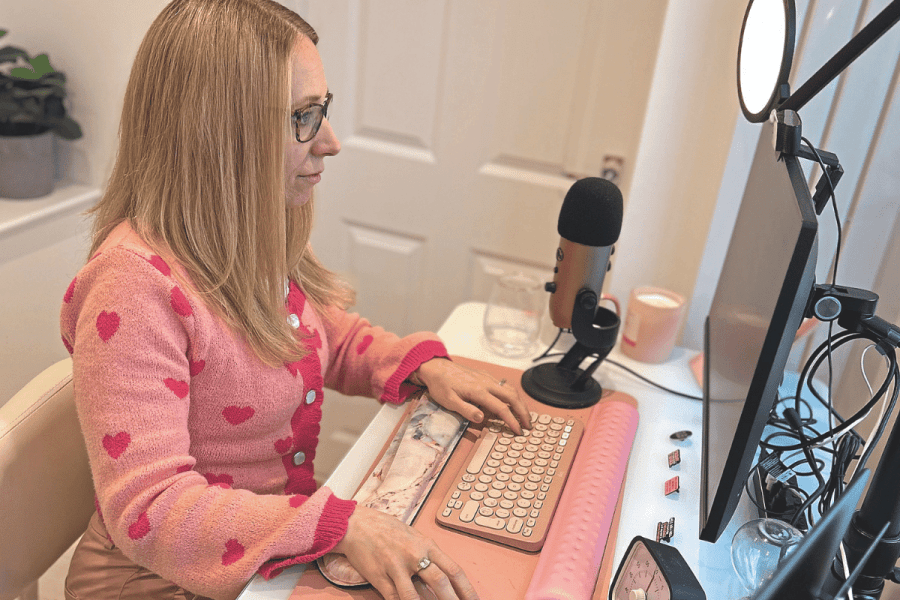
These days I am increasingly forgetful, constantly misplace objects, double-book myself, leave things to the last minute, forget appointments, and struggle to structure my day efficiently. Washing will pile up, I’ll leave cups or clothing around the house (‘It’s like a trail of where you’ve been’ my husband says), and financial matters often don’t get sorted soon enough.
I can focus, but often only when there is an imminent deadline, which kicks me into gear. I also sometimes interrupt people mid-sentence, simply because my thoughts are racing ahead and I want to share the relevant thing before the conversation moves on and the moment is lost. My husband tells me this is rude but I don’t mean it to be.
And when I’m with other ADHD-type people it’s never an issue as we’re both just talking over each other, at a rapid pace, often going off at multiple tangents then revisiting the original conversation. To me that’s just normal but to others it can sound and feel overwhelming.
Feeling Understood
In women, ADHD is often diagnosed at puberty, after childbirth or during perimenopause, when hormone levels are shifting and we have a lot more to juggle. The more I watched/read up about it, the more I wanted to seek professional advice, and so earlier this year I booked an assessment with clinical psychologist Michaela Thomas, who specialises in helping women navigate neurodivergence.
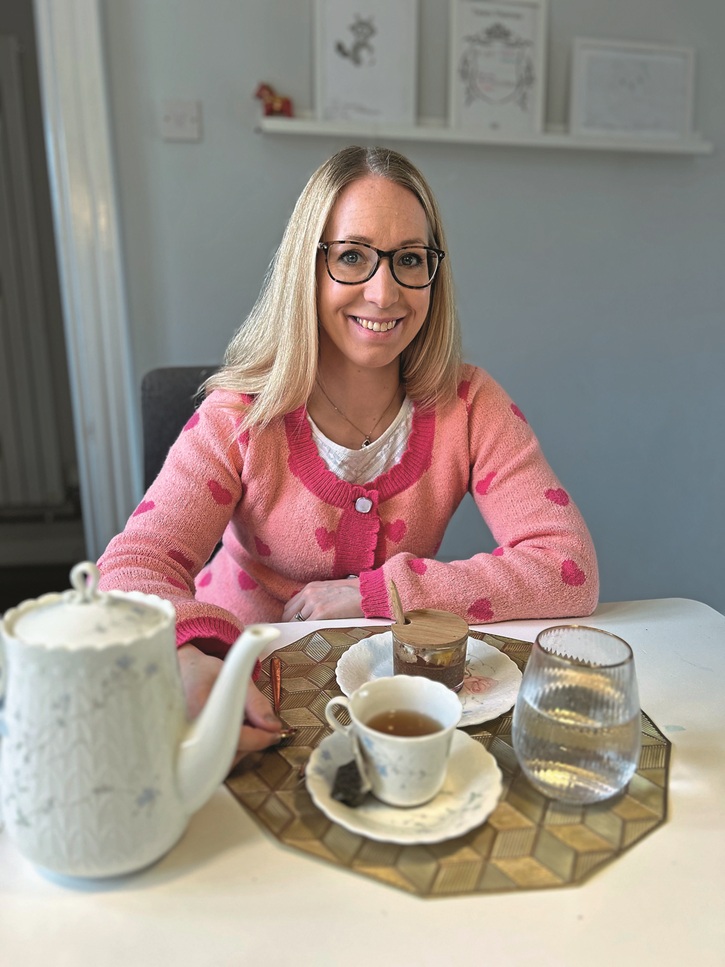
The whole process took place at Michaela’s home, which made it feel more intimate and relaxed than a sterile clinic. Instead of fluorescent lights and ticking clocks, there was natural sunlight, a cosy setting, and the kind of calm that allows you to open up fully.
It felt less like a medical appointment and more like a lunch date with a wise, supportive friend. We built in tea breaks throughout the six-hour day to pause and recharge.
During one, Michaela got me up and dancing to a crazy song about cats, to get the energy moving (I’ll post that on Insta!). Midway through, we also stopped for lunch, giving the day a gentle rhythm that made space for reflection.
The assessment itself had three main components: pre-assessment questionnaires, which I filled out beforehand, a developmental interview where Michaela asked about my life story, gently asking when certain difficulties first appeared and how they shaped my experiences; finally, symptom exploration in the here and now, discussing how traits show up day to day, from my “all-or-nothing” energy patterns to my racing, spin-cycle mind.
What struck me most was Michaela’s compassionate approach. At no point did I feel judged or pathologised. Instead, she validated my experiences, helping me see them through a new lens. For example, my tendency to interrupt people isn’t because I’m rude – it’s because my working memory struggles to hold a thought if I don’t say it immediately.
My emotional outbursts aren’t a moral failing – they’re linked to ADHD-related difficulties in emotional regulation. I felt myself exhale, almost physically, as she explained these patterns.
For the first time, I didn’t feel “lazy” or “over-sensitive”. I felt understood. It was a compassionate deep dive into my life that was, at times, emotional, as I recounted past relationships and the patterns around those.
Unlocking awareness
A full ADHD diagnosis in the UK can be given by a psychiatrist or a clinical psychologist, and after Michaela’s lengthy evaluation as well as speaking to my husband and mum, she wrote up a detailed report covering all areas of my life, and determining that I do, as I suspected, have ADHD combined type, which is part inattentive, part hyperactive.
If I then wanted to be prescribed a stimulant ADHD medication, I’d need to be refered to a psychiatrist – Michaela refers to Professor Michael Craig for this. At present I don’t want to go down that route, as in general I’m anti-medications where possible. However, if someone could guarantee me it would magically make me follow through on every project I started, or become Super Woman in terms of organisation, then I’d give it a go!
For now, I want to focus on creating more structure in my day, for example, building in time for set tasks at set times of the day/week. Michaela helps her clients with this through her ongoing support groups. She also emphasised to me that diagnosis is not about labelling, it’s about self-understanding.
What I’ve learnt from this whole process is that ADHD is not a deficit of attention – it’s an interest-based nervous system. When I’m engaged, my focus is laser sharp. When I’m disinterested, it’s like trying to nail jelly to a wall.
Emotional regulation is also key: I have a sensitivity to feelings of rejection, and re-do conversations and scenarios in my head over and over, but this is all part of the ADHD package.
I also learnt that far from being restrictive, structure can mean freedom. Having systems and routines creates the space for creativity and spontaneity, and this is what I need.
Being at school and university, and then work, gave me a time-based structure, whereas working from home, alone, means I must create my own structure, which at times can be challenging as there’s no one physically here holding me to account.
But one of the most powerful takeaways is the realisation that ADHD in women is still hugely underdiagnosed. Too many of us grow up internalising the belief that we’re scatterbrained, moody, disorganised or just broken in some way – when, in fact, we have a neurodivergent brain that simply processes the world differently.
Michaela is passionate about shining a light on this issue. She pointed out that many women only seek help in their 30s or 40s, often after burnout, parenting struggles or career challenges bring things to a head. By then, years of negative self-talk may have eroded self-esteem.
Assessment and support can be life-changing, allowing women to reclaim their strengths – creativity, empathy, intuition, and resilience – without being crushed by shame. I have felt a curious mix of grief and relief. Grief, for the years I spent berating myself for not being able to stick at things long enough to see them through. Also, relief, because now I have an explanation.
Getting assessed for ADHD doesn’t suddenly make everything easy. I still forget appointments, misplace my keys, and get carried away down Instagram rabbit holes, which provide those quick dopamine hits!
But now, I meet those moments with more compassion. If you’re reading this and wondering whether ADHD might explain some of your struggles, I’d encourage you to explore it.
Whether through The Thomas Connection or another qualified professional, seeking assessment isn’t about “labelling” yourself – it’s about understanding yourself. And that, truly, is the first step to living with greater ease, balance and joy.
Michaela Thomas is a clinical psychologist offering full-day ADHD assessments at her home in Bedfordshire and also Zoom assessments broken down into multiple hour-long sessions for those who can’t visit in person.
She hosts the podcast Pause Purpose Play, runs a group coaching programme called Burn Bright, and offers a free reset for ADHD women wanting to quieten the noise in their busy brains. Visit thethomasconnection.co.uk and find her at @the_thomas_connection.