
What if struggles with weight weren’t really to do with food? Weight loss coach Naomi Holbrook shares her holistic approach to losing weight and bettering our health.
Words: Naomi Holbrook. Images: Shutterstock.
For decades, weight has been the story you have been told to fix. You’re conditioned to believe that if you could just be small enough, disciplined enough, or “good” enough, everything else in your life will magically fall into place.
But for so many, especially in midlife, the frustration isn’t that you haven’t tried hard enough. It’s that, despite decades of trying, the solution you have been sold was never addressing the real problem. Because the real problem isn’t the weight. And the answer has never been in another diet. When women tell me they’ve “tried everything”, they’re not exaggerating.
What they haven’t tried, because nobody has ever taught them, is looking beneath the surface. Not at calories or carbohydrates but at emotions, boundaries, nervous system health, self-belief, and the stories formed in childhood that still shape them today.
Here’s what so many clients whisper to me behind closed doors: ‘I know what to do. I just can’t seem to do it.’ That sentence is never about food. It’s about pain.
So let me tell you about the most common and least spoken-about root causes. It is highly likely, having reached midlife or beyond, that you have been an emotional caretaker since you were a child.
You learned early that your role was to hold it all together for parents, partners, children, workplaces and, often in midlife, parents again, in a changing role.
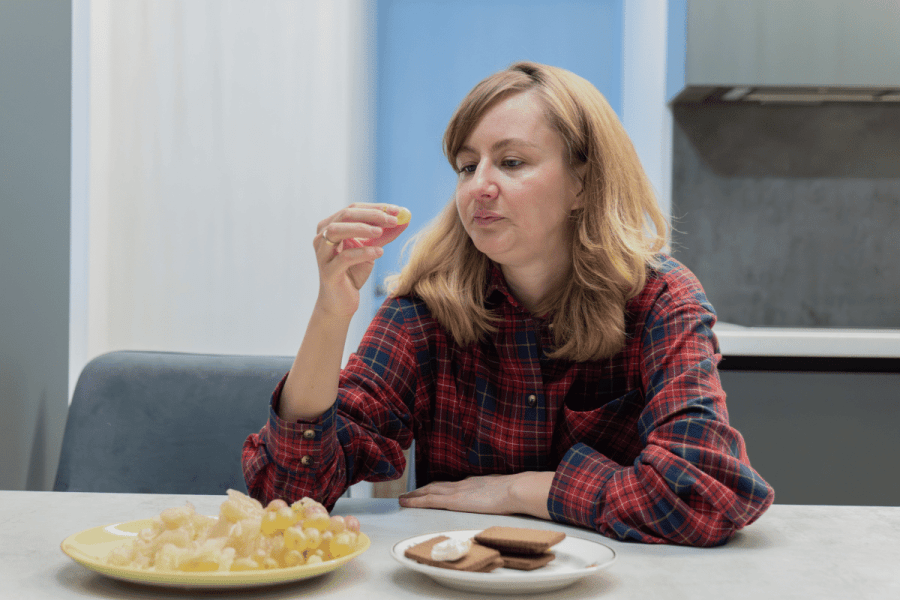
You may have swallowed sadness. Softened anger. Silenced fear. Numbed overwhelm. But unprocessed emotion never disappears. It finds a way out, through emotional eating, compulsive doing, late-night snacking, procrastination, perfectionism, scrolling, drinking, controlling, or simply shutting down. It’s not a lack of willpower. It’s a lack of space to feel.
Women often reach their 40s and realise they have built their identities on being everything to everyone. You’re the reliable one, the strong one, the fixer, the peacemaker, the glue.
But when you live without boundaries, your needs become an afterthought, and unmet needs always leak out somewhere. Often through food and alcohol, in private, and more often than not with shame. Setting boundaries isn’t about saying “no” to others. It’s about finally saying “yes” to yourself.

Early years conditioning
If you were comforted with food, rewarded with treats, told to finish everything on your plate, or grew up in a home where food was scarce or chaotic, those patterns will continue to live inside you today.
So, when women blame themselves for “bad habits”, they’re missing the truth of the matter: they’re repeating coping mechanisms they learned as children.
Compassion, not control, creates change. When self-neglect is disguised as strength, we are celebrated for resilience, for pushing through, coping, managing, multitasking, surviving. But “coping” is often a polished word for self-abandonment. Maybe you can identify with the following: skipping meals, skipping rest, skipping joy or your own needs entirely.
When you finally pause in midlife, something profound happens. For the first time, you hear yourself and what you hear is often a whisper you ignored for years: ‘I want more.’ Not more material things. More life.
Feeling frazzled
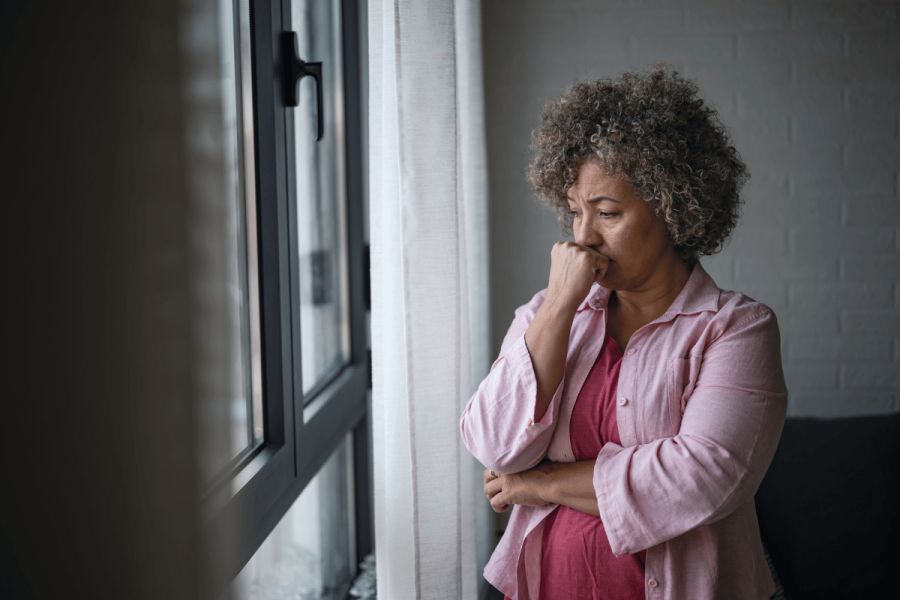
This is perhaps the most overlooked piece of this puzzle. How many women are living in a constant state of fight-or-flight: emails, mounting workload, mental load, ageing parents, changing hormones, expectations and, of course, the pressure to somehow keep it all together at the same time?
This all affects your nervous system, which can become dysregulated. A chronically activated nervous system changes your appetite, motivation, behaviour, energy and impulse control.
No diet in the world can override a body that thinks it’s in danger. When you learn to consciously regulate your nervous system through breathwork, grounding, slowing down and meeting your own needs, your entire relationship with food, and with yourself, changes. Not because you’re trying harder, but because you finally feel safe.
We’ve been taught to fear midlife. To brace ourselves for decline. To say goodbye to our “best” years. But what I see in women every single day is the opposite. Midlife isn’t a crisis, it’s an awakening.
Menopause is often the moment you stop living on autopilot and start questioning everything, including what you want, who you are outside of your roles, why you have ignored yourself for so long and, the biggest question of all, what would your life look like if you finally chose yourself?
It’s a profound psychological shift that goes far beyond hot flushes and hormonal changes. It’s the beginning of you truly coming home to yourself. Sometimes that looks like reinventing a career.
Sometimes it’s booking a solo trip for the first time in your life. And sometimes it’s simply acknowledging that you deserve more support than you’ve ever allowed yourself to receive.
This isn’t a breakdown; it’s a powerful, transformative breakthrough.
The bigger picture on emotional eating for weightloss
Most women think they want to lose weight or be smaller. What you’re actually craving is peace from the mental noise, freedom from guilt, confidence to take up space, as well as permission to rest without earning it, courage to stop shrinking in every sense, and a life that feels like yours.
When these deeper needs are met, the obsession with weight and size starts to fade. Not because you have “given up” but because you have finally woken up.
And once the inner work begins – once you sleep better, set boundaries, nourish your body, regulate your nervous system, honour your needs and trust yourself – your body often changes as a byproduct.
If you feel seen by this article, you were meant to. Maybe you’re thinking, ‘This is me! This is what I’ve been struggling with, this explains everything.’ And if you feel that, you’re not going crazy, you’re not failing and you’re certainly not behind.
You’re simply standing at the doorway of the next chapter of your life; one where you stop fighting your body and mind and start understanding it. Midlife isn’t something to survive.
It’s something to step into with your whole self. Because if your body has felt like the problem your whole life, maybe it was actually trying to show you where you needed healing.
And once you start that healing? Everything changes.
Naomi Holbrook, aka The Unconventional Weightloss Coach, is the author of Your Weight Is Not The Problem. Find out more about her work at theunconventionalweightlosscoach.com and at instagram.com/naomiholbrookcoach.