

Hydroxyapatite toothpaste has exploded in popularity on social media, with some claiming it as a ‘miracle’ alternative to traditional fluoride toothpaste. But is it really worth the hype?
Images: Shutterstock
In recent years, there’s been a swell of people looking to eliminate fluoride from their toothpaste. From concerns over ‘toxicity’ (with some critics claiming it acts as a neurotoxin or endocrine disruptor), to a general desire for more natural products, many have been looking to swap their toothpaste for something seemingly friendlier.
Whether or not the claims over fluoride are true, many have been turning instead to hydroxyapatite as the miracle ingredient that can save their teeth, no fluoride involved.
But what does it do, and does it really work? We asked an expert all about this so-called ‘miracle’ mineral.
What is hydroxyapatite, and what does it do?
The first thing to know about hydroxyapatite is that it already exists in our bodies – it’s a naturally occurring mineral that makes up around 97% of our tooth enamel.
‘It’s essentially one of the main building blocks of our teeth,’ says cosmetic dentist Dr Edoardo Felici. ‘When used in toothpaste, it can help repair very early damage to the enamel by replacing minerals that have been lost through everyday exposure to acids.’
Felici also says it may help with sensitivity, as it blocks the tiny channels in exposed dentine that cause discomfort when we eat or drink something hot or cold.
Hydroxyapatite v Fluoride
Like hydroxyapatite, Fluoride is a natural mineral which helps strengthen tooth enamel and reduce decay. It is present in a majority of widely available toothpastes, and most dentists recommend using fluoride toothpaste twice a day for healthy teeth.
But is hydroxyapatite more effective? One of its advantages is that it’s generally considered safe and well-tolerated with few side effects, in slight contrast with fluoride which may cause a stomachache or worse when ingested in large quantities (though daily use is fine).
However, Felici points out, fluoride has a much wider breadth of research behind its effectiveness for dental health. ‘For most patients,’ he adds, ‘it would remain my first recommendation.’
‘It’s particularly important for people who are more prone to cavities, have a history of tooth decay or wear orthodontic appliances. Hydroxyapatite may be a suitable alternative for some people, but I wouldn’t say it’s more effective than fluoride.’
He also adds, crucially, that hydroxyapatite is not a miracle cure that gets rid of cavities. ‘It can help strengthen areas of enamel that are starting to lose minerals, but once enamel has been physically lost, it cannot simply grow back.’
What should I look out for when looking for hydroxyapatite toothpaste?
If you’re thinking of making the switch, hydroxyapatite toothpastes are becoming more readily available.
‘Not all hydroxyapatite toothpastes are created equal,’ warns Felici, however. ‘The concentration, particle size and overall formulation can vary, and some products have much better clinical evidence than others.’
‘I’d recommend looking for a toothpaste that clearly lists hydroxyapatite or nano-hydroxyapatite in the ingredients and comes from a reputable brand with clinical research behind its formulation.’
Felici also points out that a higher concentration doesn’t necessarily equal more effective, and he recommends discussing any changes with your dentist where possible before making the switch.

How to take care of your teeth — advice from a dentist
As hydroxyapatite doesn’t actually regrow enamel once it’s lost, it’s important to maintain a good oral hygiene routine in order to prevent or reduce any future damage to the enamel.
‘The simplest habits are often the most effective,’ says Felici, who offers the following dentist-backed tips for good oral hygiene:
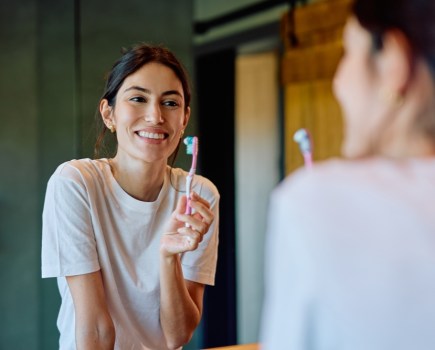
- Brush twice a day for two minutes, ideally with an electric toothbrush
- Clean between your teeth daily with floss or interdental brushes
- Spit out your toothpaste rather than rinsing
- Be mindful of how often you eat sugary snacks, sodas or acidic foods throughout the day
- After eating something acidic, give your saliva time to neutralize the acid before brushing
- Be sure to make regular dental visits, even if your teeth feel healthy
‘Hydroxyapatite is promising, but it isn’t a miracle solution, and it certainly doesn’t replace good brushing, flossing and regular dental care,’ he says. ‘Ultimately, the best toothpaste is one that protects your teeth effectively and suits your individual needs.’
‘If you’re already brushing twice a day with fluoride toothpaste and your teeth are healthy, there’s no particular reason to change. What’s important is finding a product that offers effective protection against decay and using it consistently.’
Dr Edoardo Felici is a cosmetic dentist at Apa Aesthetic Dubai. Follow him at @edoardofelici