

GP and women’s health specialist Dr Helen Wall talks to podcaster Michelle Ford about why so many women are only recognising ADHD in midlife, and how understanding the condition can be life‑changing.
Words: Michelle Ford. Images: Dr Helen Wall, Shutterstock
I’ve always had an interest in women’s health. I originally applied for obstetrics and gynaecology training, but I was heavily pregnant with my first child at the time and decided to go into general practice instead.
Even though I love being a GP, that passion for advocating for women and making sure they get the right care has always been there. I think a lot of it comes from my mum, who was a midwife – I grew up surrounded by that same deep commitment to support women properly. Throughout my career, everything I’ve done as a GP has drawn me back to women’s health.
It’s still such a frustrating area of medicine because women so often don’t get the care they need. There’s huge disparity and inequality, and that really matters to me. It’s a massive thing to change but, little by little, conversations like this are how we start.
My interest in ADHD grew partly because my daughter, who is now 17, has a diagnosis. I began to recognise her traits very clearly. Then, while running an NHS menopause clinic for our primary care network, I started seeing women where I felt there was something else going on. I noticed patterns that mirrored what I’d seen in my daughter.
I became passionate about it because I didn’t want my daughter to reach midlife having missed opportunities or struggled for decades before everything suddenly imploded. Sadly, that’s what I see in so many women – a lifetime of coping until the point where they simply can’t anymore.
ADHD is a neurodevelopmental disorder, and that’s a crucial point. There’s a lot of talk at the moment about ADHD being a trend or something people are jumping on because there’s “no test”. That simply isn’t true.
We have very clear evidence of functional and structural differences in the brains of people with ADHD: how the brain looks, how it works, and how neurotransmitters function. There’s also strong evidence of genetic links.
This is a real condition, with real biology behind it. Despite that, women are still being told they’re overthinking things, that it’s just menopause, or just stress. That really grates on me.

One of the reasons women are being diagnosed later in life is that we’re finally talking about how female hormones affect the brain. Astonishingly, it wasn’t until 2023 that the first major study looked at how female hormones impact brain function in menopause.
I’ve worked in medicine for more than 20 years, and we were never routinely taught that oestrogen and progesterone affect how a woman thinks, processes information, retains memory or has motivation. These hormones influence our brain chemistry profoundly, and when they fluctuate or decline, everything changes.
Once we understand that, it makes sense to look at how hormonal changes interact with neurodivergence. We now know that hormonal fluctuations during perimenopause and menopause can significantly worsen ADHD traits. When women start talking about this openly, they often realise they’re not lazy, disorganised or failing – there’s something else going on.
I hear from women every day who have held down careers, raised families and appeared to cope brilliantly from the outside. The internal cost of that masking is enormous. By midlife, many are burnt out, exhausted and overwhelmed, especially when hormones start to fluctuate.
I often describe midlife ADHD as a perfect storm. In medicine we talk about the Swiss cheese model – individual stressors might be manageable alone, but when they all line up, things fall apart. Hormonal change, work pressure, caring for parents, raising children, relationship changes – none of these alone might cause collapse, but together they can be devastating.
This isn’t a new condition appearing out of nowhere; I don’t believe there are suddenly more women with ADHD. What’s changed is that women are empowered to recognise it and ask for help. There are still many who are struggling without understanding why. We also have to recognise how much women’s lives have changed over recent decades.
Women now work in leadership roles, run households, care for families and carry enormous mental loads. We’re also living much longer – spending half our lives post‑menopause.
Parents are living longer, children are often born later, and many women are juggling the demands of teenage children at the same time as perimenopause. This level of sustained pressure is unprecedented, and it can expose coping mechanisms that once held everything together.
ADHD in women often looks very different from the stereotypes. It’s rarely about external hyperactivity. Instead, symptoms are internalised: difficulty processing information, switching tasks, staying focused, alongside intense anxiety and over‑preparation.
Many women compensate by working twice as hard. I’ve spoken to highly successful professionals who spend hours preparing for meetings because they can’t trust their brain to process information quickly in the moment. Hyperactivity often shows up as an inability to rest, constant mental noise and feeling unable to switch off.
One of the most important distinctions is that ADHD doesn’t suddenly appear in menopause. Hormonal changes may unmask it, but the traits should have been present since childhood. Often, if women look back carefully – at school reports, family memories, puberty or post‑ pregnancy periods – there are clear signs of difficulty.
Many women tell me they’ve never quite felt “normal”, or they’ve always wondered why things that seemed easy for others were so hard for them. That sense of being different is often there long before midlife.
I’ll be honest – I’ve missed ADHD in patients myself; I’m not proud of that, but it’s important to say. Medicine has failed many women in this space. What matters now is being open, learning and doing better moving forwards. Validation alone can be life‑changing. Understanding why you’ve struggled, why you’ve had to over‑prepare or why rest feels impossible can lift decades of self‑blame.
One of the biggest and least discussed aspects of ADHD in women is emotional dysregulation. For many women, this is the most disabling part. Hormonal fluctuations worsen anxiety, low mood, rejection sensitivity and emotional intensity. When dopamine regulation is already challenged, changes in oestrogen can send everything into a spiral.
This is why ADHD is so often mistaken for anxiety or depression alone – particularly when treatment doesn’t work as expected. Women with ADHD are more likely to be given repeated courses of antidepressants without anyone asking why they’re not improving. Anxiety and depression can absolutely coexist with ADHD, but if someone isn’t getting better, we must ask what else is going on.
We’re also learning that neurodivergent women may react differently to medications, including hormones. This research is still emerging, but it reinforces the need for careful, individualised care. And I strongly support self‑identifying as ADHD.
Not every woman needs or wants a formal diagnosis or medication. There are excellent resources, communities and strategies available without one, and accessing support can be incredibly validating while waiting for assessment.
Self‑compassion is key. Giving yourself permission to rest, to adapt your life to your brain rather than forcing yourself into neurotypical expectations, can make a huge difference. There are also many positives to ADHD.
People with ADHD are often intuitive, emotionally intelligent and highly creative. They can hyper‑focus, problem‑solve and bring extraordinary energy to the things they care about. I truly believe ADHD itself isn’t the problem – it’s living in a society that doesn’t support different ways of thinking.
If we allow women to live with ADHD rather than fight against it, we see strength, insight and resilience. Change starts with awareness. The more we talk about ADHD in women, the less women will feel broken or alone. Together, we can stop decades of masking and burnout – and finally give women the understanding and care they deserve.
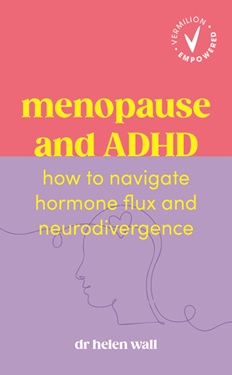
Find out more about Dr Helen Wall at instagram.com/doctorhelenwall. Her new book Menopause and ADHD (£14.99, Vermilion) is out on 14 May. To listen to the chat in full, head to Michelle Ford’s podcast Two Women Chatting, and find her at instagram.com/michelleford_twc.