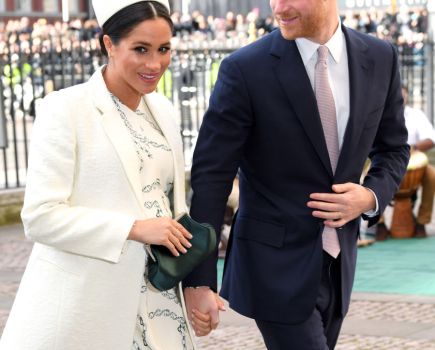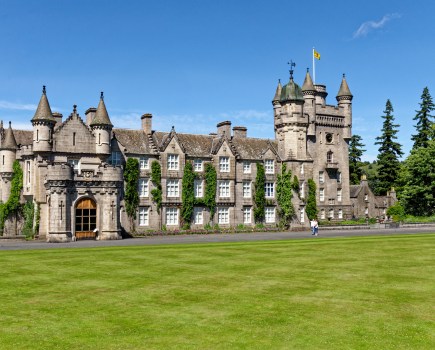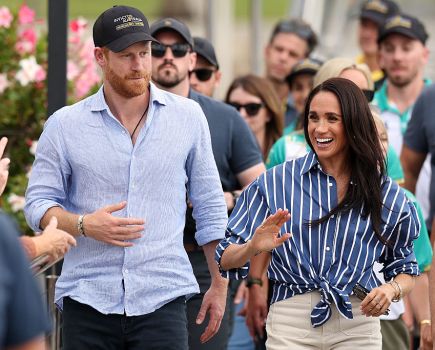

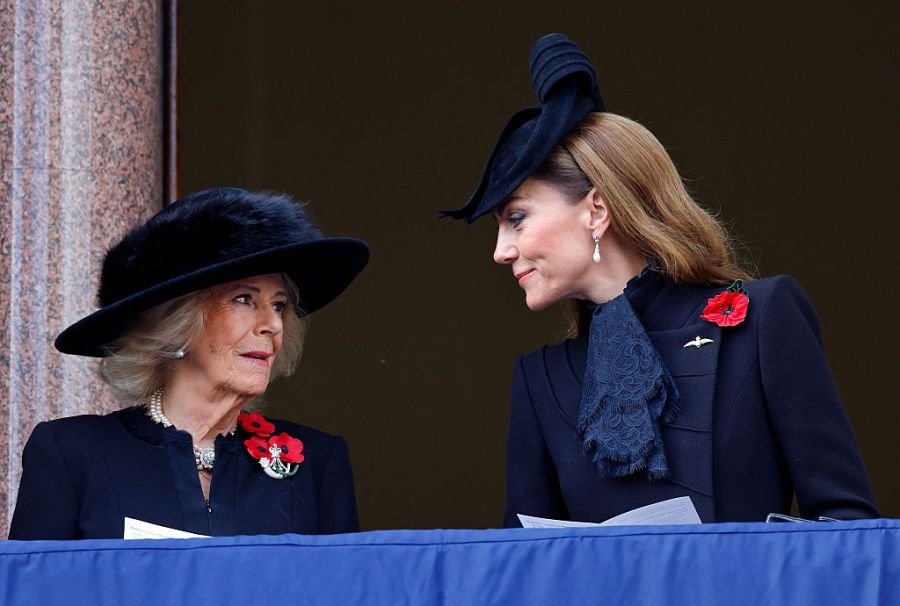
On paper it’s the ultimate fairytale – but being a wife of the Windsor’s can also pay a price. We take a look at how Queen Camilla, Princess Catherine, Princess Diana and Meghan Markle have each made an impact on the monarchy – and what might be the cost of being married into the most famous family in Britain
Words: Amy Dowrick | Images: Getty
The last few years have seen working royals operate a lot differently to those who came before them. From slimming down public-facing roles to re-jigging priorities in the name of privacy, it’s unsurprising that some freshen ups might be coming from those on the outside.
“Either deliberately or not, these four women have changed, and are changing, the royal family,” says author of The Four Wives of Windsor: Rivalries, Influence and the Real Power Behind the Crown, Simon Vigar. “They are formidable women in their own right. None of them are wallflowers.”
So how do you make your mark when playing a role in the most scrutinised job in the country?
Princess Catherine’s authenticity
While many might think that Catherine appears to have a meeker public image, the Princess of Wales definitely knows what she wants.
After a lengthy journey before entering the institution (we all remember ‘waity Katie’) and prolonged public scrutiny before her royal engagement to the Prince of Wales, Catherine has built a role that is entirely her own – and one that is taking the modern system by storm.
“She’s very clear about the role she’s going to have,” says Simon. “And since the cancer treatment, what you’ve seen from Catherine since then is authentically her – there’s a confidence there that isn’t always obvious.”
Privacy
“William and Catherine have been very clear about building this big wall between what’s private and what’s public,” says Simon. “That’s history not repeating itself there.”
“We get to see them on the big occasions. We get photos on a birthday. But actually, those kids are having a Middleton childhood. They’re not having a William and Harry childhood.”
And after making the decision to take part in fewer engagements and patronages while still wanting to make an impact with her charity work, Catherine’s control over her family’s next steps are unwavering.
“She has got really clear ideas on not only what she wants to do publicly and what she wants to achieve, but also the way that she’s bringing the children up,” says royal journalist Lizzie Robinson. “She wants to give them a normal upbringing to shield them and allow them to have a normal childhood. I think she is completely influential in that.”
Class
Although Catherine’s upbringing had no impact on her relationship with William as young adults, what it represented was a turning point for a modern institution.
“She’s married to the next King and is the mum of the one after that – but we’ve forgotten what a huge change this is for a middle-class girl from Berkshire to now be in that position,” says Simon. “It wasn’t thinkable with Charles and Diana.”
“She will have a profound impact on the monarchy,” he adds. “You’ll see even more of a double act with William and Catherine, and she’s crucial to the whole thing.”
Queen Camilla’s evolving role
The role of consort has changed since the days of Queen Victoria and Prince Albert, and we now see royal heads of state reign hand-in-hand as a united front, as following suit from the late Queen Elizabeth II and Prince Philip – and Camilla’s relationship with King Charles is no different.
“For a time, in not that distant a past, she was running the whole show when her husband, as well as Kate, were having their respective cancer treatments,” says Simon. “So, I think the role of consort is changing and evolving.”
Public attitude
Dubbed one of the greatest PR campaigns seen in recent history, the turn around of public perception towards the Queen Consort is the product of patience – and slowly building popularity in her changing role.
“People used to blame her for the whole mess, and I don’t think they do so much now – she’s about in the middle of the popularity table,” says Simon. “She’s gone from being the most hated woman in Britain, being driven out of home in the back of a car hiding under a blanket, to quite recently being the linchpin holding the entire institution together.”
Bringing the fun back
“She’s also the one on any engagement that can find the levity,” adds Simon. “She’s the one that can make her very serious husband laugh about something – and that’s what Charles loves.”
“She helps him navigate the day-to-day in a much more humorous way.”
Princess Diana breaking tradition
The global adoration of the late Princess of Wales was, and still is, undeniable – and she has lovingly been referred to as the ‘People’s Princess’ since her passing in 1997.
But it wasn’t just her warmth and genuinity that made so many see her as a valuable asset to the institution. Princess Diana continued to put her family before her royal responsibilities, famously protecting her children from cameras and trying to give them as normal an upbringing as possible – something we now attribute to how the Princess of Wales and Duchess of Sussex operate.
Redefining royal motherhood
Diana continuously ripped up the royal rulebook, ensuring that she was as involved a parent as she could be in William and Harry’s childhood.
She would often have the boys alongside her on official engagements, breaking the tradition of royal children being left at home with a nanny. This was first seen when a nine-month-old Prince William accompanied her and Charles for their Australia tour in 1983, and paved the way for what has become a royal rite of passage. Thirty years later, we’ve seen Prince William and Kate with an infant Prince George on their Australia tour, and Prince Harry and Duchess Meghan similarly following suit in 2019, taking four-month-old baby Archie to South Africa on their second major tour as a married couple.
“She would just engulf you and squeeze you as tight as possible,” Prince Harry described her in the documentary Diana, Our Mother, Her Life and Legacy. “And being as short as I was then, there was no escape, you were there and you were there for as long as she wanted to hold you.”
“All I can hear is her laugh in my head and that sort of crazy laugh of where there was just pure happiness shown on her face.”
“She always understood that there was life outside of palace walls,” Prince William said in ITV’s commemorative documentary of Diana twenty years after her death. “My mother cherished those moments of privacy and being able to be that mother, rather than the Princess of Wales.”
And just as Princess Diana accompanied William and Harry to the first day of school, William and Kate have followed suit with George and Charlotte – recently taking George to his first day at Eton College earlier this month. Like Diana, they’ve prioritised shielding their children from cameras, reducing public-facing roles to give their children the chance to grow up in private.
Meghan’s legacy
Both the Duchess of Sussex and Princess Diana share many similarities, having always leaned towards humanitarian efforts and using their platforms to shed light on issues that are so important to them – but it’s their commitment to their family (especially after renouncing their titles) that have made the pair so strikingly alike.
“So much of what Meghan is and how she is, is so similar to my mum,” Prince Harry says in the first episode of Harry & Meghan. “She has the same compassion. She has the same empathy. She has the same confidence. She has this warmth about her.”
Leaving the system
But the pair also share similarities in their suffering, and both experienced struggling with self-harm, feeling unsupported by the institution during unsurvivable press attention.
“Both of them felt that they were left to fend for themselves – and obviously the loneliness was profound for both of them,” says Simon. “Nothing can prepare you for entering that family, even for Meghan who knew all about Hollywood.”
And while Catherine had years to decide on her role in the royal family, and Camilla had decades watching from a distance about how it all operated, Diana and Meghan were both rushed into the royal system – and ultimately paid the price.
“Meghan had made her own decisions and made her own path in the world,” adds Lizzie. “Therefore, coming into an institution where there are confines and a hierarchy makes it much harder to navigate when you’ve seen life much further on.”
“It’s a crying shame that we don’t have Meghan in the royal family now, because it would be a very different organisation,” adds royal editor Chris Ship. “We would be having different conversations.”
And while there’s no denying that the current setup of the institution is less than it could be by not having Harry and Meghan working, perhaps that’s a change that we are yet to see.