


We tackle 6 of the most common sex problems, from body confidence and menopause to the orgasm gap and more, to help you get your sex life back on track — whatever the issue.
Words: Amy Mica Marsden. Images: Shutterstock.
Are you happy with your sex life, or is something getting in the way?
A healthy sex life is good for our brains, our bodies, and even our immune system. But according to a study from the Palacios Institute of Women’s Health in Madrid, 40 to 50% of women will experience some form of sexual dysfunction at some point in their lives.
For many women, these problems will effectively put an end to their sex lives; in fact, less than 20% of people who experience sexual dysfunction actually go on to seek professional treatment, opting instead to ‘tough it out’ themselves or just let sex fall by the wayside.
The good news is that most of these problems are treatable and temporary – they may just require a little creativity in the moment.
That’s what Dr Sonia Wright, host of The Midlife Sex Coach for Women podcast, says is most important to remember when we come up against a problem.
‘Sexual intimacy is all about being creative,’ she says, ‘because what sex looks like in your 20s and 30s, 40s may not be what it looks like in your 50s, 60s, 70s, and we definitely want to be a sexual individual throughout our lifespan.’
So what can be done to help you get your sex life back on track if you’re struggling? We asked the experts for their advice about 6 of the most common problems women experience in the bedroom, so you don’t have to.

1. ‘I don’t know what I want or how to ask for it’
‘Not knowing what you want isn’t a failure; it’s usually a sign that you’ve never been given permission to explore,’ says sex and intimacy coach Annette Benedetti, host of the podcast Talk Sex with Annette.
Annette recommends spending some time alone with yourself and your anatomy, using all five of your senses to really explore what feels good for you – and remembering that you don’t need permission to do so.
‘Using all five senses, touch, sound, sight, smell, and imagination, helps women understand what actually turns them on and what helps their body feel open and safe. The more clarity a woman has about her own pleasure, the easier it becomes to talk about it with a partner.’

2. ‘I’m uncomfortable with someone seeing me naked’
‘We’re much more critical of ourselves than anyone is of us,’ says certified sex and relationship coach and host of Taboo to Truth: Life & Sex After 50, Karen Bigman.
‘Women have an unrealistic view of what their bodies “should” look like… The reality is that if a man is getting naked with you, he’s much more interested in sex than in inspecting your stretch marks or belly.’
So if you find yourself putting off sex out of fear that someone will judge your body, remember that there are usually more important matters on your partner’s mind.
Dr Sonia also notes that there’s no one shape, size or colour for a beautiful body, and there’s no one way to look to ‘deserve’ sex: ‘If you have the ability [to experience sexual pleasure], you’re kind of born with the permission slip.’

3. ‘I struggle to achieve orgasm with my partner’
This problem is so common there’s even a name for it: the orgasm gap. Overall, only three in ten British women (30%) say they achieve orgasm every time they have sex, compared to three in five British men (60%) — and 7% of women say they never ‘get there’ at all.
‘What we need to understand, if we’re talking about heterosexual relationships or where the focus is on penetrative sex, 85% of women need some sort of clitoral stimulation,’ says Dr Sonia, emphasising how important it is that this vital organ gets the attention it needs.
And if you’re finding this is a new problem as you’re getting older? It could be down to menopause, says Karen, who recommends speaking with a medical professional if the problem persists.
‘Anorgasmia is a real issue that women of all ages face. When women go through menopause, in addition to losing estrogen and progesterone, their testosterone levels decrease. Testosterone contributes to libido, orgasm, and orgasm intensity. Exploring hormone therapy is a good starting point.’

4. ‘Sex is painful for me’
The first thing to note, if sex is or has become painful for you, is that ‘pushing through’ it is definitely not recommended.
‘You’re not supposed to feel pain when you have sex. Do not “endure” it,’ Karen insists. ‘Pain is a signal that something’s off.
‘The first step is to get a medical evaluation. It could be the consequences of hormonal shifts as a result of menopause, or it might be the cause of a condition like endometriosis.’
In the meantime? Dr Sonia reminds us that there’s no one way to have sex — and if one way isn’t working for you, there are other methods to make sure your sex life remains healthy, pain-free, and pleasurable for you and your partner, including experimenting with non-penetrative toys, and remembering that penetrative sex is not the be-all and end-all.
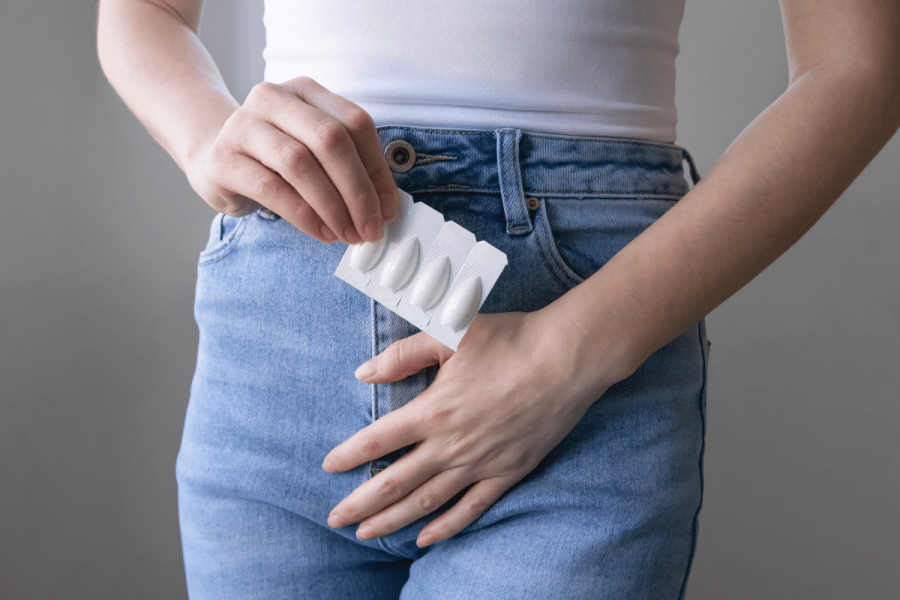
5. ‘Things are dry or different down there’
If you’re dealing with anatomical changes as you get older, don’t just accept it as part of ageing. It may be common, but there are adjustments you can make to ensure sex doesn’t just stop after menopause.
‘Very often, women in the perimenopause or menopause stage are told, “This is just what happens. Sex is going to go away, and I’m sorry, but that’s what you have to deal with,”’ Dr Sonia says, reminding us that this is not the case. (Read our 8 tips to enjoy great sex after the menopause!)
In fact, there’s a medical term for the atrophy that can happen in the vulva as we age and our hormones fluctuate – Genitourinary Syndrome of Menopause, also known as GSM or vaginal atrophy. This can affect up to 84% of postmenopausal women, causing symptoms such as dryness, itching, pain during intercourse, and urinary issues.
If you’re experiencing any of these issues, it’s important to speak with a doctor to determine what can help, including HRT, medicated vaginal moisturisers or lubes to help with lubrication and pain, and adjusting how we have sex.
You can find the NHS’ Menopause Guide to Understanding GSM/Vaginal Atrophy here, or read our tips to beat vaginal dryness here.

6. ‘My libido is low — I’m never in the mood’
‘Low libido is rarely about being “broken,”’ says Annette. ‘It is most often linked to exhaustion, chronic stress, hormonal changes, medications, or disconnection from pleasure itself.
Especially if you’ve been in a long-term relationship with your partner, this is a trap that many easily fall into; your libido can easily die off when faced with routine, ‘boredom’, or the everyday stresses and irritations of regular life.
Dr Sonia suggests that this issue is much better navigated if we come at it from a place of communication, creativity and understanding.
‘When we’ve been in a relationship for a long time, that can lead to things feeling kind of the same,’ she says. ‘We need to understand. What is it that I need that will shift it for me?’
Whether it’s listening to erotica together, changing what time of day we try for sex, or trying something new together, communicate with yourself and your partner to find what works for you.
‘When women stop treating libido like a performance metric and start treating it as an ongoing relationship with their own body, desire often begins to return naturally,’ adds Annette, while Karen recommends the book Come As You Are by New York Times bestseller Dr Emily Nagoski, to learn more about changing libido.
Meet the experts
Dr. Sonia Wright is the host of The Midlife Sex Coach for Women podcast and is on a mission to help women embrace their sexuality and live their best lives inside and outside of the bedroom. Find her at soniawrightmd.com
Karen Bigman is a certified sex and relationship coach and host of the podcast Taboo to Truth: Life & Sex After 50. Find her at taboototruth.com.
Annette Benedetti is a sex and intimacy coach and host of the podcast Talk Sex With Annette. Find her at talksexwithannette.com