

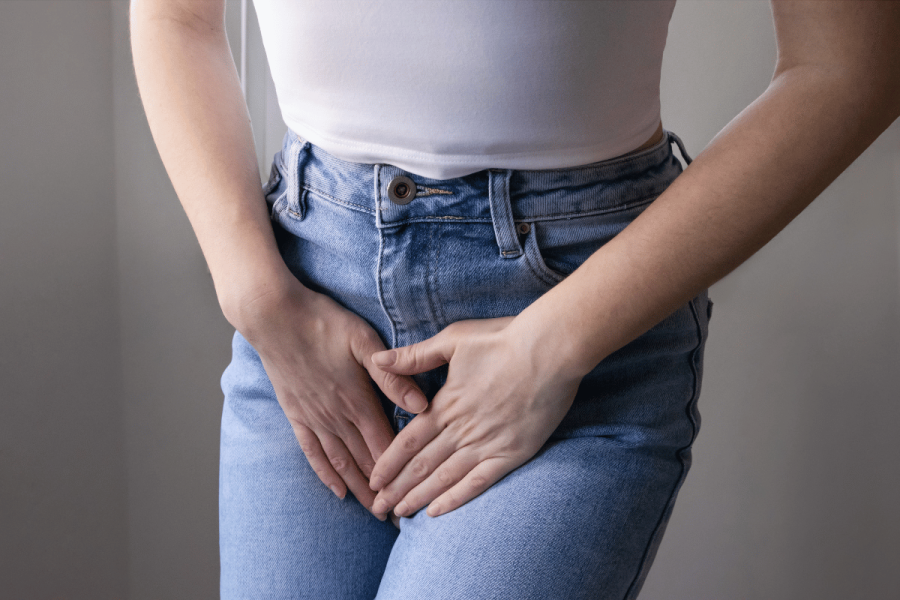
Lichen Sclerosus – a painful skin condition that affects the genital area, common during post-menopause — is thought to affect 3% of women in the UK, but it could be even more. We spoke to Dr Shirin Lakhani to find out more and what treatments are available.
Words: Katy Sunnassee. Images: Shutterstock.
Lichen sclerosus can occur at any age, but the peak incidence is before puberty and at menopause, so it could be hormone related. The condition is generally external, but it can affect the opening of the vagina.
The labia minora and majora can sometimes fuse together and you can’t separate them and they can also stick together in the midline, so you get narrowing of the vaginal opening.
Lichen Sclerosus is not bacterial or viral or a fungus, but doctors think it’s autoimmune, where the body’s own immune system attacks itself. It often looks like white patches on the labia, so it can look a little bit like vitiligo. It can coexist with vitiligo as well, which is autoimmune, and which makes it a bit more confusing.
Lichen Sclerosus causes inflammation in the tissue, which can lead to itching, burning, and either a thickening or thinning of the tissue; there can feel like little paper cuts in the tissue as well, which is really uncomfortable.
Even wearing underwear or jeans or walking can be excruciating. And intercourse can be very problematic, as a lot of women split every time they have sex. It’s often diagnosed late because women go to their doctor and say they’re itching down below, and often they won’t be correctly diagnosed and will be given thrush treatment.
But thrush is an infection, and the only similarity is the itching and the discomfort. Thrush gives you a discharge but Lichen Sclerosus doesn’t. ‘I’ve had women who’ve been on repeat thrush medication for years and no one’s actually examined them to see what it is! This is why it’s so important to examine yourself to know what your “normal” looks like,’ explains Dr Shirin Lakhani.
Treating the problem
‘The treatment for Lichen Sclerosus on the NHS is steroids to try to get it under control. But it’s a relapsing/remitting condition – so, you’ll have flare-ups and then you’ll have periods where you feel okay.
In my clinic I use platelet-rich plasma, where you take the person’s blood, spin it in a centrifuge to separate it, and then inject the white blood cells into the areas.
Then I also use Morpheus8, which is often done on faces and necks for rejuvenation and can be painful, but internally it’s not very painful at all. I do it with a local, topical anaesthetic.
In the vaginal canal it’s not painful, but externally it’s a similar sensation to having it done on your face,’ says Dr Lakhani. ‘Lichen Sclerosus can affect the anal area as well, and affect men too on their foreskin, the glans and the shaft, but it’s far more common in women.
It’s not sexually transmitted, and doctors think it may run in families. It can also progress to cancer in about four per cent of people due to repeated inflammation,’ she continues.
‘I’ve found that symptoms tend to worsen if people are overweight, but that might just be because of friction and extra sweat in the folds. Stress and eating a high-sugar diet can also trigger flare-ups. Antibiotics won’t really work as it’s not bacterial – more research is really needed,’ Dr Lakhani explains.
Know your normal!
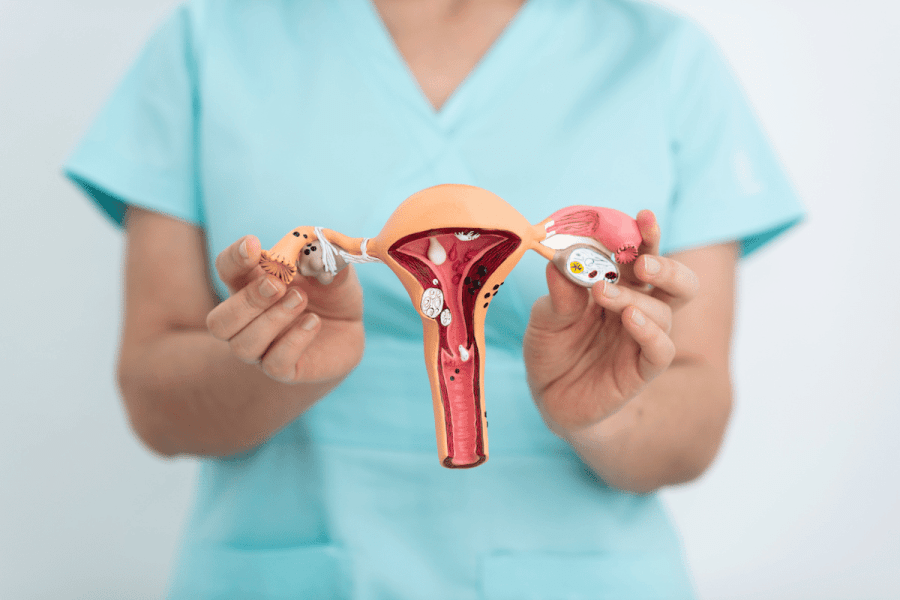
Dr Lakhani has teamed up with Pause Live to launch their Know Your Normal campaign to encourage women to check their vulvas more often.
‘The whole point of the campaign is that most women don’t know their normal. We are now accustomed to checking our breasts and that’s accepted and it’s not taboo anymore.
Most women are regularly checking their breasts, at least on a monthly basis. But what they don’t do is examine their genitals. Ideally I want women to start from a young age,’ says Dr Lakhani.
‘Men are more likely to notice problems like lumps in their testes, whereas women don’t even look at their vulvas. They don’t know what it looks like and it’s very different from person to person. So, the idea is you start examining early on and know what normal looks like for you, so you can pick up on any changes.
‘As we get older, there’ll be natural changes anyway, such as loss of volume and more dryness and things like that, but it’s important to pick up anything unusual. Things to watch out for include changes in colour, texture, any sort of lumps, anything where your labia start sticking together, which is called fusion,’ she explains.

Dr Shirin Lakhani works with women to help balance their hormones. She is a GP and fully trained aesthetic physician specialising in intimate rejuvenation (P Shot, O Shot), and is founder of Elite Aesthetics (elite-aesthetics.co.uk). She is also an expert in Lichen Sclerosus.