

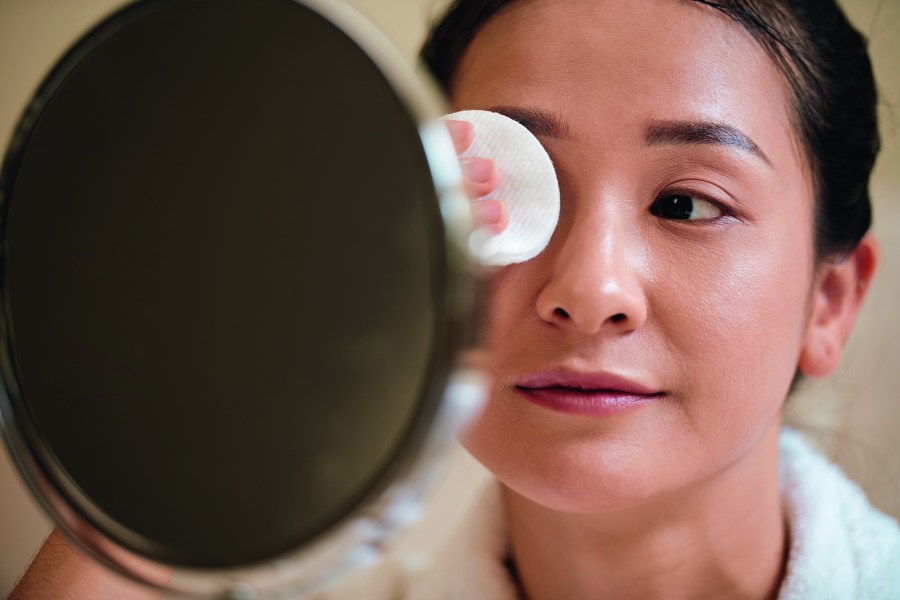
We’ve all done it – gone to bed with make-up on, not cleaned our brushes for months or even years, and used old mascara, all of which can lead to infections. It’s time to start afresh with these simple hygiene habits to keep your eyes healthy
Words: Katy Sunnassee | Images: Shutterstock
Remove make-up before bed
Not removing make-up before bed can cause make-up debris to make its way into the eye, leading to the cornea getting scratched, and rubbing your eyes in the morning can only make matters worse. Once you have a corneal abrasion, bacteria and fungi can more easily infiltrate the eye, leading to infectious keratitis.
‘If this is not treated promptly, these infections can encourage the growth of blood vessels in the cornea, leading to scarring; and untreated keratitis can lead to possible blindness,’ says Nimmi Mistry, professional services optician at Vision Direct (visiondirect.co.uk).
A recent study stated that infectious keratitis is among the top five leading causes of blindness globally. Other issues that may occur from sleeping in your make-up include the development of styes and chalazions. A stye is a tiny bump on the edge of the eyelid margin, commonly caused by a bacterial infection, such as blepharitis (which affects the eyelid margins/lashes). Generally, styes are acute in development with a quick resolution.
‘A chalazion is a swelling of the oil-producing gland known as meibomian glands (located at the lid margins), and are larger than styes,’ says Nimmi. Typically chronic, chalazions are painless and require no treatment. Meibomian glands work best when open, to maximise their efficiency in producing oils, an essential component of the human tear film, alongside water and mucous to keep your eyes protected and hydrated.
‘Eyeliner can potentially block the meibomian glands, increasing chances of developing chalazions and styes. Therefore, you must make sure when removing make-up to remove it all carefully and use products that are eye friendly,’ she adds.
Clean your brushes and applicators
A 2023 study found that one in 10 Brits admit to not cleaning their make-up applicators often enough. And another study, in 2020, found that most make-up brushes contain staphylococcus aureus, which is a major pathogen for the eye. ‘It can infect the tear duct, eyelid, conjunctiva, cornea, anterior and posterior chambers, and the vitreous chamber,’ says Nimmi. These bacteria could lead to bacterial conjunctivitis, symptoms of which include:
- Yellow or green sticky discharge in one or both eyes that forms a crust during the night that may prevent your eye or eyes from opening in the morning.
- Redness in one or both eyes.
- Itchiness in one or both eyes.
- A gritty feeling in one or both eyes.
- Tearing or watery eyes.
- Photophobia (sensitivity to light).
To kill any harmful bacteria that linger in your make-up brushes and prevent these issues, it’s a good idea to wash the brushes every 7-10 days.
Don’t use expired products
In the same way that dirty make-up brushes can harbour bacteria, so can the make-up products themselves. Even though make-up contains preservatives that help prevent bacteria from growing and living in the products, they can still be contaminated if used regularly. ‘Take mascara – the spool touches the eyelashes and then is placed back inside the product; this happens repeatedly, often without the spool being cleaned, potentially leading to the spread of bacteria to the eyes,’ says Nimmi.