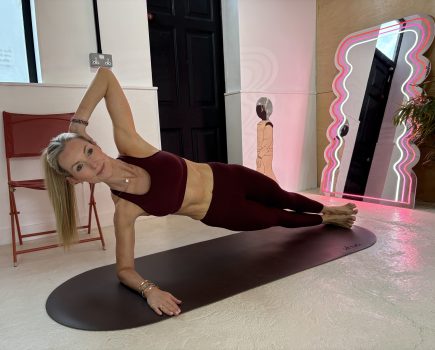

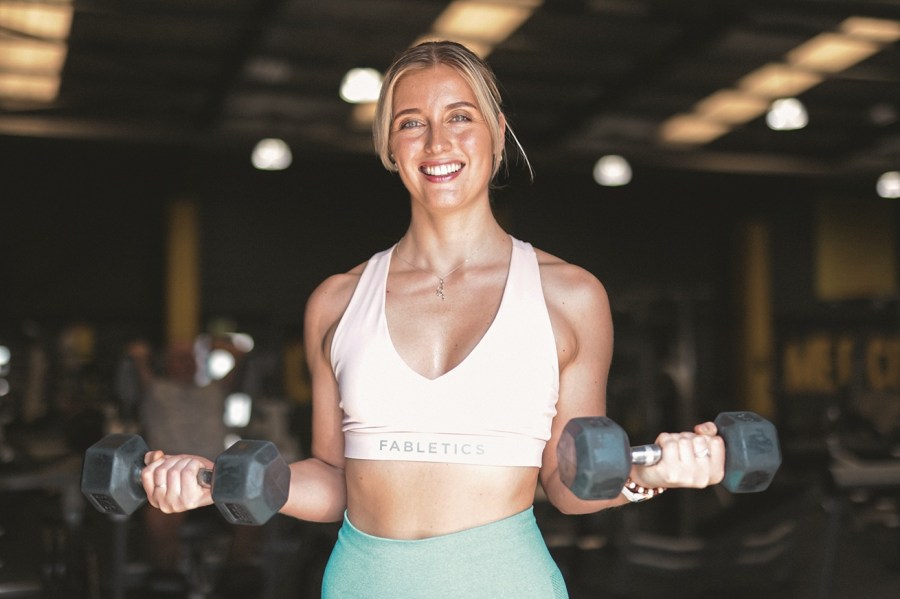
Don’t be a slave to your scales, as you’ll actually be healthier, slimmer and stronger if you gain muscle – even if that means you weigh more, says personal trainer Chloe Thomas. Plus, she shares her at-home body dumbbell workout for strength and a leaner frame.
Words: Chloe Thomas. Images: Bass Film Co.
Although seeing a diminishing number on your bathroom scales might be the ultimate test of successful weight loss, you’d be wrong. Weighing yourself is counterintuitive because muscle is denser than fat, which means it takes up less space in the body.
This is why someone with more muscle mass would look leaner and smaller than someone with the same weight but a higher body fat percentage. Muscle is compact and firm, whereas fat is more spread out and takes up more volume. So, you might weigh the same – or even more – if you gain muscle, but you will look smaller and be healthier.
For instance, I have gained 16kg but I have toned up and stayed the same dress size. I have actually built muscle and lost some body fat. When I left the modelling industry eight years ago, I got a personal trainer to help me build muscle and I avoided using the scales to track progress.
Now, as a coach myself, I advise clients to not solely rely on scales for progress. Unfortunately, we have it drilled into us as women that the scale is the most important way to track progress from diet culture – but it’s not!
When you stand on a scale you are weighing absolutely everything: your hair, your bones, your muscle, your stomach. Whenever your weight goes up or down it doesn’t necessarily mean that it’s body fat you have gained or lost – it could be water retention, muscle or just something you’ve eaten. You can also gain up to about 2kg just before and during your period due to water retention caused by the hormonal change of the rise in progesterone.
Menstruation may also cause bloating and digestive issues, which can cause temporary weight gain, but again it doesn’t mean fat gain. You can also use measurements and photos as a barometer of fat loss. For my own journey, I have mainly used pictures as a measure of progress.
If I had used the scales, I would have been upset with the weight gain, but using pictures, I can see my body is more toned and I look better. My body fat percentage is actually in the “athletic” range for women, so I’m very healthy even though my scale weight has gone up.
This is also why you need to be careful with BMI, as it only takes into consideration weight and not body fat percentage or muscle mass. Another advantage is that muscle has a higher metabolic rate than fat, which means it burns more calories. On average, each pound of muscle burns 6-7 calories per day while a pound of fat burns around 2-3 calories.

So, having more muscle increases your basal metabolic rate (BMR), which is the number of calories a body needs to maintain basic functions like breathing. This is why building muscle helps with fat loss as it increases the amount of energy your body uses, even when you’re not exercising. It may cause the scale to go up but you will lose fat faster and feel better.
Having more muscle is also beneficial for your health, not just for how you look. Strength training and building muscle helps improve bone density, which can prevent conditions like osteoporosis, especially in older adults and through menopause. Regular strength training and muscle-building exercises have been linked to improved mental health, reducing anxiety, depression and improving your mood.
Having more muscle also makes everyday tasks easier and reduces the risk of falls and injuries. All of these benefits can contribute to better long-term health and quality of life.
Shape your body!
Try this at-home full body dumbbell workout to strengthen muscles for a leaner frame. It targets glutes, quads, biceps, core, back, shoulders and triceps. All you need is a set of dumbbells, a mat and 20 minutes to exercise.
Start here…
- Warm up before you begin to avoid injury to muscles.
- Try stretching your limbs, then march on the spot for five minutes.
- Make sure to cool down and stretch post workout.
- Spend 40 seconds on each exercise.
- Rest 20 seconds between each exercise.
- Perform four rounds total.
- Try an extra round or two if you have more time.
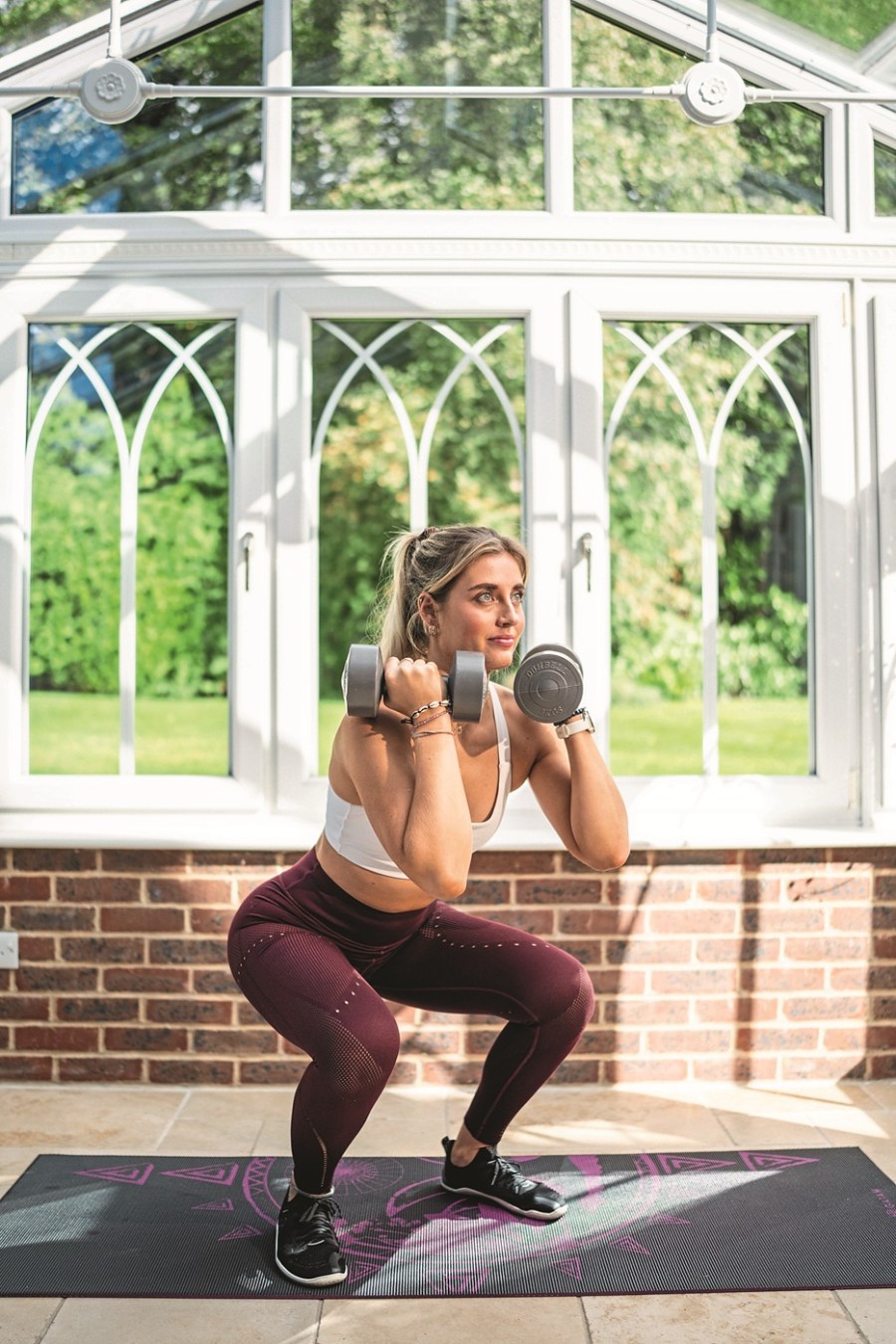
Push press
Hold the dumbbells at shoulder height. Slightly bend your knees into a mini squat (pictured), then drive through your legs as you press the weights overhead simultaneously. Lower the weights back to your shoulders with control and repeat.
Tricep Extensions
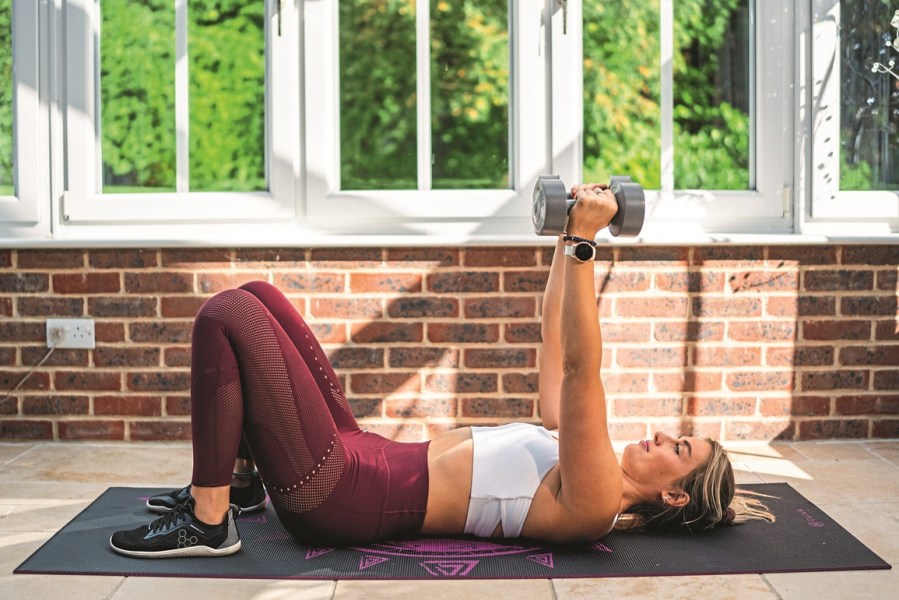
Lie on your back with knees bent and feet flat on the floor. Hold the dumbbells above your chest with arms straight. Lower the weights slowly towards the top of your shoulders, bending at the elbow (pictured), then press back up. Repeat.
Renegade rows
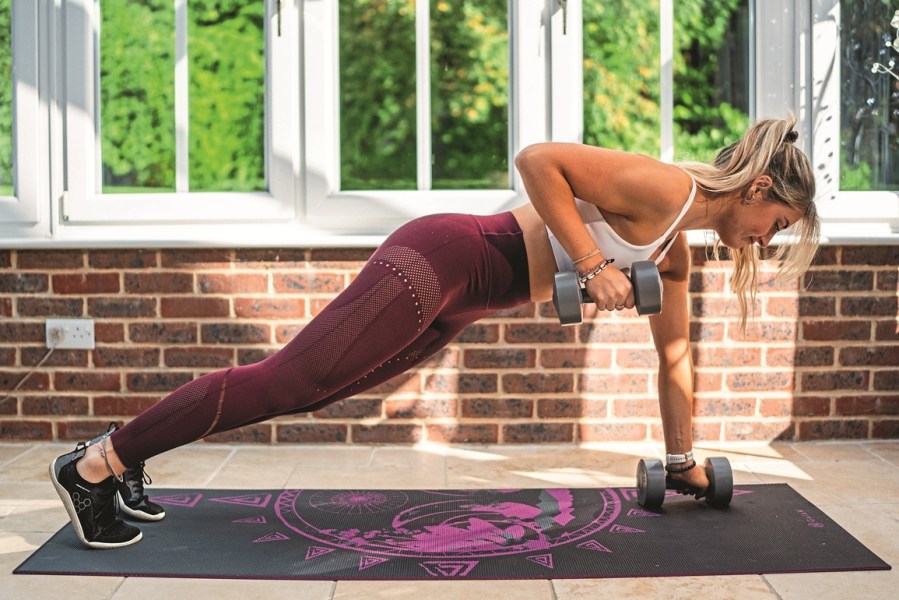
Start in a high plank position, holding a dumbbell in each hand with wrists under shoulders. Keeping your body still, row one dumbbell toward your waist by driving your elbow back (pictured), then lower it slowly. Repeat on the other side, then alternate rows. Focus on engaging your core to avoid twisting and maintain control throughout the movement.
Plank to crunch
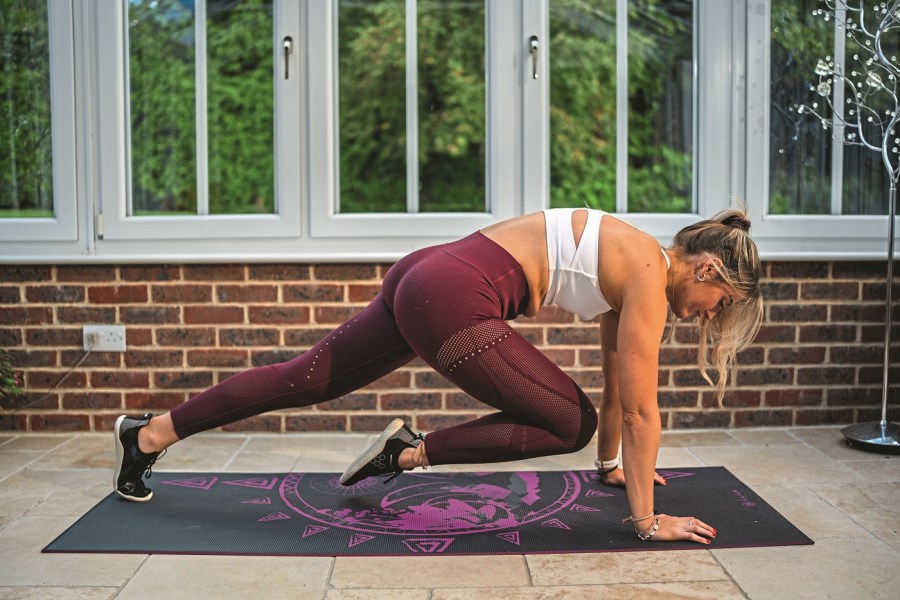
Start in a high plank position, with hands under shoulders and body in a straight line. From here, drive one knee toward your chest, engaging your core, then return to the plank. Repeat on the other side, alternating knees.
Lunges to bicep curls
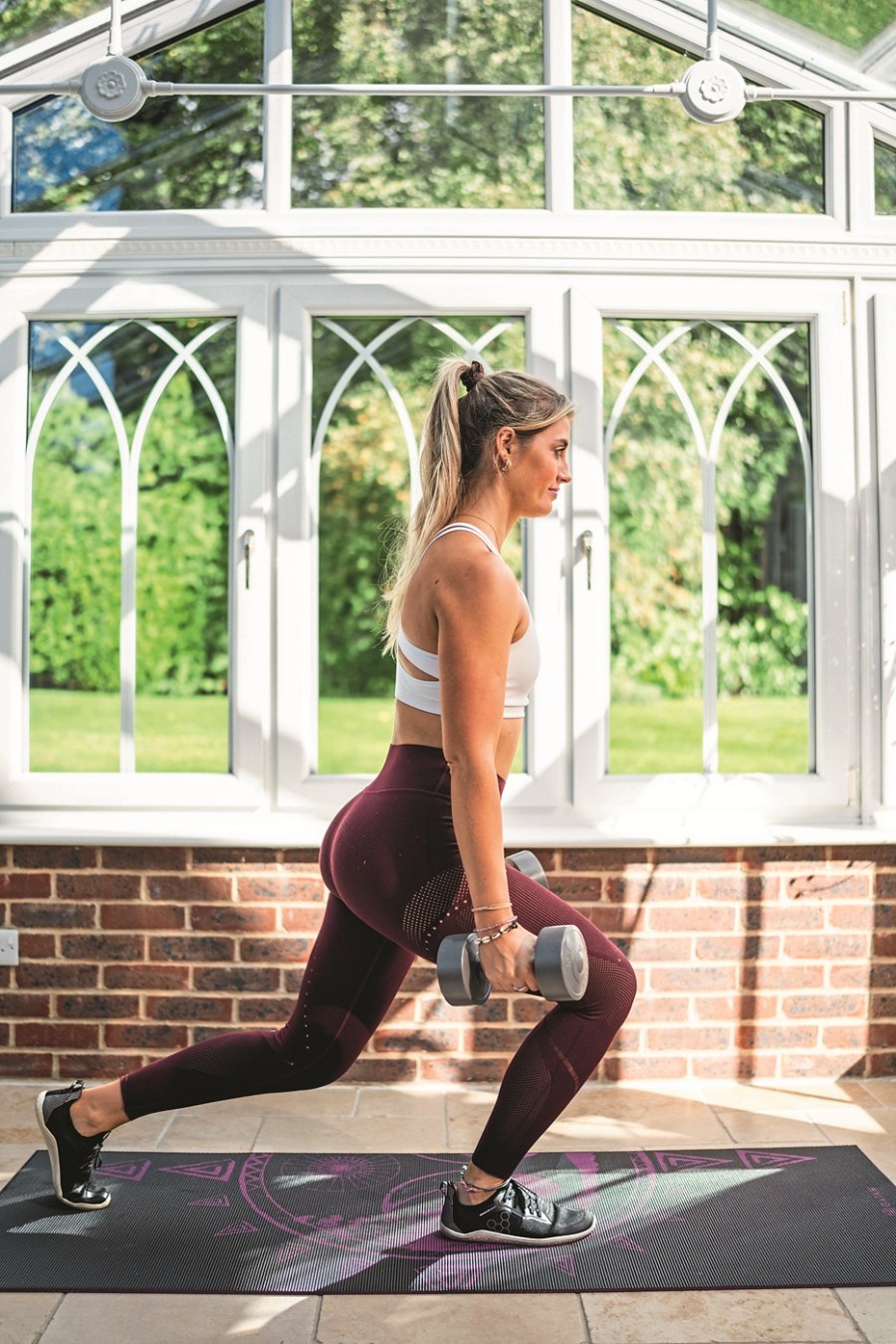
Stand with dumbbells in each hand, arms by your sides. Step one foot forward into a lunge (above), lowering your back knee toward the ground while keeping your chest upright. At the bottom of the lunge, curl the dumbbells towards your shoulders. Lower the weights as you step back to the starting position, then switch sides.
Chloe Thomas is a personal trainer, women’s health and mindset coach, and the founder of online holistic coaching platform Chloe Inspires Coaching. Find out more at chloeinspires.com.