
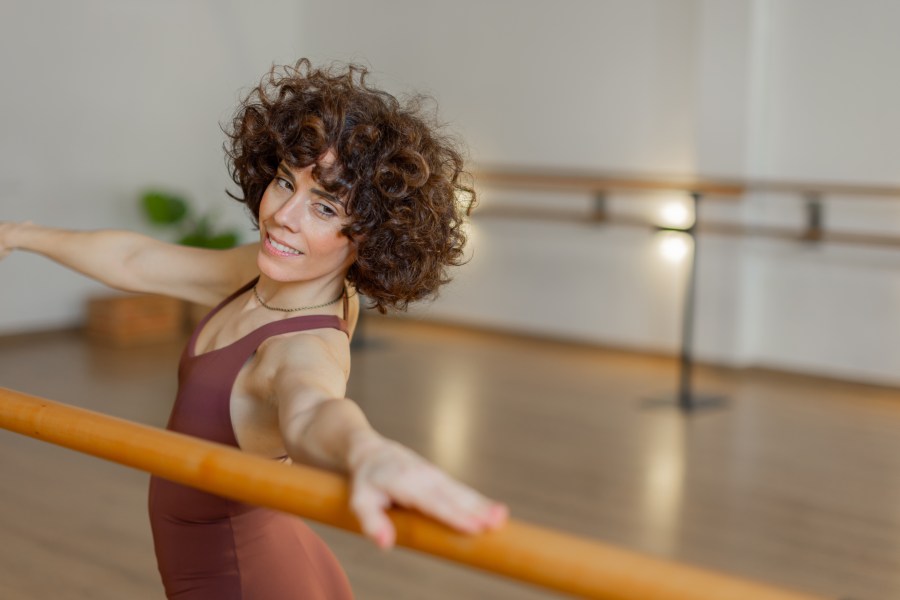
Movement specialist Vanessa Michielon shares a barre workout to help tone your body from top to toe
Words & Images: Vanessa Michielon
Barre is a low-impact, full-body workout that blends ballet moves with core-strengthening and muscle-building exercises inspired by Pilates and resistance training. Created in London by ballerina Lotte Berk back in the ‘50s, barre is set to the beat of the music and uses strength-training techniques to exhaust the muscles and improve active range of motion.
Even though the method has evolved and today many different approaches exist, one of the signature features is the famous muscular “burn” or shake caused by the frequent isometric holds. These are performed by maintaining the same position for quite a while, often adding small pulsing motions. This type of contraction, where the length of the muscles involved almost doesn’t change, is not only effective at building endurance but also mental resilience and concentration, so that at the end of the practice you feel empowered and more confident.
Barre is also great for improving your posture and quality of movement: in each position you are reminded of creating length in your body, especially in your spine, and to move with precision and attention to the small details.
Barre improves cardiovascular endurance too as it keeps your heart rate high for a sustained period. While the pace of each barre session can vary from class to class, from slower and steadier ones that focus more on isometric holds, to faster-moving HIIT ones, almost all Barre sessions will incorporate quick cardio bursts, lifting your heart rate up.
Try this sequence to get your muscles fired up for a great workout.
1. Wide second
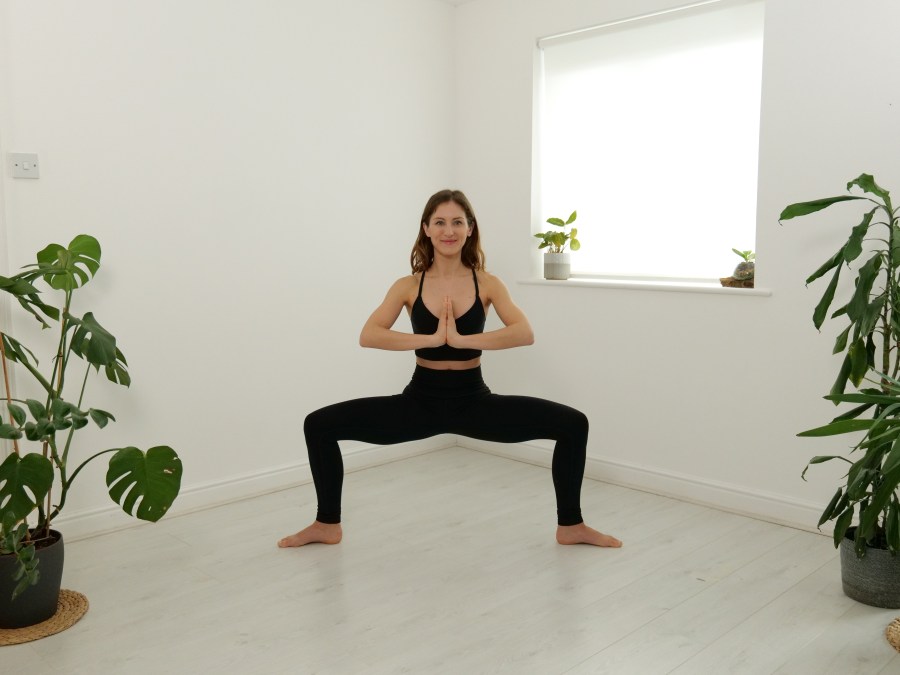
This is the barre version of a grand plié in second position (a classic ballet move).
- Step your feet wide and turn your thighbones outwards, toes and knees pointing in the same direction. Bend your knees until you can comfortably maintain your tailbone pointing downwards, spine in neutral.
- Gently “wrap” your knees backwards and maintain a static hold, or repeat the tiny wraps to create even more space in your groin area.
- Benefits: opens hips; works your mid-glutes, quads and inner thighs; and strengthens core for better balance.
2. Curtsey
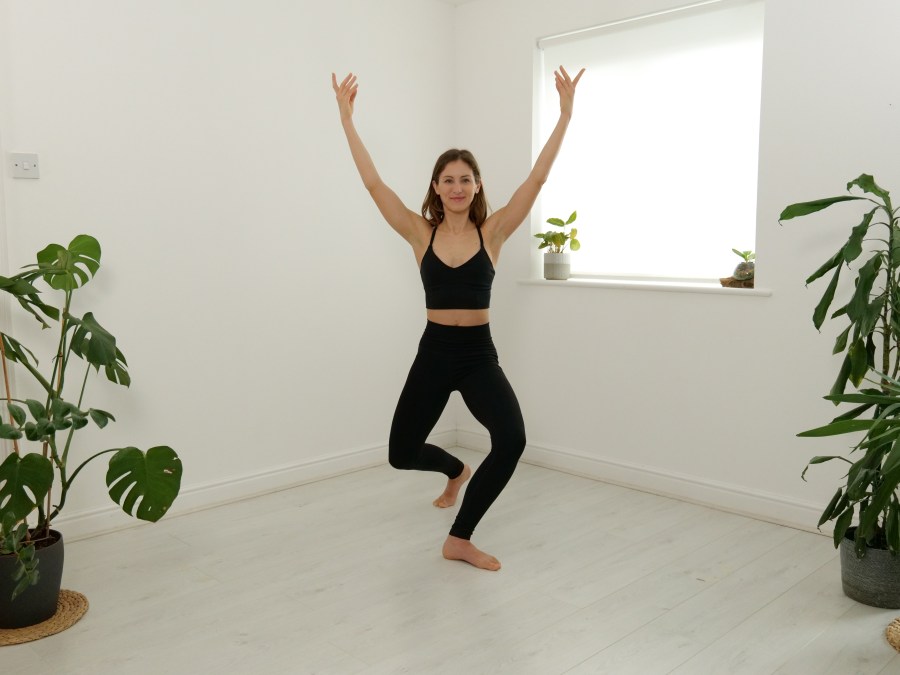
This is a basic curtsey made to raise your heart rate.
- From a V position (heels together, toes slightly apart), step one foot back and align the back toes with your front heel, maintaining external rotation in your thighs. The back heel is lifted and the hips and shoulders are facing forwards, arms are raised.
- Bend your knees as much as possible and keep your weight in the middle. Your spine is in neutral and your abdominals pull in and up.
- If you want to make this shape move and work your core and arms more, fold over your front leg as if you wanted to bow down, then come back up straight creating a V shape with your arms.
- Repeat with a fast tempo for one minute, then switch sides.
- Benefits: ankle stability, better balance, and works your quads and mid-glutes.
3. Leg lift
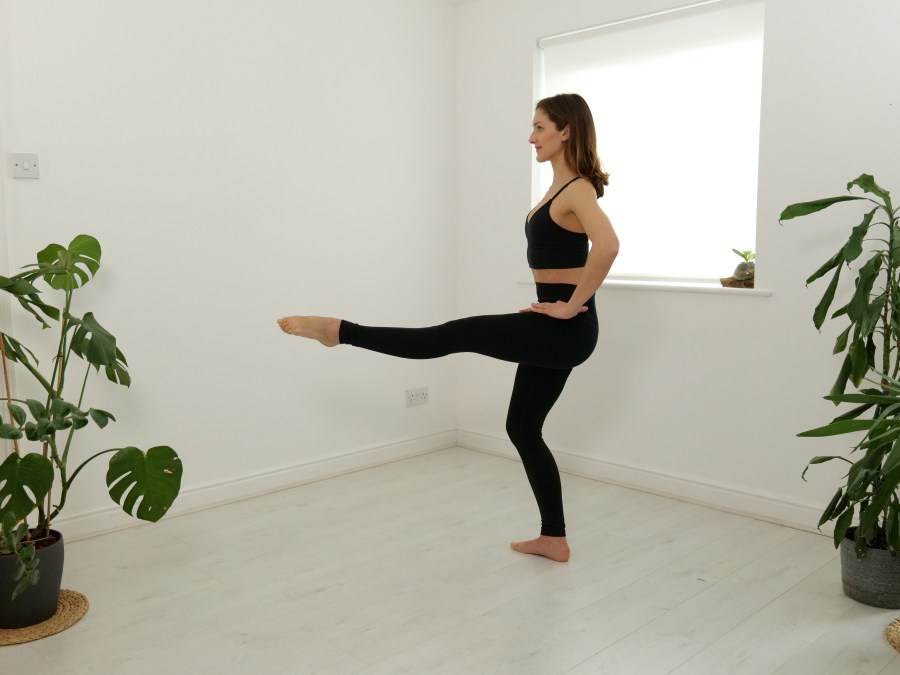
This is the slow barre version of a ballet grand battement.
- Starting from V position, bend both knees and keep your spine neutral.
- Lengthen one leg in front of you and point your toes, keeping the leg externally rotated.
- Hug your abdominals in and lift your leg maintaining length through your whole body. Then lower your leg, lightly tapping the floor with your toes.
- Focus on spiralling both legs outwards (make sure your standing knee is always tracking towards your toes) and keeping your tailbone pointed towards the floor, especially when your leg is lifted. Repeat on the other leg.
- Benefits: builds quad strength, core connection and balance.
4. Standing pretzel (isometric and full range eccentric)
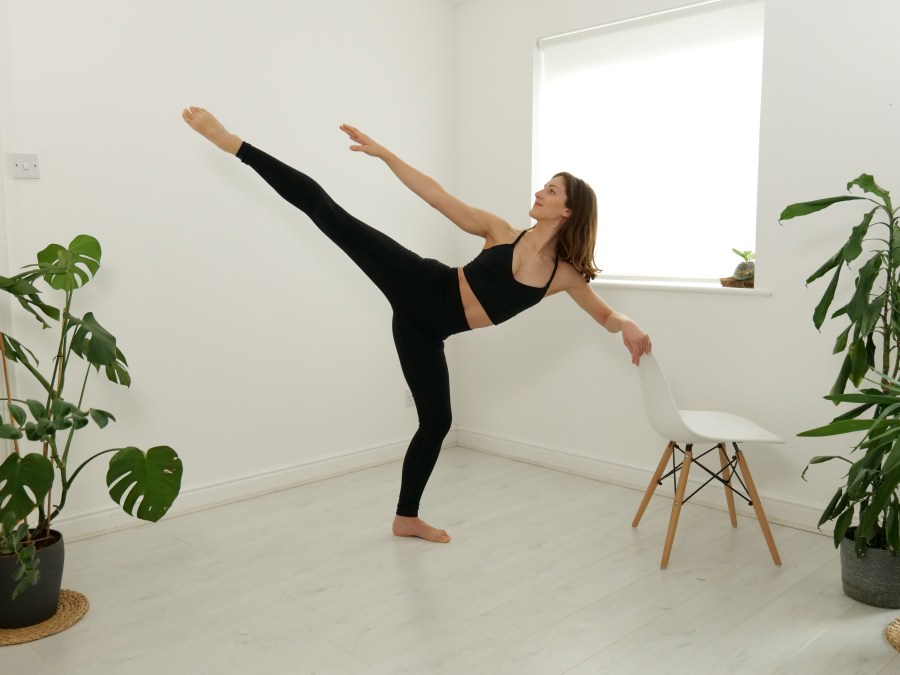
This is one of the most iconic and complex barre positions.
- Standing side-on to the barre or support, place one forearm on top of it and step slightly away, aligning your shoulder with your elbow (imagine you are doing a side plank at the barre).
- Bend your knees and turn both feet 45 degrees towards the barre. Lengthen the external leg sideways away from the barre and lift it, maintaining your spine neutral and your hips one on top of the other. Then bend the lifted leg and press it behind you (ideally you can feel some stretch in the front of your hips), without arching your back. Finally lift your foot a little higher than the knee, creating an internal rotation.
- You can keep this shape and add tiny knee pulses upwards. Or take the full range variation with your leg straight. In this case, lift and lower your leg, lightly tapping toes on the floor. Enhance the ab connection with an oblique squeeze at the top. Repeat on the other side.
- Benefits: works your obliques and mid-glutes, improves shoulder stability, and increases active range of motion.
5. Forearm foldover
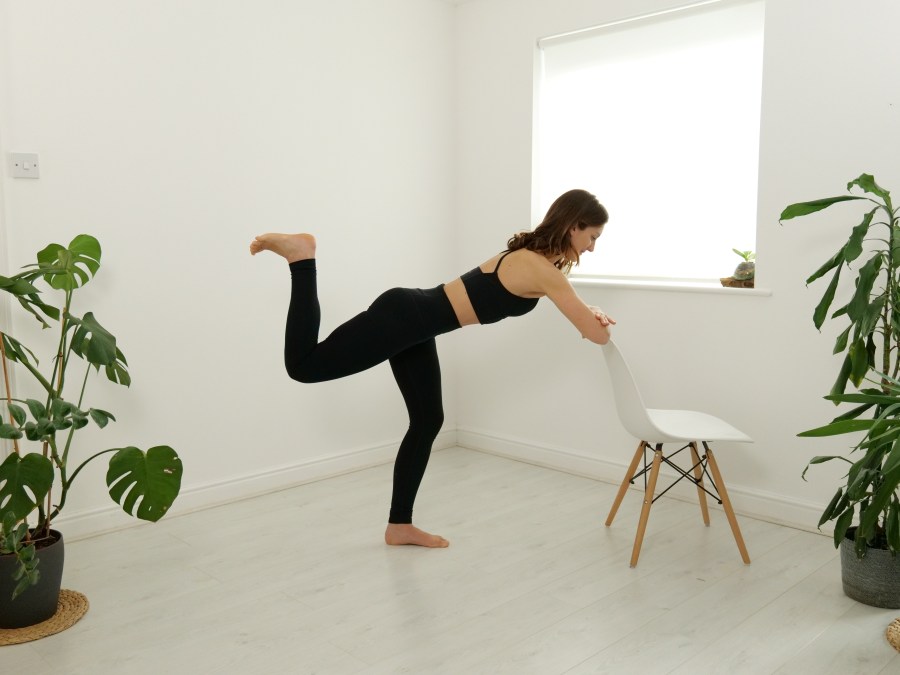
This uses small pulsing movements for maximum effect.
- Place your arms in Cossack position on the support (forearm over forearm), bend your knees and step your feet away from the barre until your spine is inclined but still in neutral.
- Squeeze your shoulder blades downwards, draw your abdominals in and up, and lift one of your legs behind you keeping knee bent, without losing the neutral placement of your pelvis (don’t arch your back).
- Flex your lifted foot and squeeze it towards your sit bones, like a hamstring curl. You can then add small repetitive squeezes (imagine you have a sponge behind your knee) or presses of your foot towards the ceiling, maintaining complete stillness in the rest of your body. Repeat on the other side.
- Benefits: works back, hamstrings and gluteus maximus; and improves shoulder and pelvic stability.
6. Low arabesque
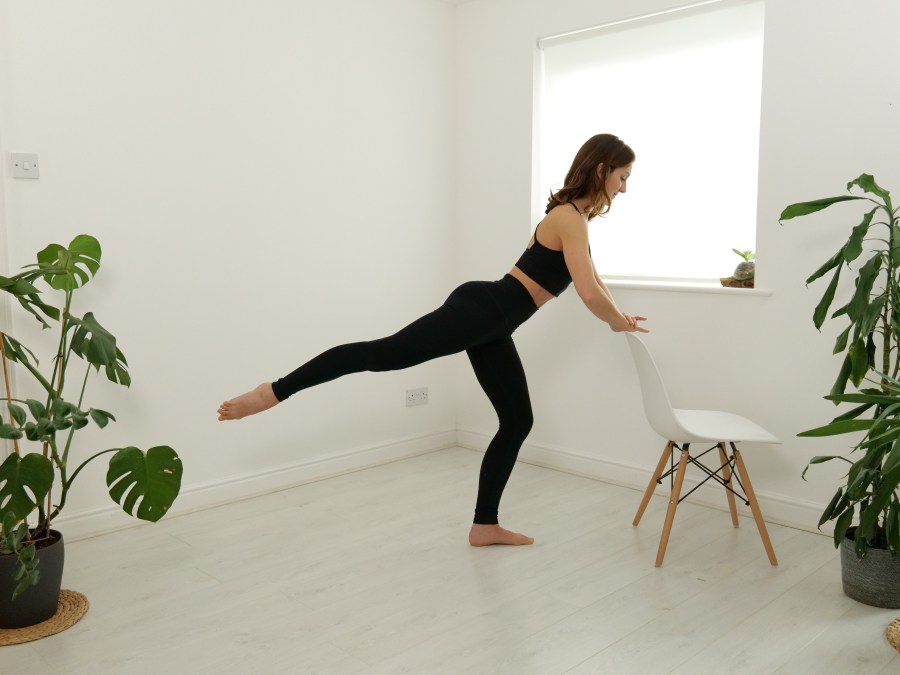
This is the barre version of a ballet arabesque.
- Rest both hands on your support and slightly step away from it. Start with your feet in a small V position, then lengthen one leg behind you, maintaining the external rotation as you gently shift your torso forward. Your toes are pointed, your low abdominals engaged.
- Lengthen your leg even more and lift it, without overly arching your back, then lower it down to lightly tap the floor. Imagine you are connecting your lifted heel with the opposite shoulder, so you can more easily maintain your leg directly behind your hip. Repeat on the other side.
- Benefits: Works your back, hamstrings, mid-glutes and gluteus maximus.
Vanessa Michielon is a movement specialist and founder of the Transformative Movement method, empowering people of all walks of life to embrace yoga, Pilates and dance to improve physical health and achieve a balanced state of mind. Find her online classes at vanessamichielon.com and follow her at instagram.com/vanessamichielon.