

You’ve given up sweets, fizzy drinks and office treats — so why is your blood sugar still rising? Experts reveal the everyday ‘health foods’ hiding surprising amounts of sugar and the smarter swaps to try instead.
Words: Amy Mica Marsden. Images: Shutterstock.
The world is hooked on sugar, and studies show our consumption of it is only going up.
Each year globally, the average person consumes 17 kilograms of the stuff, with over 200 million metric tons consumed in total in 2023 – a rise of almost 4 million tons from the previous year.
But it’s not just the obvious sugar culprits which are to blame; many of the foods marketed to us as ‘healthy’ can contain large amounts of sugars without us even knowing it.
The damage that excess sugars can cause
It’s well documented that too much sugar can cause a whole range of short- and long-term health issues. In fact, regularly consuming sugar-sweetened beverages can raise the risk of developing type 2 diabetes by 26%, and high sugar intake is linked to a 38% higher risk of developing cardiovascular diseases.
But it isn’t just disease we need to worry about.
‘When we consume excess sugar (or trigger constant and high spikes of insulin), especially refined sugar, we trigger rapid blood glucose spikes, which demand an insulin response, which eventually leads to insulin resistance if repeated chronically,’ says Camila Frezard, Clinical Nutritionist and co-founder of Smart Coffee.
‘A single high-glycemic food isn’t catastrophic,’ she continues, ‘but the pattern of constant blood sugar spikes creates downstream issues: hormonal imbalance, increased inflammation, energy crashes, impaired cognitive function, and accelerated ageing at the cellular level.’
Camila also points out that blood sugar dysregulation can directly affect our nervous systems.
‘Rapid glucose spikes trigger cortisol response (the stress hormone), which over time dysregulates your entire HPA axis. This means sustained sugar overconsumption actually impairs your body’s ability to regulate stress, sleep, and mood.’
Natural sugars vs ‘free’ sugars
Not all sugars were created equal, and not all of them are bad for your health.
For a healthier lifestyle, the NHS recommends cutting down on ‘free sugars’ often added to food and drinks (like biscuits, chocolate, and fizzy drinks), or occurring naturally in foods such as honey, syrups, and unsweetened fruit juices and smoothies.
Free sugars are so-called because they have been released from the plant or cellular structure they came from, making them easier for the body to absorb quickly – and triggering blood sugar spikes.
However, sugars that naturally occur in things like fruit, dairy and whole grains are less likely to cause such a spike, as they often come paired with fibres and minerals which help to slow their absorption into the bloodstream.
Hidden sugars and their swaps
Cutting down on free sugars might seem easy on the surface, but many ‘health foods’ often contain large amounts of sugar, meaning our careful diet plans are still being thrown off.
However, Camila recommends that it’s not just about cutting out sugars altogether.
‘Rather than asking “what sugar should I eat,” ask “what can I pair with this to slow absorption”,’ she advises.
‘Pair carbs with protein, fat, or fibre. A piece of toast with almond butter triggers a completely different blood glucose response than toast alone. Same food, different outcome based on what you pair it with.’
‘Of course, perfection isn’t the goal,’ she adds. ‘One dessert won’t create insulin resistance. A lifetime of constant blood sugar spikes will. Focus on the default, what you eat daily, rather than occasional indulgences.’
Here are 6 of the biggest culprits of hidden sugars, according to Camila, along with the swaps she recommends to keep your blood sugar stable.
1. Breakfast cereals (commonly 12g-15g of sugar per serving)
‘That’s equivalent to three teaspoons of sugar before you even eat anything else.’
The swap: ‘Whole oats (steel-cut, not instant) with protein powder, nuts, and cinnamon. Cinnamon actually helps moderate blood glucose response.’

2. Flavoured yoghurts (15-20g of sugar per serving)
‘The marketing says “probiotic health” — the reality is sugar + live cultures. The sugar often outweighs the benefit of the probiotics.’
The swap: ‘Plain Greek yoghurt + fresh berries + a small drizzle of honey. You control the sugar content (4-5g instead of 15-20g), and you get the protein benefit intact.’
3. Granola and “healthy” granola bars (10-18g of sugar per bar)
‘Often marketed as “natural” or “organic.” The sugar content is identical to a candy bar.’
The swap: ‘Raw nuts + seeds + a small amount of dark chocolate (70%+ cacao). Same satisfaction, dramatically lower sugar impact.’
4. Plant-based milk alternatives (up to 12g of sugar per serving)
The sugar contained in these is often added as “natural sweeteners”.
The swap: Be sure to check for unsweetened versions when you do your next shop
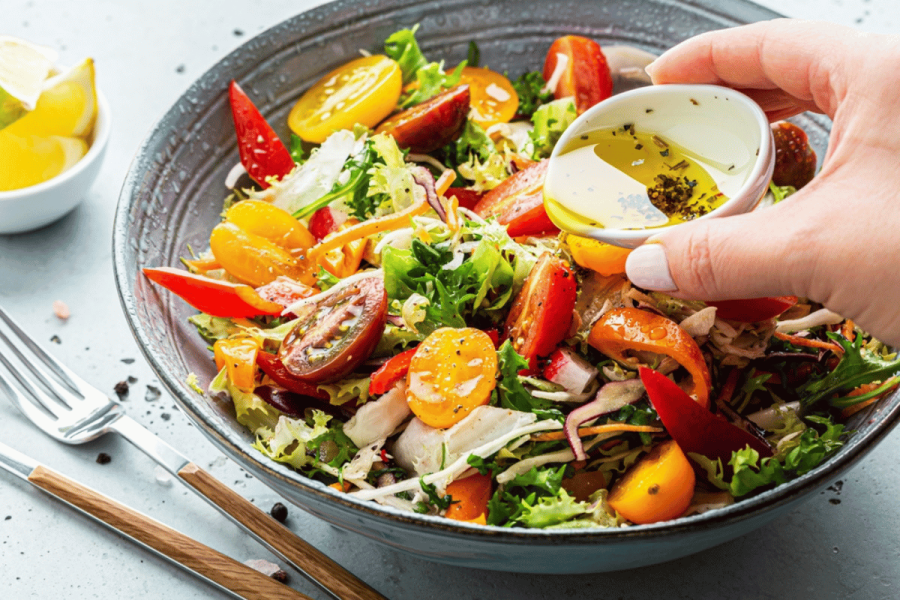
5. Salad dressings (typically 3-5g of sugar per serving, two tablespoons)
‘Even “vinaigrette” versions often contain added sugars.’
The swap: ‘Olive oil + vinegar + mustard (which has negligible sugar). Or make your own tahini-based dressing.’
6. Protein bars and “fitness” snacks (10-15g of sugar per bar)
‘The marketing positions them as performance tools, but the sugar content is closer to a chocolate bar.’
The swap: ‘Whole food (apple with almond butter, cheese with nuts, hard-boiled eggs). Real food has fibre and cofactors that processed bars don’t.’