
Short on time? Try our quick asparagus recipes here
Make the most of asparagus while it’s in season – cook it properly, build simple meals around it, and stretch a single bunch further than you might expect
Knowing how to cook asparagus properly makes all the difference. It is one of those ingredients that feels like a treat – short season, distinctive flavour, and at its best when handled simply. But it’s easy to fall into a rut – boiled, buttered, done.
Treat it properly and it becomes far more versatile, working just as well as a quick side as it does at the centre of a meal.
Cook it well, and it can be far more than a quick side. With a bit of attention, asparagus becomes something you can build meals around, stretch across several dishes, and use with real confidence in the kitchen.
Get the basics right for better flavour every time
Before you cook anything, it’s worth getting the basics right. Good asparagus doesn’t need rescuing, just not ruining.
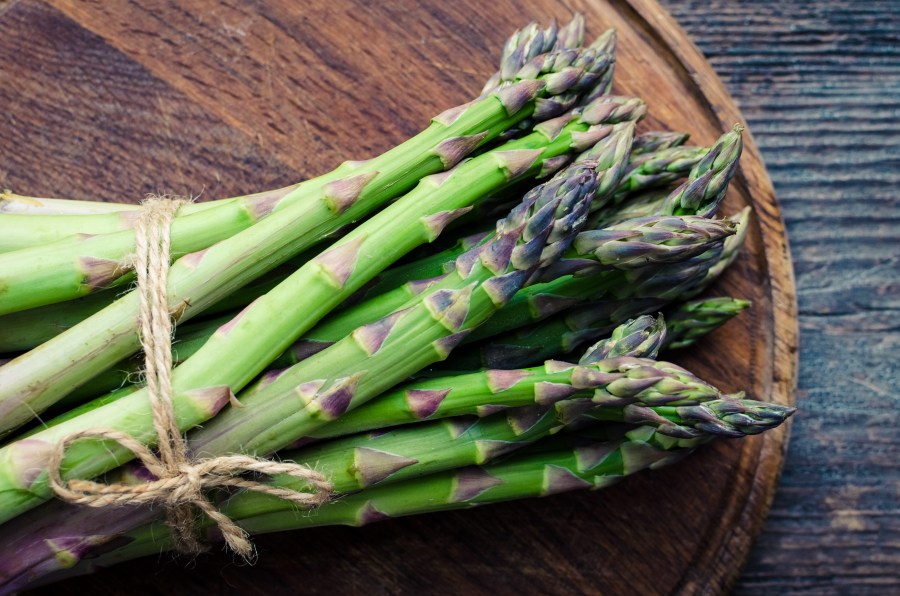
Look for firm, bright spears with tightly closed tips. Thickness isn’t a quality marker – thick spears can be excellent, but they may need slightly longer cooking or peeling at the base.
When it comes to trimming, snapping works, but it can waste more than necessary. A knife and a quick trim of the woody end is usually more economical.
How to cook asparagus properly
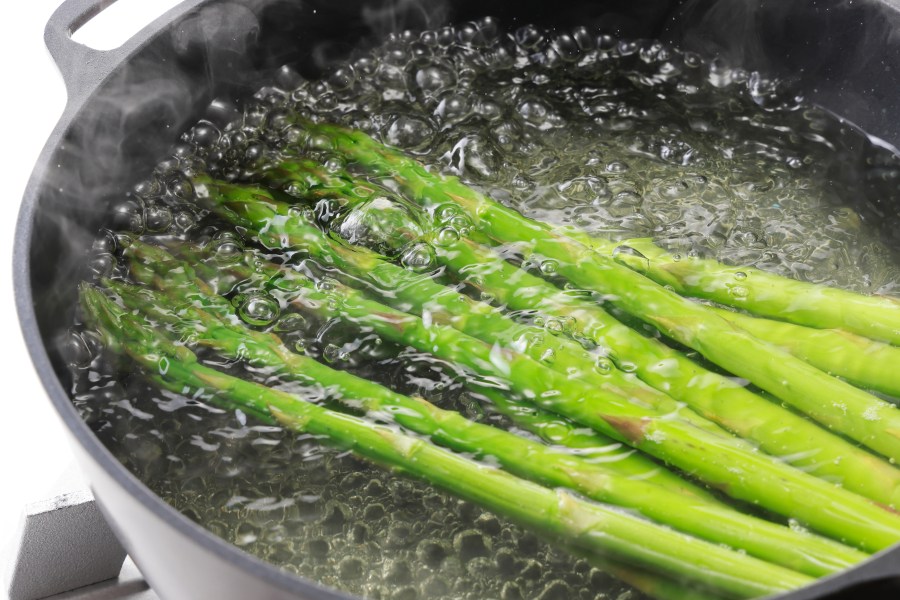
Cooking is where most people go wrong. Overcooking turns asparagus soft, dull and slightly sulphurous. You’re aiming for tender with a bit of bite.
Boiling: 3-4 minutes in salted water
Steaming: slightly longer, but more controlled
Griddling or frying: 3-5 minutes for colour and flavour
It’s worth testing rather than guessing – you’re looking for tenderness with resistance, not softness.
If you’re cooking for more than one or two people, it’s worth thinking about timing everything else around the asparagus rather than the other way round. It’s one of those ingredients that doesn’t wait particularly well, so having plates ready and everything else cooked means you can serve it at its best. That small shift makes a noticeable difference, especially with simpler dishes where the asparagus is doing most of the work.
Asparagus is also best served straight away. Letting it sit, even briefly, pushes it past its best.
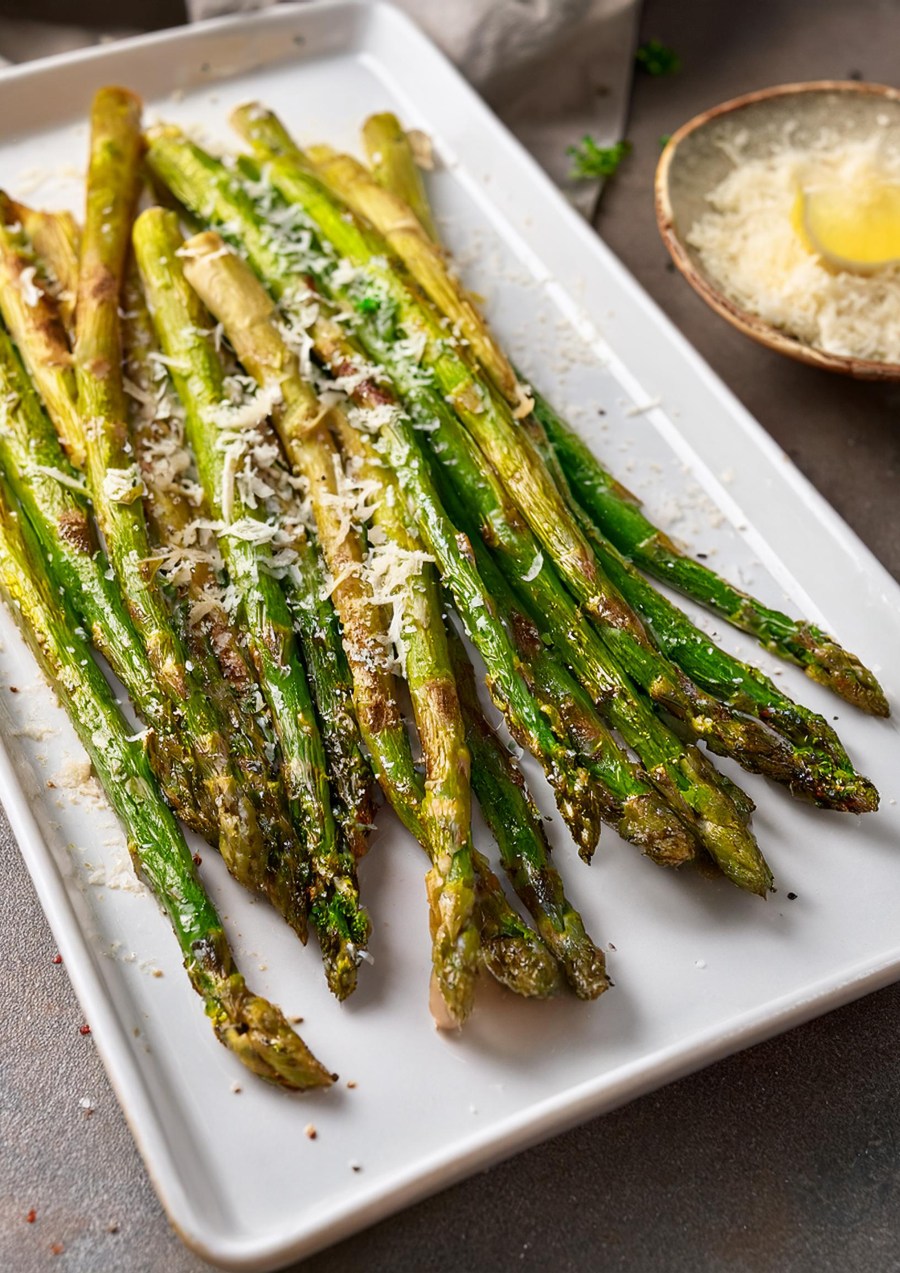
Griddled asparagus with Parmesan & pink peppercorns
Simple, quick and exactly what good asparagus needs
Ingredients
1 bunch asparagus
1 tbsp olive oil
60g Parmesan (about 2oz)
1 tsp pink peppercorns, lightly crushed
Squeeze of lemon
Method
Heat a griddle pan until hot.
Toss asparagus in oil and cook for 3–4 minutes per side.
Add Parmesan so it softens slightly.
Finish with peppercorns and lemon juice.
Serve immediately.
Asparagus with caper egg mayo
Humble on paper, but rich, sharp and exactly what good asparagus needs
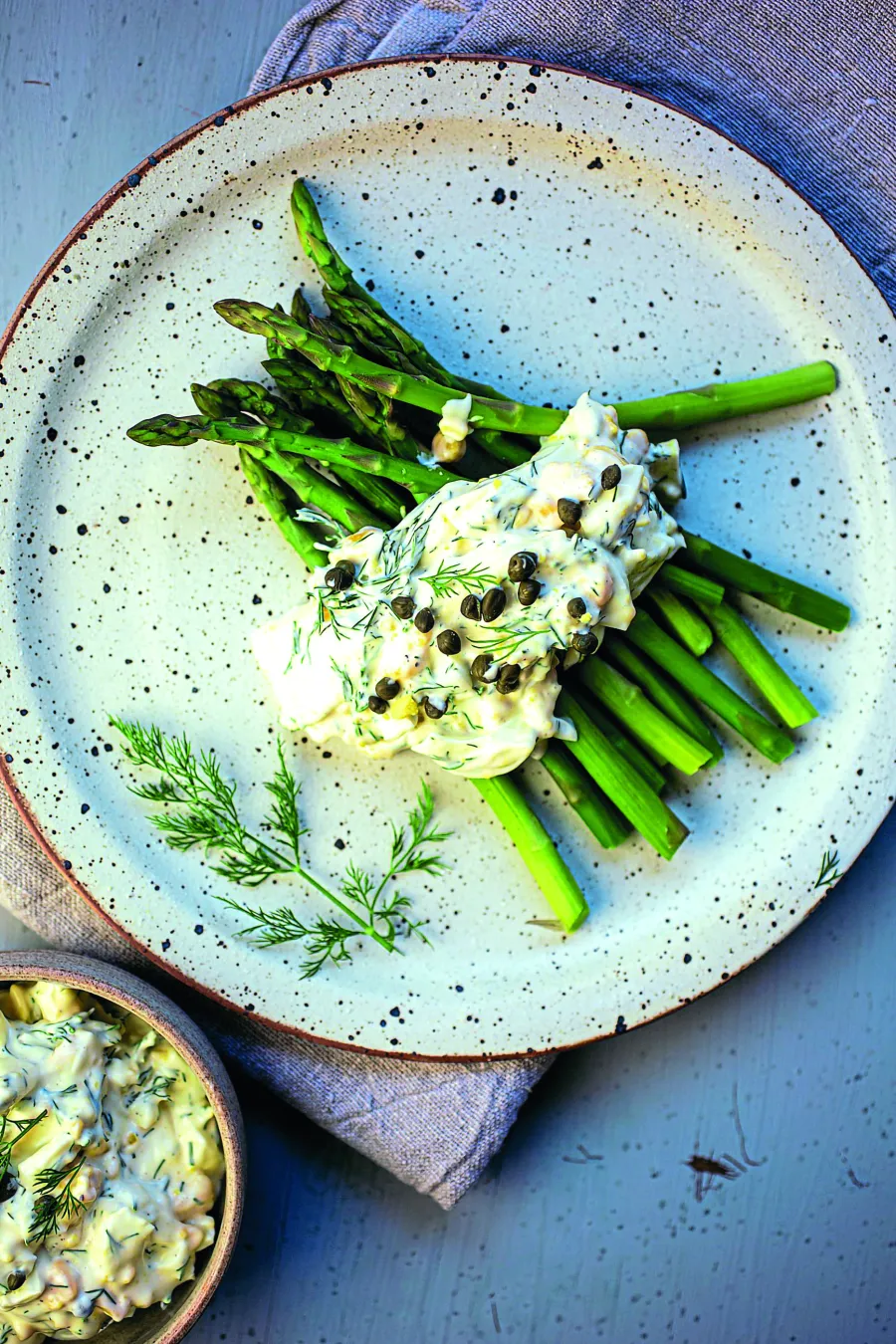
Ingredients
1 bunch asparagus
2 eggs
2 tbsp mayonnaise
1 tbsp capers, chopped
1 tsp Dijon mustard
Salt and pepper
Method
Boil eggs for 8 minutes, then cool, peel and chop.
Mix with mayonnaise, capers and mustard.
Cook asparagus in boiling salted water for 3–4 minutes.
Drain and serve with the egg mayo spooned over.
Turn asparagus into simple, satisfying meals
Once you move beyond serving asparagus on the side, it becomes much more useful. The key is balance.
Asparagus is delicate, so pair it with:
– gentle richness (butter, cream, cheese)
– brightness (lemon, herbs)
– soft textures (rice, pasta, eggs)
It doesn’t need heavy sauces or long cooking. In most cases, it’s best added towards the end so it keeps its flavour and texture.
Asparagus risotto
A classic way to turn asparagus into a proper meal
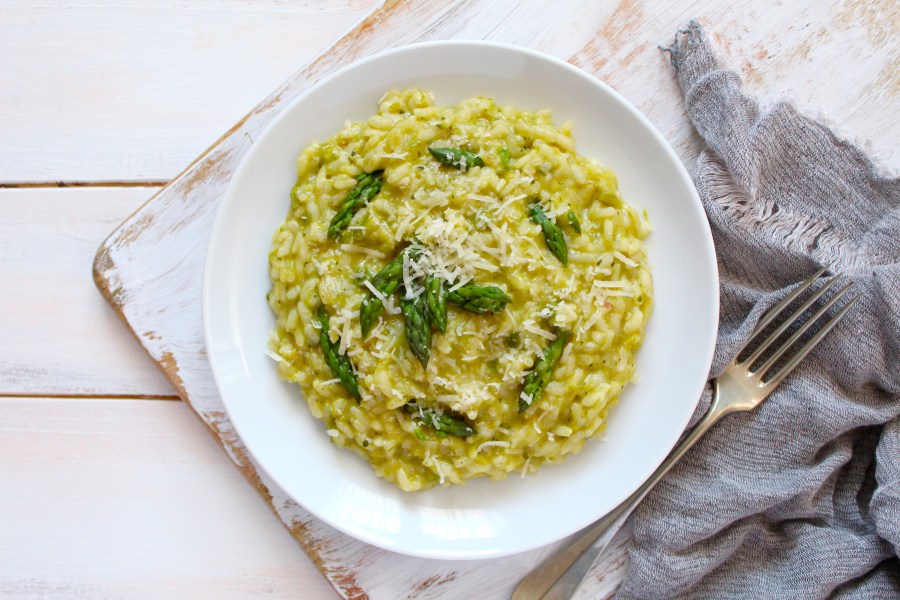
Ingredients
300g risotto rice (about 10½oz)
1 bunch asparagus, chopped
1 litre stock (about 4 cups)
1 onion, finely chopped
2 cloves garlic
50g Parmesan (about 2oz)
Knob of butter
Salt and pepper
Method
Cook onion in oil until soft, then add garlic.
Stir in rice and coat well.
Add stock gradually, stirring as it absorbs.
Add asparagus halfway through cooking.
Finish with Parmesan, butter and seasoning.
Asparagus pasta with lemon & Parmesan
Quick, fresh and ideal for midweek cooking
Ingredients
200g pasta (about 7oz)
1 bunch asparagus
1 tbsp olive oil
1 garlic clove
Zest and juice of 1 lemon
40g Parmesan (about 1½oz)
Method
Cook pasta according to pack instructions.
Cook asparagus with oil and garlic for 3–4 minutes.
Drain pasta, reserving a little cooking water.
Toss everything together with lemon and Parmesan.
Add a splash of cooking water if needed.
Choose the right spears and handle them properly
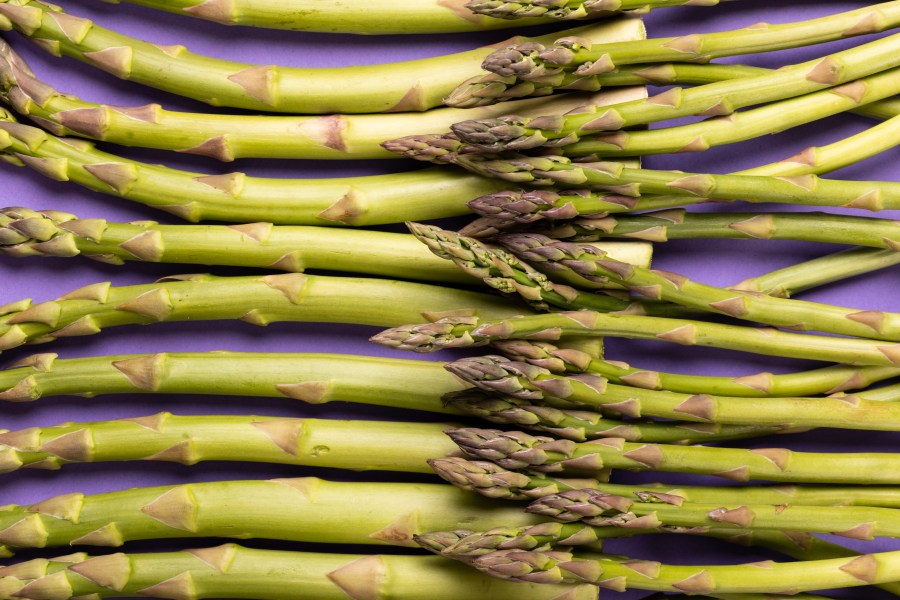
There’s a common assumption that thin asparagus is more tender and therefore better, but that’s not really the case. Thick spears can have a deeper flavour but may need peeling at the base if they’re fibrous. Thin spears cook more quickly and need very little prep beyond trimming.
You might hear references to male and female plants – males tend to produce thicker, more uniform spears, while females are often thinner – but in practice this isn’t something to worry about when buying.
White asparagus is grown without light, which gives it a milder, slightly more earthy flavour. It’s widely used in Europe, particularly in Germany, and does occasionally appear in the UK. It usually needs peeling and slightly longer cooking.
Most of the time, though, you’ll be choosing between thick and thin green spears. Both are useful – it’s just a matter of adjusting how you cook them.
Make asparagus go further without losing flavour
Asparagus doesn’t keep well. Even in the fridge, it starts to lose its sweetness within a few days.
To get the most from it:
– store upright in a glass with a little water (like flowers)
– use thicker stems for soups or blended dishes
– don’t waste the ends – they’re ideal for stock
A small amount, used well, can carry a dish. Cutting spears into shorter lengths and distributing them evenly means you get asparagus in every bite, rather than a few large pieces that disappear quickly.
It’s also worth thinking in terms of contrast. Asparagus on its own can feel light, but paired with something more substantial – eggs, potatoes, grains – it becomes part of a balanced dish rather than an add-on. That’s often the difference between using it sparingly and using it well.
Asparagus & pea soup
Fresh, bright and ideal for using up what’s left
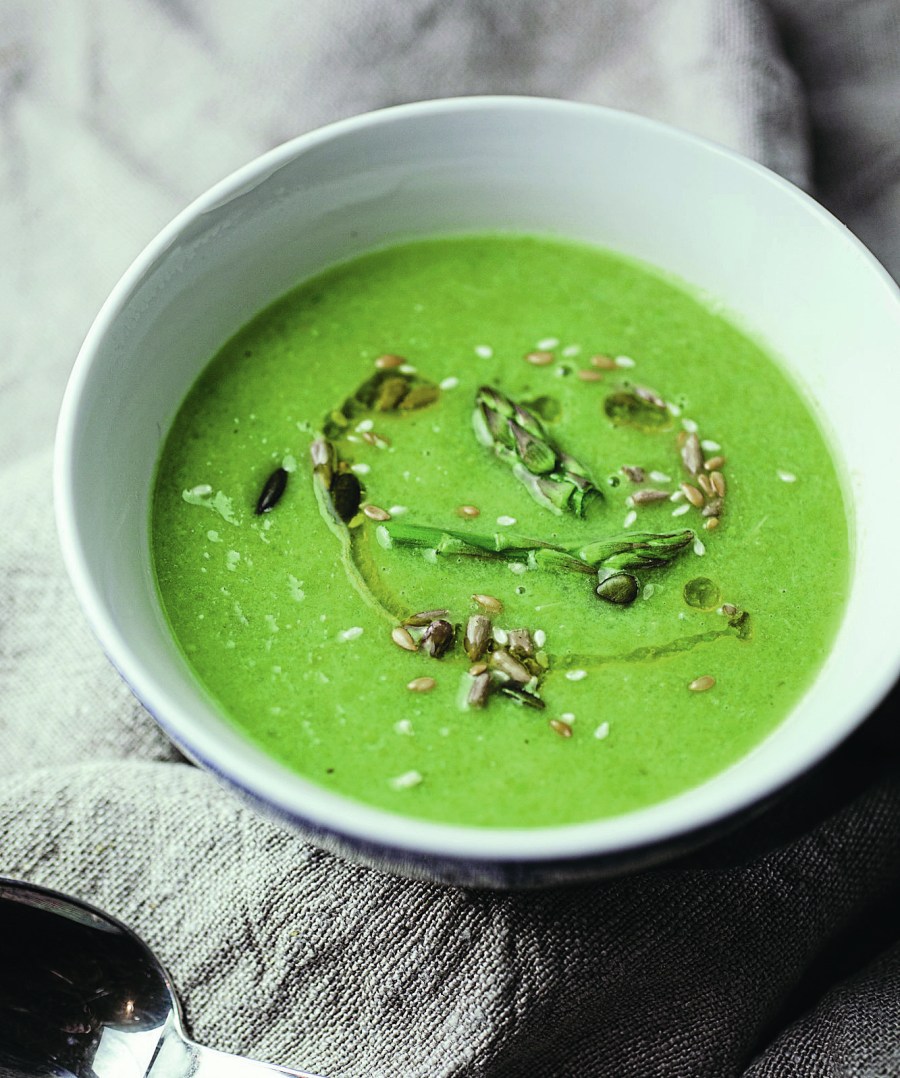
Ingredients
1 tbsp olive oil
1 onion, chopped
1 garlic clove
300g asparagus (about 10½oz), chopped
200g peas (about 7oz)
750ml stock (about 3 cups)
Salt and pepper
Fresh herbs (optional)
Method
Cook onion in oil until soft, then add garlic.
Add asparagus, peas and stock.
Simmer for 10–15 minutes.
Blend until smooth and season to taste.
Asparagus & potato frittata
A good way to turn small amounts into something more substantial
Ingredients
200g asparagus (about 7oz)
4 eggs
2 cooked potatoes, sliced
1 tbsp olive oil
40g cheese (about 1½oz)
Method
Cook asparagus in oil for 3–4 minutes.
Add potatoes and warm through.
Pour over beaten eggs and cheese.
Cook gently, then finish under a grill until set.
Make the most of asparagus while it’s in season
Asparagus isn’t around for long, which is part of the point.
It’s worth cooking it simply, but also worth making the most of it while you can – whether that’s a quick plate with butter or something more substantial.
Once you know how to cook asparagus properly and use it thoughtfully, it becomes far more versatile and even the simplest dish will feel like something worth sitting down for.
Growing your own? Our complete guide to growing asparagus covers everything from planting to harvest.