

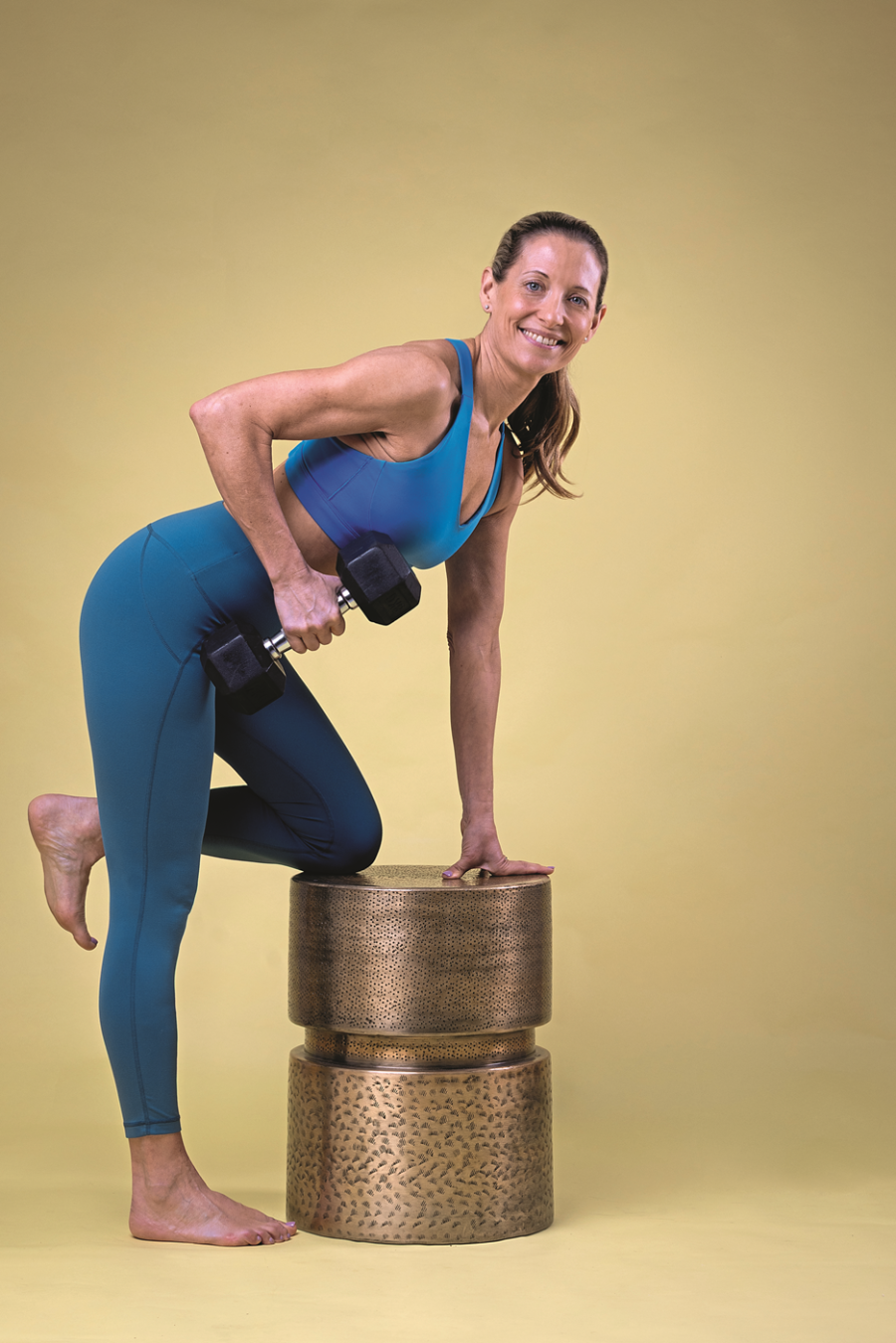
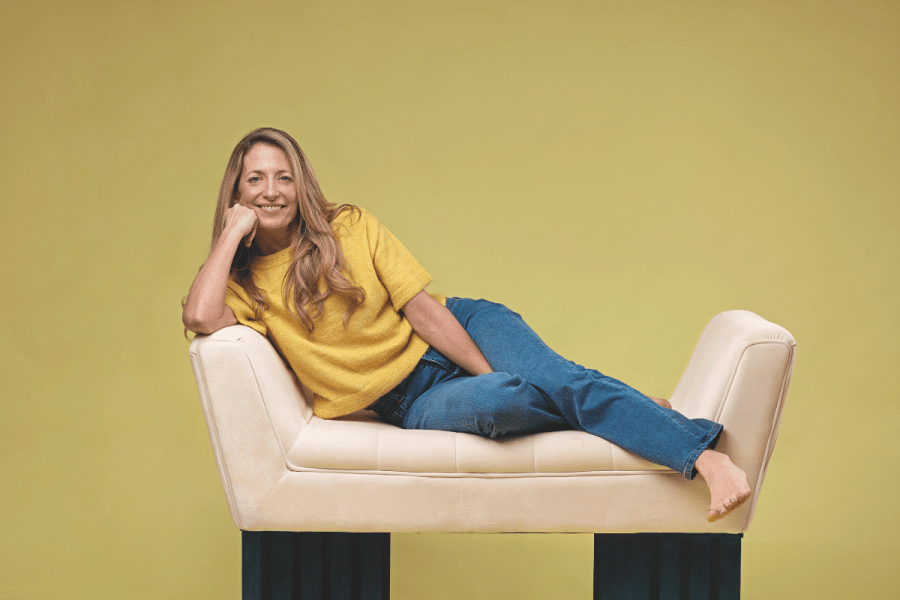
Women’s health coach and bestselling author Kate Rowe-Ham, 49, talks to Jo Ebsworth about her personal battles with disordered eating, perimenopause and ADHD – and how movement and nutrition have helped to heal her health.
Words: Jo Ebsworth. Images: Agi Gallacher.
I had quite a healthy relationship with food and exercise as a kid. I was actually a very good skier and trained with Chemmy Alcott for Great Britain until I tore my anterior cruciate ligament at the age of 13. But then there was a massive shift, because I developed an eating disorder in my late teens.
Unfortunately, I’d always grown up with the narrative that playing sport and keeping fit was about body shape and body size, which I truly believe is wrong. My mum and I have had very honest, open conversations about this, so it’s not remiss of me to say that I think this was her narrative.
I think many women of my generation struggled in the 90s. We were in that Kate Moss “nothing tastes as good as skinny feels” era, and that’s when things went totally wrong for me in my mid-20s. I ran my first marathon, and exercise became about burning as many calories as possible. I also fuelled myself on as little as possible, and I actually lost my periods for a year.
That went on for a while, but then I had my kids in my late 30s, and I wanted to try to be a good role model for them. I wouldn’t call myself large, but I wasn’t very comfortable in myself or the way I looked. That’s when I decided to become a personal trainer after having my third child at the age of 40.
As a PT, I did a lot of cardio. I was doing free HIIT classes live on Instagram every morning at 6.30am, and then I’d teach spinning classes afterwards and go running for myself. The problem was, I thought cardio was the only way to look after myself because I’d never received that educational piece about the power of weightlifting.
And you know what? I wasn’t fitter or in better shape back then than I am now. In fact, my body was exhausted because I was doing all that movement but not eating enough, which is something I think so many women do. Unsurprisingly, things only got worse when I started to experience crippling joint aches, anxiety, night sweats, panic attacks and heart palpitations.
At the time, I was your perfect example of a “sandwich generation” woman. My dad had been diagnosed with stage IV pancreatic cancer, and my youngest had been diagnosed with a rare genetic lung condition, so I was in and out of hospital with both and it was a crazy time.
My breaking point came when I thought I should drive into a tree; not to take my life, but to switch off the noise and step out of my life so I couldn’t be at everyone’s disposal.
I desperately wanted to feel like my old self again, so when I finally worked out that I’d been hit by perimenopause, I set about making significant changes because I knew I couldn’t spend another 30 years living that way.
Menopause wasn’t spoken about 10 years ago, so I did my own research. I’d come from this binge-drinking culture, so I was drinking way too much and binging on food too. I was stuck in a boring cycle of restricting myself Monday to Thursday and feeling great on the Friday, only to rip the plaster off and fall off the wagon over the weekend.
That’s why I decided to give up alcohol in December 2020 and start feeding my body what it needed in perimenopause. I also really focused on lifting heavy weights while eating protein and fibre, and I slowly worked out what it was that I needed to function better.
I got really caught up in social media at this point, which made things harder. Don’t get me wrong, talking about my symptoms online helped me feel like I wasn’t alone, and I finally realised I was perimenopausal after I hosted my first live Instagram chat with Dr Rebecca Lewis from Newson Health. But I think there’s so much conflicting information out there about how to eat and exercise that it becomes very confusing.
My biggest message to women when you’re trying to make changes and break through all the noise is to ask yourself: ‘Does it feel sustainable? Does it feel right for me?’ If it does, choose that one thing and stick with it. If it doesn’t work, try something else that you’ve seen. But don’t try different things all the time.
I’ve been on a mission to raise awareness about menopause for years. I was one of the first fitness people to talk about menopause, and in 2023, I launched my online platform, Owning Your Menopause (OYM; owningyourmenopause.com), to help women navigate menopause positively using movement, nutrition, community and mindfulness.
I also wrote my first book, Owning Your Menopause: Fitter, Calmer, Stronger in 30 Days (£16.99, Yellow Kite), to help women improve their health without having to spend lots of money, and I’m a proud patron and campaigner for Menopause Mandate.
But when I lost my dad, and my post-menopausal mum said, ‘What about me? What should I be doing?’, I realised that good health is about more than the changes you make in midlife – it’s about the changes you make for life.
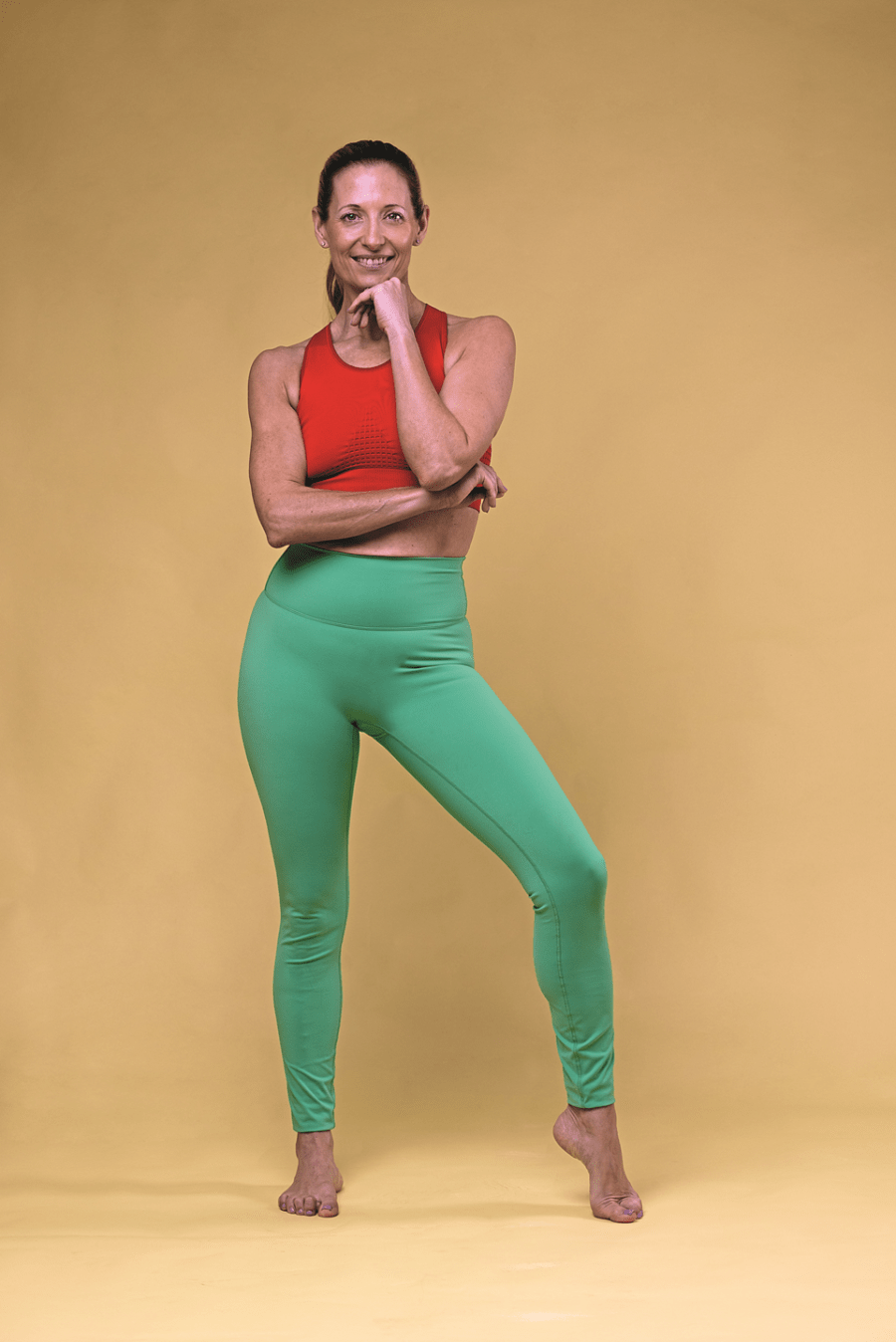
Over the last two years, I’ve become focused on the bigger picture of longevity. Longevity is the umbrella term for your lifespan (the number of years you live) and your health span (the number of years you live in good health) combined, but it’s your healthspan that we really want to nurture and focus on.
Women are living for around five to 10 years longer than men but in poorer health, and we know why. It’s because there’s a massive gender health gap and we put ourselves last because we are the carers. Personally, I want to be able to get on and off the loo when I’m older and open a bottle of water and get out of bed so I can live as independently as possible, and – I’m going to say it – without being a burden to my children.
Because while I would never describe my dad as a burden, you do end up caring for your parents. There’s that massive circle of life, and I want my kids to have just good memories of me, and for me to go out the right way, if that makes sense.
Muscle is the key to longevity. The more muscle we have, the more able we are, and the more balance and stability and strength we have. Your brain and your heart are also muscles, so we need to keep working on all of those things.
That’s why the three pillars of my new book, The Longevity Solution: 21 days to health, strength & vitality (£16.99, Yellow Kite), are movement, nutrition and mental wellbeing. We absolutely must lift weights and eat enough protein and fibre to futureproof our bodies, but it’s just as crucial that we look after our minds.
It’s all about the Japanese concept of ikigai, which is about finding your reason for being and your purpose for getting out of bed in the morning. Because purpose and accomplishment and fulfilment is joy, and joy is being with other people. Socialising is essential, but so is finding understanding and support in community. When I went through perimenopause, I had five people living in my house, but I felt very lonely.
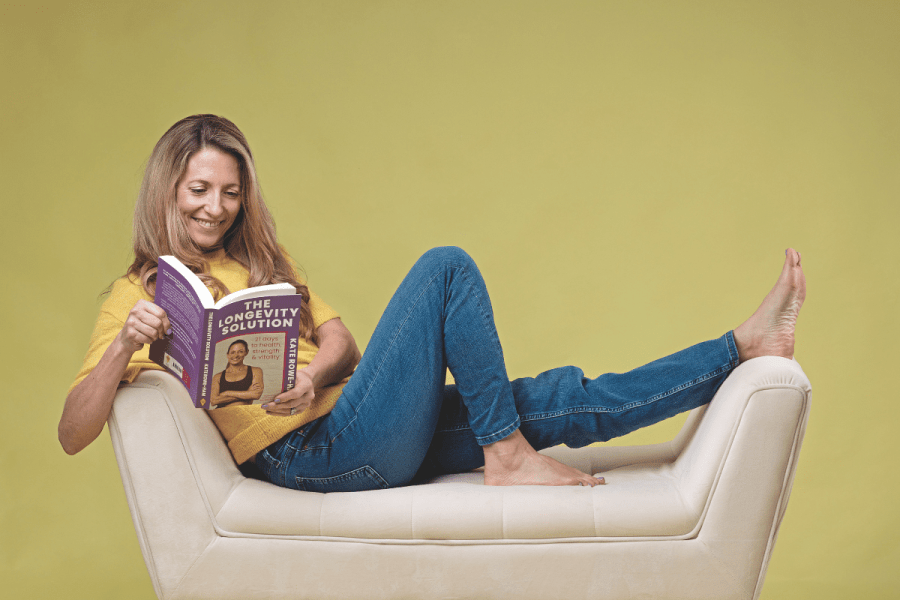
I’m almost 50, and I’m still waiting for my NHS over-40 health check. It’s crazy! Which is why one of my favourite chapters in the new book details all the assessments and screenings you’re entitled to and what to do if you’ve missed them.
Early detection is one of the most powerful tools for extending lifespan and healthspan, so I hope everyone who reads the book is reminded to make those very important appointments. One reason I really advocate for my health is that pushing for testing helped me get diagnosed with serrated polyposis syndrome.
After I lost my dad, it made me think about the fact that I’ve always had funny bowels, and that my sister has Crohn’s, and that my granny had bowel cancer, so I explained all that to the doctors and they booked me in for a colonoscopy. It turned out I had a ridiculous number of huge polyps – I’ve since had five or six more colonoscopies to get rid of them.
Obviously, that means eating well, exercising and not drinking alcohol have now become non-negotiables, but I’m happy to continue trying to live as healthily as possible if it helps to reduce my risk of cancers.
I also have osteopenia in both hips. Your bone density peaks at the age of 30, so it’s likely that my disordered eating had an impact. Obviously, it’s not great that I suffered from disordered eating, but I don’t regret my colourful past and the drinking and partying because I made many amazing memories.
The good news, however, is that my last scan showed the osteopenia hasn’t progressed, which is no doubt because I’m lifting weights, eating the right foods, not drinking as much and taking my vitamin D. I know I keep repeating the same lifestyle changes for better health, many of which don’t have to cost a thing, but I honestly believe we can all make a big difference to our longevity by implementing little changes.
Also, it’s better to try and make changes now before we’re looking down the barrel of a gun because, like Top Santé Editor-in-Chief Kate Sunnassee says: ‘Our genes may account for around 20 per cent of our longevity, but lifestyle pulls the trigger.’ I couldn’t agree more.
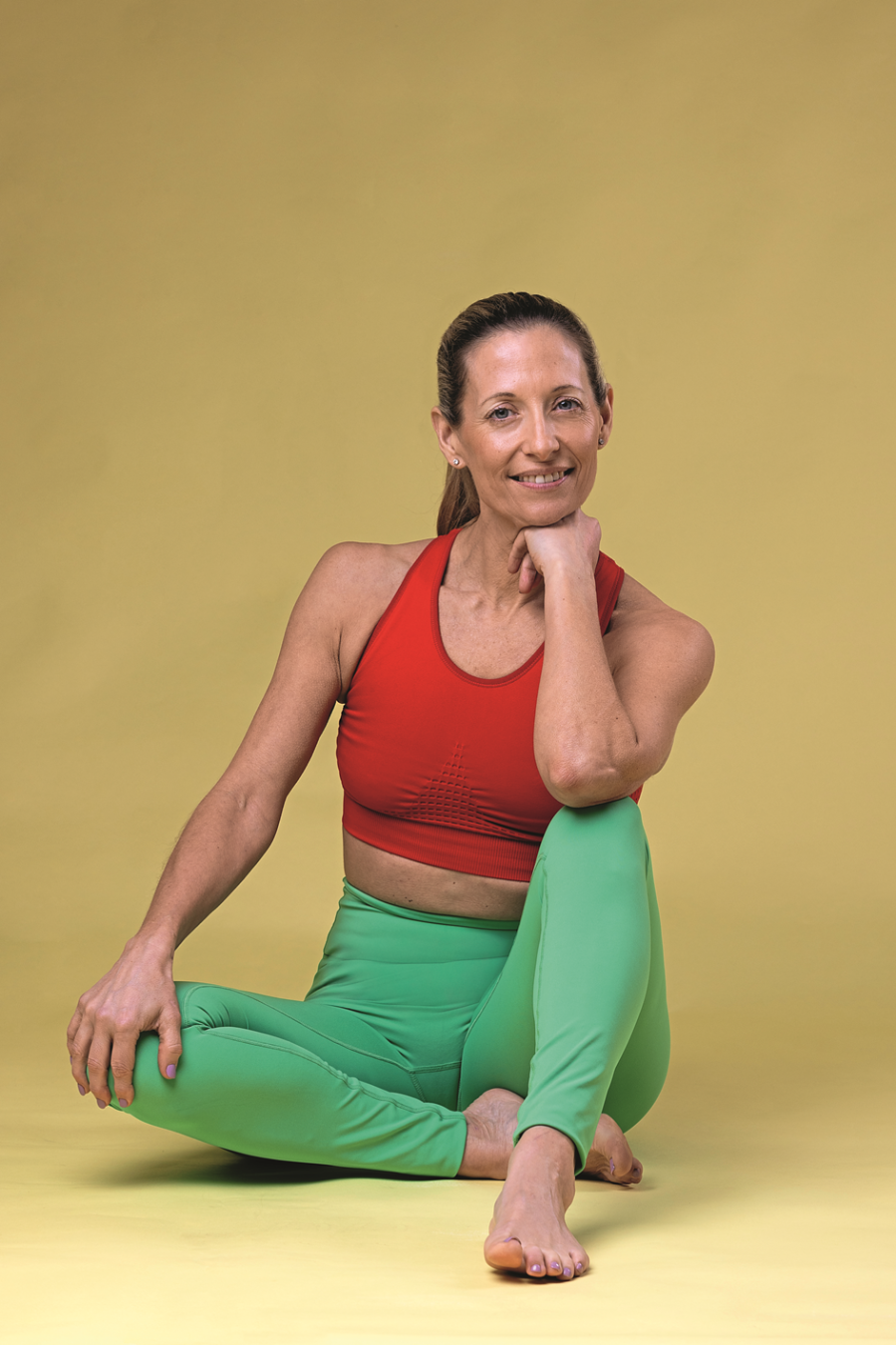
Throughout my whole life, I always knew I was different. Let’s put it this way, I was always in trouble at school, always the loudest, always the first at a party and the last to leave, whatever state that was. I don’t have an off-switch, and I’ve always been told I was too much, too much, too much – all the things I’m sure anyone with ADHD can resonate with.
I spent most of my life shrinking myself, not just physically, but mentally as well. If I’m honest, that moment when I wanted to hit the tree during my perimenopausal phase was probably down to ADHD, because I wasn’t managing it the way I do now.
But these days, I’d say I’m much more in control of things with the help of exercise, a protein-rich diet and better sleep, which are just some of the things Mel Robbins and Dr Chris Palmer talk about on the podcast, The Truth About ADHD in Adults.
The biggest gift for my mental health and ADHD is morning movement. I know it’s not always possible for everyone, but without it, I think I’d be on a very slippery slope (never assume that everyone on social media has their s**t together – they don’t!).
I think a lot of people think mental health management has to be yoga or chanting or some other calm activity, but my brain doesn’t work like that. My moments of calm and reflection come when I’m lifting weights or mindfully eating a big, delicious, wholesome, fulfilling breakfast (my days of restriction and starvation are long gone).
I have trouble falling asleep at night, so I take melatonin, which really helps. Both vitamin D and magnesium are important for ADHD too, and creatine, omega and collagen are also on my vitamin hit list, although I put creatine over collagen for the brain benefits.
I try to avoid snacking to help keep my blood sugars balanced, but I always feel like I need a signature sweet seal-off after a meal, so I’ll often have a date with maybe a little bit of peanut butter and Montezuma’s dark chocolate all squished together. After that, I’m perfectly happy!
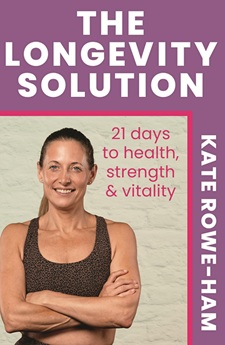
Kate’s new book The Longevity Solution: 21 days to health, strength & vitality is out now (£16.99, Yellow Kite).