
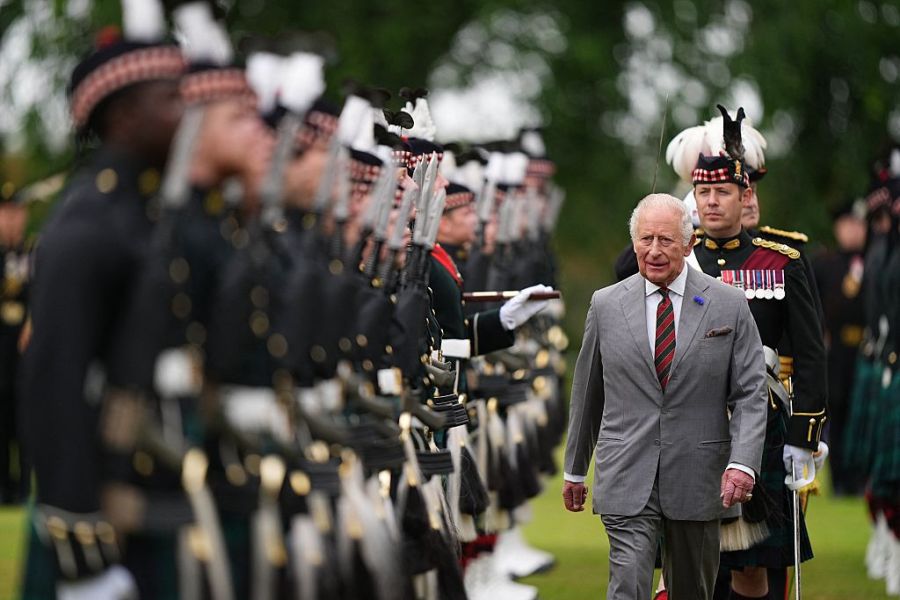
The total amount of tax payable by His Majesty since accession to the Throne is more than £30 million
PICS: Getty Images
Figures released in the Royal Household’s annual report reveal that the King voluntarily paid £12.9 million ( $17.5 million) in income and capital gains tax during the 2024–25 financial year, following a payment of £11.7 million ($15.9 million) the previous year.
Since becoming King in 2022, Charles and his eldest son, Prince William, have collectively paid more than £50 million ($68 million) to HM Revenue & Customs.
The unprecedented disclosure comes amid growing calls for greater openness over royal finances following recent controversies surrounding the King’s younger brother, Andrew Mountbatten-Windsor, formerly Prince Andrew, and wider scrutiny over how public money supports the monarchy.
Buckingham Palace described the move as an effort to increase transparency and “encourage wider understanding of our accountability”. Palace officials stressed that publishing the King’s tax payments was a voluntary personal decision made by both Charles and Prince William.
However, while the figures themselves are striking, they reveal only part of the picture.
One of Britain’s biggest taxpayers
Charles’ £12.9 million (US$17.5 million) tax bill places him among the UK’s top 100 taxpayers.
By comparison, Prime Minister Sir Keir Starmer declared earnings of around £152,000 ($207,000) in 2023–24 and paid just under £55,000 ($75,000) in tax.
Constitutional experts say the figures underline the scale of the King’s private income.
Craig Prescott, a constitutional expert at Royal Holloway, University of London, said the payments indicate that “there is substantial income going towards the King”.
Yet without knowing the King’s taxable income, experts say it is impossible to determine how much he actually earns or what effective tax rate he pays.
Dan Neidle, founder of Tax Policy Associates, said the disclosure remains “highly opaque”.
“We don’t know how much of that is capital gains tax, how much is income tax,” he told BBC Radio 4’s Today programme.
“Very importantly, we don’t know what expenses he’s deducted to come up with the figure on which he pays the tax.”
Where does the King’s money come from?
Although Charles receives public funding through the Sovereign Grant to carry out official duties, his personal wealth comes largely from private sources.
His main income comes from the Duchy of Lancaster, a historic portfolio of farmland, commercial property, investments and other assets that provides the monarch with an independent income.
For 2025–26, the Duchy is expected to generate around £25.2 million ($34.3 million), although not all of this counts as taxable personal income.
The King also receives income from private investments, savings and his privately owned estates, Balmoral and Sandringham, although no details of these earnings have been made public.
Unlike most taxpayers, the monarch is legally exempt from paying income tax under Crown Exemption arrangements. However, Queen Elizabeth II voluntarily agreed in 1993 to pay tax on her private income following criticism over royal finances after the Windsor Castle fire.
Charles continued that practice as Prince of Wales and has now become the first reigning monarch to reveal the actual amount he pays.
Prince William also reveals his tax bill
The Prince of Wales has also published his tax payments for the first time since inheriting the Duchy of Cornwall.
William paid £7.76 million (US$10.6 million) in tax during 2024–25, following a payment of £8.34 million ($11.3 million) the previous year.
His income comes from the Duchy of Cornwall, a hereditary estate worth more than £1 billion (around $1.36 billion) that funds his official duties, charitable work and private family life.
William’s private secretary, Ian Patrick, said the Prince pays income tax at the highest rate on any net surplus after official costs have been deducted, with those deductions independently audited.
In another move aimed at improving transparency, William has also announced he will no longer personally benefit from the £1.5 million ($2 million) annual rent previously generated by Dartmoor Prison. Instead, the money will be redirected towards supporting communities around Princetown after the prison closed because of high radon gas levels.
Greater transparency amid mounting scrutiny
The publication of the King’s tax payments follows increasing parliamentary scrutiny of royal finances.
MPs have questioned how public money is spent and called for greater accountability following concerns surrounding Andrew Mountbatten-Windsor’s financial arrangements with Crown-owned property.
The Palace’s decision to release tax figures appears to reflect a wider effort to demonstrate that the Royal Family is becoming more open about its finances.
Sovereign Grant set to rise
The annual report also reveals changes to the funding the monarchy receives from taxpayers.
The Sovereign Grant for 2024–25 totalled £86.3 million ($117.4 million), comprising £51.8 million ($70.4 million) for core running costs and £34.5 million ($46.9 million) towards the extensive refurbishment of Buckingham Palace.
Once the decade-long renovation programme is completed in 2027, the temporary funding will end. However, the core Sovereign Grant will rise significantly to almost £100 million (around $136 million) a year—substantially higher than previous levels.
The grant covers the official running costs of the monarchy, including staffing, travel, state visits, receptions and the maintenance of occupied royal palaces.
Buckingham Palace also confirmed that despite the completion of refurbishment works, the King and Queen Camilla will continue living at Clarence House rather than moving into Buckingham Palace. Instead, the palace will remain the monarchy’s working headquarters while becoming more accessible to visitors.
A balancing act
For Buckingham Palace, the publication of the King’s tax payments represents a significant constitutional milestone and another step towards modernising the monarchy.
Yet while the headline figure of £12.9 million ($17.5 million) is impressive, many financial experts argue meaningful transparency requires more than simply revealing the final tax bill.
Without details of taxable income, deductions or effective tax rates, the public still cannot fully assess the King’s personal finances.
Even so, the Palace hopes the disclosure sends an important message: that the monarch is not only supported by public funds but also contributes millions back into the Treasury.
Whether this marks the beginning of a new era of royal financial openness—or simply a carefully managed glimpse behind palace walls—remains to be seen.