
If you wake up feeling groggy despite sleeping for hours, your bedtime drink might be the hidden cause. We asked an expert how to protect our sleep without missing out on summer.
Words: Amy Mica Marsden. Images: Shutterstock.
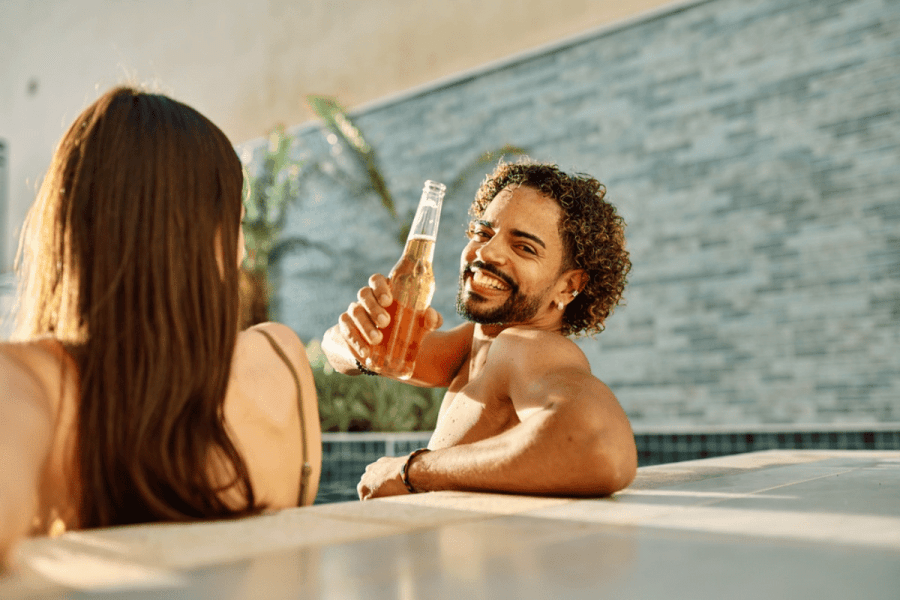
Summer is a time of long evenings, barbecues, sunsets, a beer or a glass of wine before bed. Especially on hotter evenings, it can be tempting to have an extra beverage before bed to help us drift off.
In fact, nearly 20% of adults in the US report using alcohol as a sleep aid — and up to 30% of those with insomnia.
However, while you might think an alcoholic drink at night can help you rest, it could actually be harming the quality of your sleep more than you think.
Alcohol and sleep
We asked board-certified physician and alcohol recovery coach Dr Kali Theis to debunk some commonly held beliefs about the effects of a nightcap.
‘Alcohol is a natural diuretic, which means it makes you urinate more by suppressing the hormone that helps your kidneys retain water,’ she told us. ‘During the warmer months, our bodies use sweating as a mechanism to keep ourselves cool.
‘Combine sweating from the heat with increased urination from alcohol, and this can increase the risk for dehydration, headaches, dizziness, fatigue or worse.’
And dehydration isn’t the only effect of alcohol on sleep.
In a 2024 study in the journal Sleep, researchers tested whether alcohol affected restfulness across three stages of sleep each night. They found that drinking alcohol before sleep ‘substantially affects sleep architecture’, meaning that the regular patterns in sleep were changed – for the worse.
The study found that late-night alcohol, especially across consecutive nights, led to a significant decrease in the restful portion of sleep (REM) and concluded that ‘the use of alcohol as a sleep aid remains a public health concern.’
Dr Kali also points out how this can have a compound effect in summer. ‘Warmer temperatures often also disrupt sleep, as our core body temperatures rest best at cooler temperatures,’ she explains. ‘Being both hot and intoxicated will have a compound effect, likely leaving someone feeling exhausted.’
Healthy drinking habits for sleep
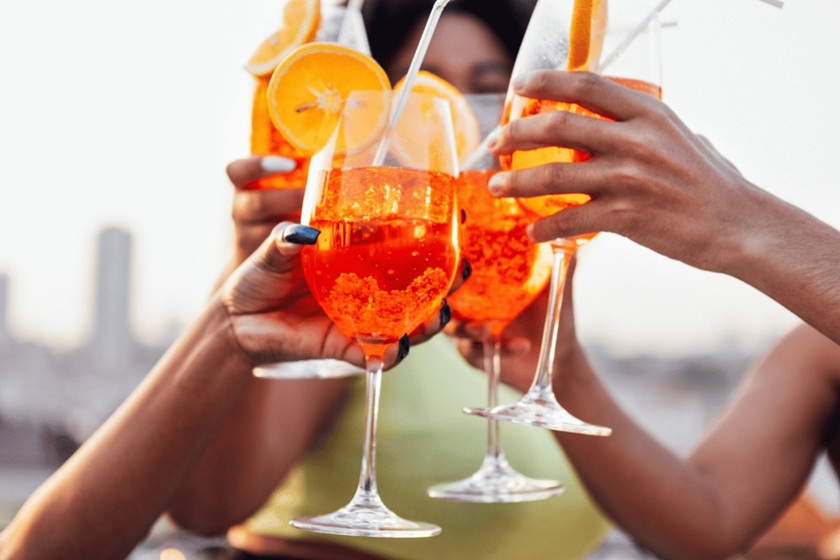
It may sound like doom and gloom, but don’t worry – you don’t need to completely give up alcohol in the summer if you want to preserve your sleep quality. There are a few things you can try to ensure you’re enjoying your summer and not waking up groggy.
One thing Dr Kali recommends is ‘zebra striping’, or alternating between alcoholic and non-alcoholic drinks. ‘This helps to prevent overdrinking alcohol and provides your body with added hydration during the warm months,’ she explains. Find out more about ‘zebra striping’ here.
Dr Kali also recommends using an alcohol tracker to track the number of drinks you consume and adjusting the timing and location of your drinks.
‘[Drinking] earlier in the afternoon would provide time for the alcohol to metabolize before attempting sleep, or drinking in an air-conditioned environment would help to prevent some of the effects of heat exhaustion,’ she recommends.
DOs and DON’Ts
Above all, if you’re concerned about the amount of quality sleep you’re getting, Dr Kali recommends not drinking any alcohol within 3-4 hours of your bedtime and making sure you’ve eaten and are well hydrated beforehand.
To shake off any lingering grogginess or dehydration from the night, drink a large glass of cold water first thing in the morning. ‘This is the best way to help your body rebound from fatigue from a poor night of sleep due to drinking,’ says Dr Kali.
‘Alcohol also greatly affects our blood sugars, as most alcohol is high in sugar and we often feel a crash after this sugar spike wears off in the mornings. A natural sugar, such as that found in fruit, would be a good idea for breakfast to help combat summer heat as well.’
Dr Kali Theis is a board-certified physician and an alcohol recovery coach at thesoberdocs.com. Find her on Instagram at @thesoberdocs