

By now, you might have stumbled across the term ‘Fibermaxxing’ online – especially if you spend a lot of time on Instagram or TikTok. But what is it, and how can it help us? We spoke to health professionals to get the low-down.
Words: Amy Mica Marsden. Images: Shutterstock
It turns out that the vast majority of us aren’t getting enough fiber in our diet – a problem often linked with increased risks of gut health issues, colorectal problems such as fissures or hemorroids, poor heart health, fatigue, and even colorectal cancer.
In fact, according to the National Diet and Nutrition Survey, only 4% of adults are meeting the recommended 30g of daily fiber needed for good colorectal health.
Why should we eat more fiber?
“Fiber is foundational to colon function,” says Dr Carmen Fong, Colorectal Surgeon, Chief Medical Officer at health platform Bummed, and author of Constipation Nation.
“By the time food reaches the colon, most nutrients have already been absorbed, and what remains becomes stool. The colon’s job is to reabsorb water—but fiber helps regulate this process so stool doesn’t become too dry and hard, or too soft and mushy.”
And a lack of fiber doesn’t just impact our bowels – it can mess with our hormones, our microbiome, and even impact our mood (for example, as much as 95% of the ‘feel good’ chemical serotonin is made in our gut)!
What are the benefits of ‘fibermaxxing’?
It turns out that our fiber intake can have a knock-on effect on many aspects of our health.
Angie Kalousek Ebrahimi, senior director of lifestyle medicine at Blue Shield of California, says, “Fiber sources in your diet are the ‘prebiotics’ or the primary fuel source for gut bacteria that feed the gut microbiome and drive production of short chain fatty acids.
“These short chain fatty acids are linked to colon health, metabolic regulation and inflammation.”
Angie says increased fiber intake, and an increase in the short chain fatty acids they help produce, can lead to “improved digestion, reduced LDL cholesterol, increased satiety, reduction of blood sugar and cortisol spikes, and reduction of brain fog.”
How to start fibermaxxing safely
“The best way to safely increase fiber intake is to make gradual increases vs. a dramatic increase over a short period of time,” says Angie.
“Focus on slowly incorporating a variety of fiber sources by incorporating a range of fruits and vegetables as well as legumes and whole grains, and this way you’ll be sure to get a mix of both soluble and insoluble fiber.”
As a colorectal surgeon, Dr Fong is also concerned about the impact that a sudden change in fiber intake can have on the digestive system.
“To go from eating chicken nuggets every day to three kale salads a day will make anyone bloated and ill, and they will abandon their fiber supplementation altogether,” she warns.
Dr Fong recommends starting with an increase of just 5-10g fiber a day, and gradually upping your intake by the same amount every 1-2 weeks (as tolerated).
If you’re struggling to find enough fiber in your day-to-day diet, you can try supplements – for example, psyllium husk is a great source of fiber. You can also try magnesium to aid digestion, or consider a probiotic to help diversify your gut microbiome.
It’s also important to stay well hydrated when you increase fiber, Dr Fong stresses, as “Fiber without water ‘turns into concrete’ in the colon.” She recommends 2-3 liters of water a day to avoid bloating, discomfort, and constipation.
Best high fiber foods for women
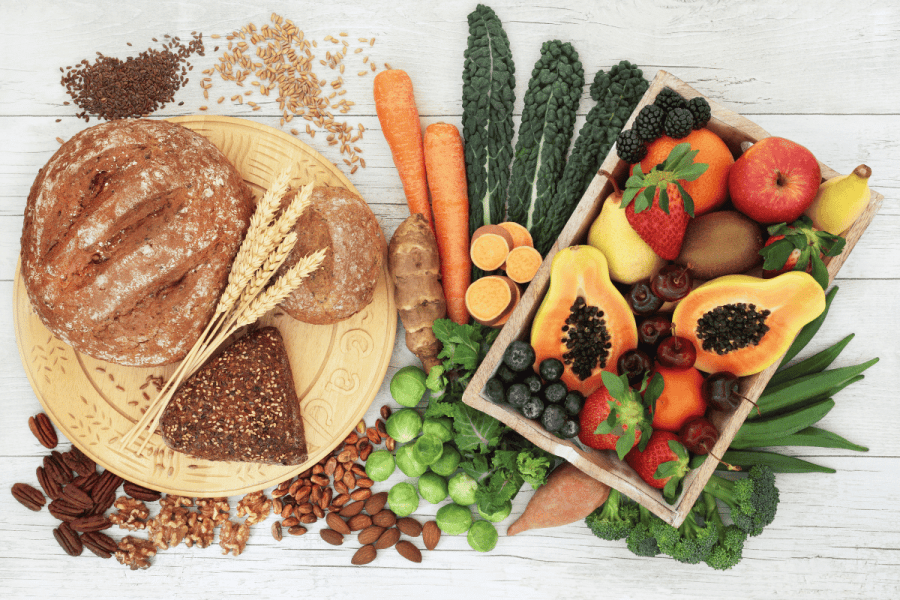
Aside from supplements, there are many easy-to-cook ingredients you can add to meals to increase your fiber intake and get you closer to your 30g recommended daily intake.
Many of these ingredients can be ‘hidden’ in things like soups, salads, smoothies, or even sweet treats, to give maximum benefits with minimal effort or discomfort.
According to the USDA National Nutrient Database for Standard Reference, the following foods can give you a great fiber boost:
- Lentils, boiled – 15.5g of fiber per cup (198g)
- Green peas – 9g of fiber per cup (160g)
- Quinoa – 5g of fiber per cup (185g)
- Raspberries – 8g of fiber per cup (123g)
- Broccoli, boiled – 5g of fiber per cup (156g)
- Split peas, boiled – 16g of fiber per cup (196g)
- Chia seeds – 10g of fiber per ounce (28.35g)
Remember to go slow when adding fiber into your diet, and if any negative symptoms occur (such as bloating or constipation), go back down to a lower amount and stick there for while longer before trying to up your intake again.
Dr Carmen Fong is a double board-certified colorectal surgeon and chief medical officer at Bummed, the digital health platform for treating anorectal conditions. Her book Constipation Nation is available now.
Angie Kalousek Ebrahimi is the Senior Director of Lifestyle Medicine and Certified Nutritionist at Blue Shield of California.