

Dinner dates, takeout nights and cozy evenings on the couch can all be part of falling in love — but they can also quietly change your eating and workout habits. A behavior change expert explains why weight gain is common in new relationships, and how to prevent it without putting your romance on hold.
Words: Amy Mica Marsden. Images: Shutterstock
The excitement of a new relationship often brings a packed social calendar, with dinner dates, movie nights and spontaneous treats becoming the norm. While it’s important to enjoy this special time together, those changes in routine can make it harder to maintain healthy habits — particularly if you and your partner have different lifestyles.
‘When partners begin sharing meals, leisure time and routines, their behaviors naturally start to converge,’ explains behavior change specialist, Dr Heather McKee. ‘Previous exercise or food routines can also be displaced as people reorganize their time around the relationship.
‘In the honeymoon phase of a relationship, in particular, it can feel celebratory or holiday-like so people tend to break from their normal habits and lean into fun and pleasure.’
Common causes of unwanted weight gain
Weight changes are never the result of one single meal or date night, as Dr Heather is keen to emphasize, but more often the result of an overall change in habits and routines.
Some of the most common causes when it comes to unwanted relationship weight gain are:
- Eating out, ordering takeout or drinking alcohol more frequently.
- Unintentionally matching a partner’s portion size despite having different energy needs.
- Making food the default way to celebrate, relax, or spend time together.
- Replacing individual workout routines with more sedentary couple time.
- Allowing occasional “treat” behaviors to become the new everyday default.
Of course, the joy of a new relationship is far more important than the number on a scale; however, if you’re trying to manage or maintain your weight, changes in habits can quickly get in the way of your goals.

How to find a healthy balance while dating
If you’re keen to make some changes to prevent any further weight gain, it can feel difficult to say no to things while still having fun and enjoying yourself — especially if the relationship is new.
We asked Dr Heather what steps we can take to support healthier habits without damaging the new relationship.
Identify the cause and adjust
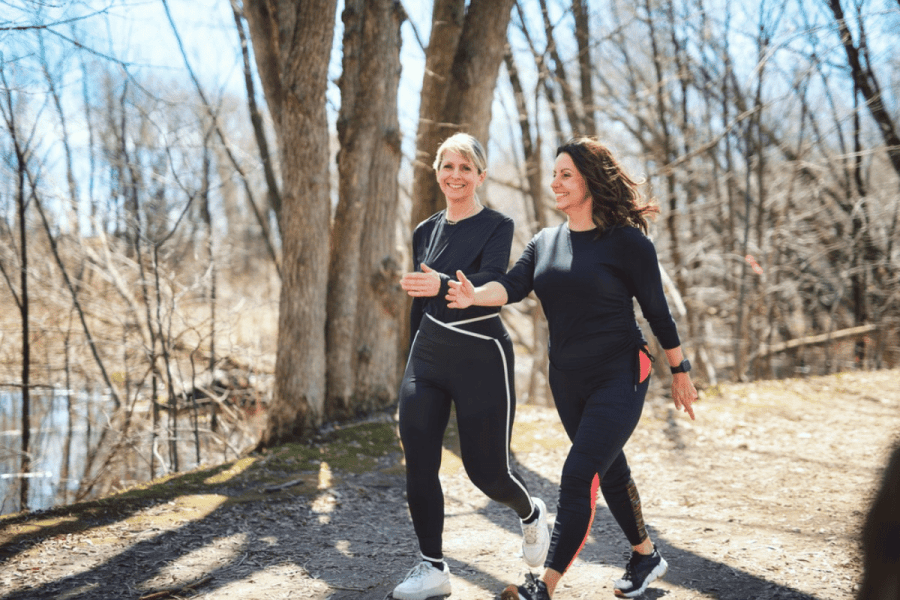
‘Start by identifying what has actually changed rather than beginning a restrictive diet,’ she advises. ‘Couples can preserve the connection while adjusting the routine: walk before dinner, cook together more often, alternate restaurant dates with active or non-food dates, and protect exercise or meal habits that matter to each person.’
Tune into your own hunger cues
If your partner naturally eats larger portions than you do, you may find your own serving sizes gradually increasing too. If you’re gaining weight and that’s not something you want, pay attention to the amount of food that feels right for your own energy needs, appetite and health goals, rather than automatically matching your partner’s portions.
Ask for support
‘Ask one another what support would be helpful, rather than monitoring, criticizing or policing food choices,’ says Dr Heather. ‘Research suggests partners can create a positive “ripple effect” on one another’s habits, particularly when the support respects choice rather than creating pressure.’
Finally, it’s important to remember that gaining weight is not automatically a health problem. Dr Heather reminds us that ‘it is more useful to consider the wider pattern including energy, sleep, fitness, strength and wellbeing than to treat the number on the scales as the only outcome.’
‘It may be that the individuals are happier and more content than they were before, and that in time, once the honeymoon period has worn off, they will default back to healthier habits they had before.’
She adds, ‘There’s a lot to be said for the impact that happiness can have on our overall wellbeing vs any negative effects small weight increases can have.’
Dr Heather McKee is a health behavior change specialist and consultant. Find her at drheathermckee.co.uk