

As the UK endures an intense heatwave, women’s health expert and GP Dr Ginni Mansberg explains why women often find it significantly harder to cope, particularly during menopause and at certain stages of the menstrual cycle.
Menopause
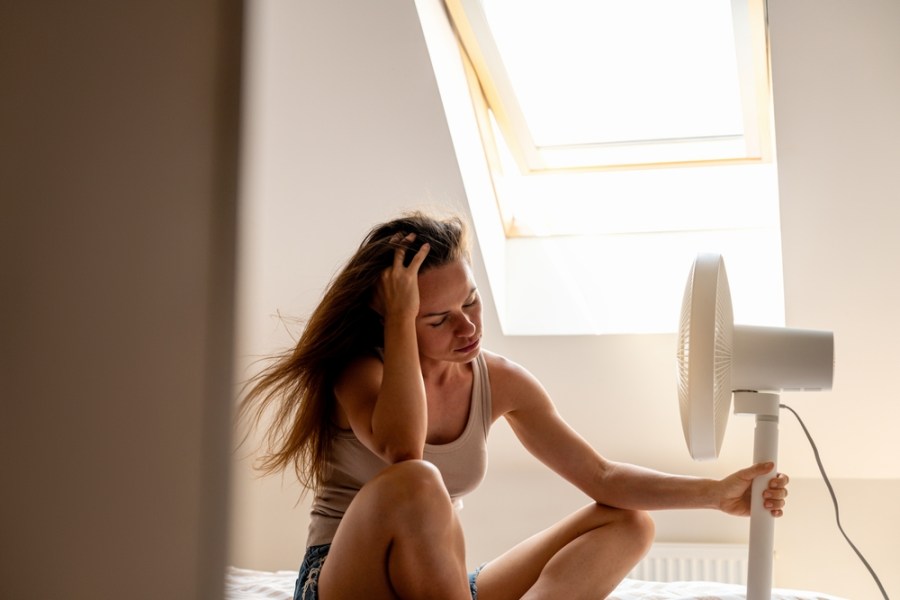
“Hot flushes are essentially your body’s thermostat overreacting,” says Dr Ginni. “In women going through menopause, there’s a narrowing of the ‘thermoneutral zone’ – the range in which core body temperature is normally maintained without triggering sweating or shivering. On a hot day, you’re already closer to that tipping point before you’ve even started worrying about it, so you’re running even hotter. Flushes come faster, harder and more often.”
She explains that this isn’t just about external heat, but also internal hormonal shifts.
“As oestrogen declines, our core body temperature rises. It’s not that hot days are ‘hotter’ for menopausal women; it’s that the internal thermostat itself has become more trigger-happy.”
Menstrual Cycle
And it’s not limited to menopause. “Heat is far more likely to make you feel like your cycle has gone haywire through worse cramps, bloating, headaches and disrupted sleep,” she says, even though there’s little evidence that heat directly alters cycle timing.
Symptoms are amplified by the way the body responds to hot weather.
“Headaches are usually a result of dehydration. In hot weather, the body loses water and electrolytes through sweat, and if these aren’t replaced, dehydration sets in and can worsen conditions such as migraines.
“Swelling in the feet and hands is largely due to vasodilation. Blood vessels widen to help radiate heat away from the body, but this also increases vessel permeability, allowing fluid to leak into surrounding tissue and cause swelling and a bloated feeling, even though it’s not genuine weight gain.”
Sleep
Lack of sleep is also your worst enemy, whether you’re experiencing menopause or menstrual symptoms.
“Hot flushes are linked to altered sleep architecture, increased slow-wave sleep and a shortened first REM period, meaning the thermoregulatory mechanism behind flushes actively disrupts the sleep cycle itself,” explains Dr Ginni.
Heat then compounds the problem from the outside.
“It’s harder to fall asleep and stay asleep in a warm bedroom, regardless of hormones. The result is a fatigue spiral: poor sleep lowers your tolerance for pain, mood swings and brain fog, so every other symptom – including cramps, irritability and headaches – feels amplified the next day.”
What Not to Ignore
“Don’t write off chest tightness or palpitations as ‘just a flush’, a headache that is sudden, severe or different from your usual pattern, or symptoms of heat exhaustion, such as confusion, a very high temperature, stopping sweating or fainting. These need medical attention regardless of the weather,” says Dr Ginni.
The same applies to any unexpected bleeding.
“Heat can absolutely make normal symptoms feel worse, but it shouldn’t be used to explain away something genuinely new or out of character.”
What Works
The basics work because they target the real mechanisms behind symptoms, says Dr Ginni.
“Consistent hydration with cold water, paced breathing with slow, controlled breaths, and strategic cooling, such as cold packs on the neck or wrists, can all help dampen the thermoregulatory overreaction behind flushes.”
She also recommends wearing loose, breathable natural fibres and scheduling exercise for early morning or evening rather than during the hottest part of the day.
What to Avoid
Dr Ginni advises avoiding exercise during the hottest hours of the day, typically between 11am and 3pm. She also warns against under-hydrating simply because you don’t feel thirsty, and against layering on extra skincare or makeup to “fix” a flushed face, which can aggravate already heat-sensitive skin, particularly for those with rosacea.
“While caffeine, alcohol and spicy foods don’t need to be banned outright, during a heatwave, when your thermoneutral zone is already working overtime, they’re the first things I’d suggest dialling down.”
• Dr Ginni Mansberg is a leading healthcare communicator and clinician specialising in midlife women’s health.
Visit, https://www.drginni.com.au/