


Your gut plays a more vital role in your health than you might expect. Our three wise women share their perspectives and offer advice on improving your gut health and helping to solve this huge part of the health puzzle.
Words: Pauline Cox, Kate Rowe-Ham, Suzy Reading. Images: Shutterstock.
Pauline says…
Pauline Cox is a functional nutritionist. Her latest book is Hungry Woman: Eating For Good Health, Happiness + Hormones. She runs health food store and café Sow and Arrow near Bristol (sowandarrow.com). Follow her at instagram.com/paulinejcox.
The gut microbiome has taken centre stage in recent years, widely praised for its role in immunity, mood and inflammation. But its influence on women’s hormonal balance is often overlooked. Within the gut lives a specialised group of microbes known as the estrobolome. These bacteria help regulate how oestrogen is metabolised and processed in the body.
After the liver breaks down oestrogen for elimination, the estrobolome can either support its removal or allow some of it to be reabsorbed. When this balance is disrupted, oestrogen levels may rise, potentially worsening symptoms such as PMS, heavy periods, mood swings, fibroids and endometriosis. Supporting a healthy estrobolome is largely about supporting overall gut health.
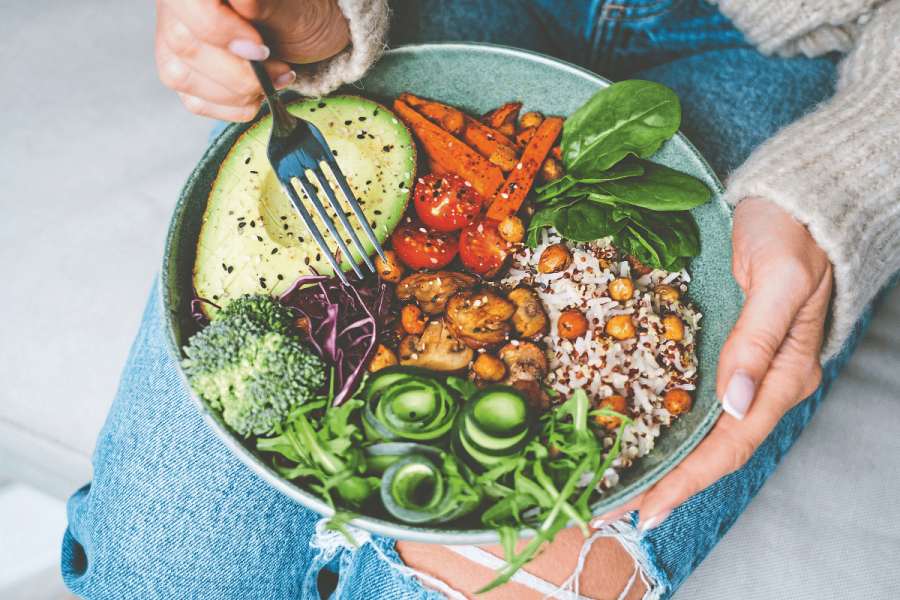
A diet rich in fibre from fruit, vegetables and wholefoods, as well as fermented foods, encourages microbial diversity, while limiting ultra-processed foods and excess alcohol reduces strain on the system.
Regular physical movement and stress management also play a role, helping maintain efficient digestion and healthy bowel movements – both essential for proper hormone clearance. In some cases, targeted probiotics containing specific strains of Lactobacillus and Bifidobacterium may provide additional support.
Gut-vagina connection
The gut and vagina may seem unrelated, yet emerging research shows they are closely linked ecosystems. The gut microbiome is highly diverse, made up of bacteria, fungi and yeasts that influence digestion, immune function and inflammation. The vaginal microbiome, by contrast, is typically dominated by Lactobacillus species.
These beneficial bacteria maintain a slightly acidic environment that protects against pathogens and reduces the risk of infections such as bacterial vaginosis and thrush. The connection works in several ways.
Certain gut bacteria can migrate to the vaginal tract via the rectal-vaginal route. Beneficial microbes, particularly Lactobacillus, may help seed and maintain a protective vaginal environment. However, when gut balance is disrupted – a state known as dysbiosis – the risk of vaginal imbalance can increase.
There is also important immune cross-talk between the two systems. The gut microbiome helps regulate immune responses throughout the body, including in the vaginal tissue. If gut health is compromised, systemic inflammation may rise and local immune defences can weaken, making infections more likely.
Hormones further influence this relationship. Oestrogen supports the production of glycogen in vaginal tissue, which feeds Lactobacillus and helps maintain acidity. When oestrogen levels decline, such as during perimenopause or menopause, changes in the vaginal microbiome can follow.
Certain strains of Lactobacillus and Bifidobacterium may benefit both gut and vaginal microbiomes.
I recommend TerraNova Women’s Microbiome (currently £19.99, sowandarrow.com) – it contains four Lactobacillus strains that help maintain a healthy vaginal microbiome and support natural pH levels.

Kate says…
Kate Rowe-Ham is a PT specialising in helping midlife women get strong and feel good. She’s the founder of app Owning Your Menopause (owningyourmenopause.com) and a patron of the Menopause Mandate. Follow her at instagram.com/katerh_fitness.
When we think about improving gut health, we usu ally focus on diet, but exercise plays an equally important role. Movement doesn’t only support digestion; it also nurtures the gut microbiome, reduces inflammation, and strengthens the gut–brain connection. For women in midlife and beyond, regular exercise can be a powerful way to support digestive health through hormonal change.
One of the immediate benefits of exercise is improved gut motility. Movement helps food move through the digestive system more efficiently, reducing issues such as bloating, constipation and sluggish digestion. Even gentle activity, like a short walk after meals, can stimulate digestion and support regular bowel movements.
Exercise also helps increase the diversity of gut bacteria. A more diverse microbiome is linked to better digestion, stronger immunity and lower levels of chronic inflammation. Research shows that people who are physically active tend to have a healthier balance of gut microbes compared to those who are sedentary.
Both aerobic exercise and strength training appear to have a positive effect, particularly when performed consistently. Inflammation is another key link between exercise and gut health. Low-grade chronic inflammation can damage the gut lining and contribute to digestive discomfort and metabolic problems. Regular, moderate exercise helps lower inflammatory markers and supports the gut barrier.
Get Physical
The gut and brain are closely connected, and exercise is one of the most effective ways to support this relationship. Physical activity reduces stress hormones such as cortisol while increasing feel-good endorphins.
A calmer nervous system allows the body to shift into rest-and-digest mode, improving digestion and reducing stress-related gut symptoms. Strength training offers additional benefits.
By improving muscle mass and insulin sensitivity, resistance exercise supports blood sugar regulation, which in turn influences gut bacteria and digestive health. Maintaining muscle becomes increasingly important with age and plays a role in overall metabolic and gut resilience. There is no single best exercise for gut health.
Walking, swimming, cycling, yoga, Pilates and resistance training can all be beneficial. The key is consistency and balance. Overly intense training without adequate recovery can sometimes worsen gut symptoms, particularly in already stressed bodies.
Regular, supportive movement is one of the simplest and most effective ways to improve gut health, and it works best when combined with rest, recovery and enjoyment.
Suzy says…
Suzy Reading is a chartered psychologist and coach, and her new book How To Be Selfish comes out next month. Suzy’s practical toolkit helps you feel safe to advocate for yourself, so you can prioritise self-care and also receive love and support from others. Find her at suzyreading.co.uk and at instagram.com/suzyreading.
We know that mental health has a profound impact on gut health. It is commonly understood that stress and anxiety lie at the heart of this, but did you know that emotional suppression plays a significant part too?
Suppressing your emotions has serious consequences for whole-body health: when you don’t allow yourself to feel your feelings, it has a negative effect on the body.
Specific to gut health, emotional suppression reduces the diversity of your gut microbiome, increases inflammation in the body, reduces pain tolerance, increases the intensity of pain and distress caused by pain, and is a risk factor in the development of chronic conditions such as IBS and diseases including irritable bowel disease.
The way we’ve been raised to view emotions can make it tricky for us to feel safe to express ourselves. We’ve been led to believe that there are “positive” and “negative” emotions and this colours our attitudes toward them and how we feel about ourselves when they’re present.
Gender conditioning and our historic experiences of emotional expression also add to guilt and fear of being open about our feelings, especially when it comes to anger and sadness. For more guidance on healing your relationship with emotions, see Step 4, “I take back my right to feel”, in my new book, How to Be Selfish.
All your emotions have a purpose, and you need them all to guide you in meeting your human needs. While it’s OK to have all your feelings, clearly this doesn’t give you the right to do harm with your emotional expression. Somatic practices – movement, touch and breathing – can be powerful ways to help you move through feelings in safe and healthy ways.

Try these three practices to boost your emotional digestion and your gut health:
1. Alternating Knee Hugs
Lie on the floor or your bed with your legs outstretched and your arms stretched overhead. As you exhale, hug your right knee into your chest with your hands. Come back to your start position as you inhale. As you exhale, squeeze your left knee in. Repeat five times on each leg. This is particularly useful if you feel a bit stuck or when it’s difficult to connect with your feelings.
2. Lion Breath
When anger, irritation or frustration arises, roar it out with lion breath. Inhale through the nose and exhale through the mouth with the tongue extended out, issuing a cathartic wordless release. Three of these can help you move through the feeling without saying anything damaging. It also releases the throat and jaw, which soothes the nervous system.
3. Permission to feel
Place a hand on your heart and say to yourself, “I give myself permission to feel”. Rather than judging yourself, learn to make space for your feelings and listen to any messages they might have. The hand-on-heart gesture taps you into a feeling of compassion, which is essential for emotional health and supporting healthy gut function.