

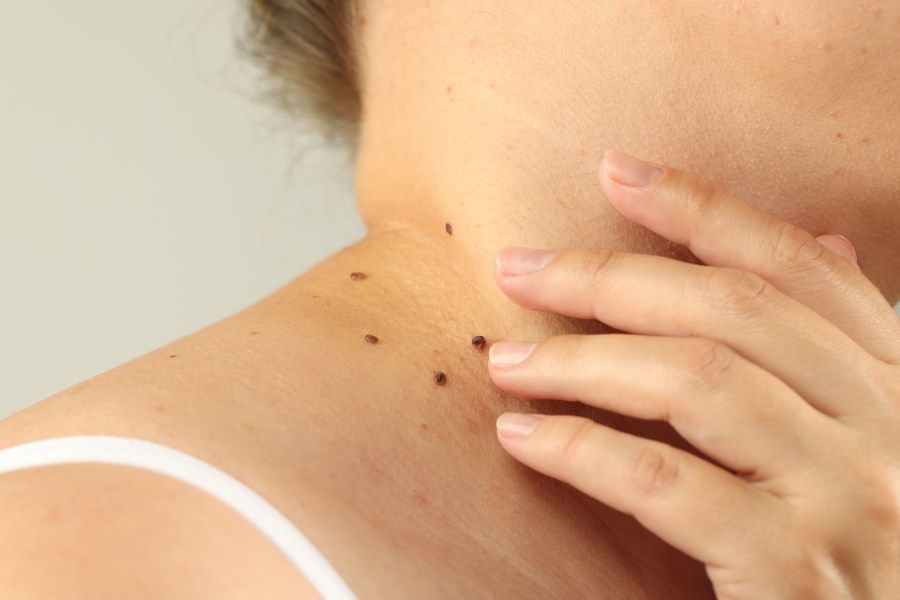
With the number of new melanoma skin cancer cases rising to above 20,000 for the first time in the UK, Dr Tim Cunliffe, Medical Director at The Mole Clinic, shares why early detection is so important – and the moles you should never ignore
Words: Amy Dowrick | Images: Shutterstock
While the everlasting summer offers ample time to top up your tan, you should be no stranger to the damage of UV rays – and even if you’ve got a gold star in slathering on the SPF, it’s always worth knowing the risks.
“Melanoma is highly treatable when caught early – but the challenge is that many people only look at obvious moles on obvious places – and miss the subtle warning signs,” says Dr Tim Cunliffe of The Mole Clinic – the only UK private clinic dedicated to skin cancer screening and mole removal. He shares the seven warning signs people often miss when checking their moles – and the steps he thinks we should all be taking to protect our skin in the sun (and out of it).
7 signs people often miss when checking their moles
1. A mole that looks or behaves differently from the rest
“Dermatologists often call this the ‘ugly duckling’ sign,” says Dr Cunliffe. “One mole that looks different to the rest or behaves differently to the others, for example crusting or bleeding that does not settle within 4 weeks.”
He shares two simple rules to follow when looking at your moles – the ABCDE rule and EFG rule.
The ABCDE rule stands for:
- Asymmetry – if you draw a line through the middle of the lesion, the two halves don’t match
- Border – the edges of the lesion may be irregular or blurred, and sometimes show notches
- Color – color that is different to your other moles, and may be one or more colors (or shades of color)
- Diameter – keep an eye on moles than are more than 6mm in diameter (although many skin cancers start smaller than this)
- Erythema – a pink area or evolution (growing)
The EFG rule stands for:
- Elevation – any raised mole that sits as a bump on the skin should be monitored for sudden changes in shape, color, or texture
- Firmness – if a mole feels hard, solid, or firm, it can be a warning sign
- Growth – if it has sustained for 3-4 weeks
2. Changes over time
According to Dr Cunliffe, the biggest mole warning sign is evolution – which can include growth, the mole becoming raised, changing color or shape, itching (although many skin cancers are not itchy), and crusting or bleeding.
3. Moles in hidden places
Skin cancer can appear in places people rarely examine, so keep a close eye on your back (or backs of legs), scalp and hairline, behind the ears, between the toes, the soles of your feet as well as intimate areas.
“Melanomas are discovered accidentally because these areas are easy to miss,” says Dr Cunliffe, who also suggests keeping an eye out for a new line appearing on a nail, or for something growing up through it.
4. A new mole
“New moles in adulthood deserve particular attention – especially if they appear suddenly or behave differently from existing moles,” he adds.
5. A mole that doesn’t heal
Persistent crusting, bleeding or a ‘spot’ that repeatedly scabs and returns can also signal skin cancer.
6. Pink, red or skin-coloured lesions
According to Dr Cunliffe, not all skin cancers are dark brown or black – some melanomas are pink, red or lightly coloured.
“Essentially, if it looks different to the rest get it checked out,” he says.
7. Changes on darker skin tones
It’s mostly important to remember that skin cancer can occur in all skin types, including skin of colour.
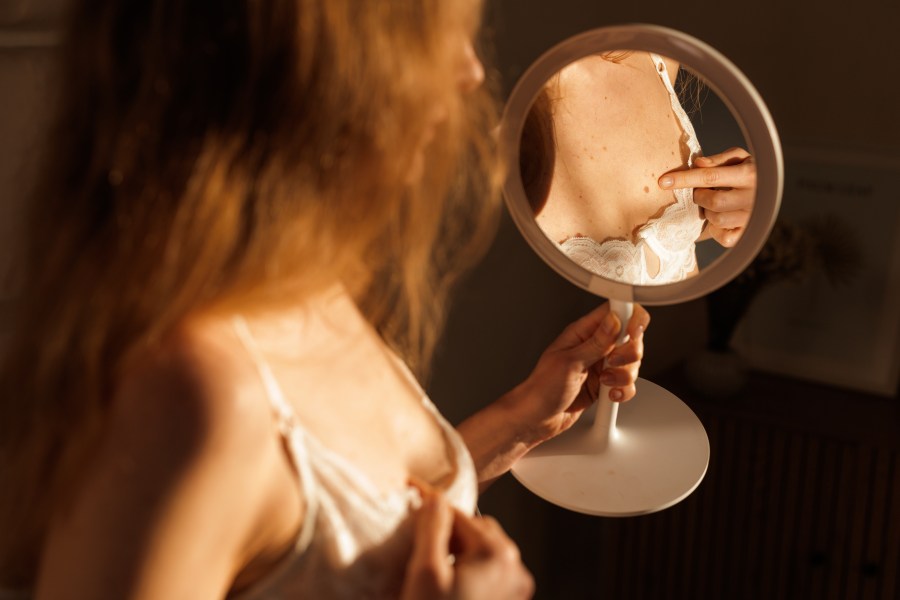
Keeping track of changes
Most people struggle to remember what a mole looked like six months ago, which is why Dr Cunliffe says that monitoring them matters. He shares some helpful ways to stay on top of mole changes:
- Taking clear photos in consistent lighting
- Using your phone’s date-stamped camera roll
- Using mirrors for hard-to-see areas
- Asking a partner or family member to help check your back and scalp
- Self-check every 3 months (you might need a partner or family member to check the sites you can’t see)
- Professional check annually (more often if high risk)
How to choose the right sunscreen for your skin type, according to a dermatologist
What we should be doing daily
Good skin protection is about consistency rather than perfection. Dr Cunliffe recommends these daily habits that can make the biggest difference:
- Wearing SPF30 or higher every day on exposed skin
- Reapplying sunscreen when outdoors for extended periods
- Wearing hats and UV-protective sunglasses
- Seeking shade during peak UV hours
- Avoiding sunbeds completely
- Checking your skin regularly
- Booking professional skin checks annually or more often if you are higher risk (e.g. larger numbers of moles, fair-skinned, family history of skin cancer, immunosuppression)
“Experts now encourage people to think of SPF like brushing their teeth,” he adds, “It should be something you do routinely, not only on holiday.”
Dr Tim Cunliffe is Medical Director at The Mole Clinic, the only UK private clinic dedicated to skin cancer screening and mole removal. For more information visit www.themoleclinic.co.uk