

From bunions to athlete’s foot and more, summer can be a nightmare if you have a foot problem. Show off your feet with pride this sandal season with our guide to achieving your healthiest summer feet yet!
Words: Rachel Tompkins. Images: Shutterstock.
Summer is when most of us pay a little more attention to our feet as they’re often on display, unlike in winter when we can hide them under shoes, socks and slippers. But while getting a pedicure can prettify your toes ready for the beach, it’s also a good time to address your whole-foot health, not just for this summer but for well into the future – after all, we spend a lifetime on our feet and yet they very often get neglected.
‘The health of your feet is vital because all of your weight is carried on them, and they are necessary for mobility,’ says consultant podiatric surgeon, Mr Kaser Nazir of Jorja Healthcare Group (jorjahealthcare.com).
‘While most people take the health of their feet for granted, there are lifestyle factors that many people do that can negatively impact feet, causing pain and discomfort both in the short and long term. But the good news is that by understanding more about your feet you can make positive changes to improve their health, and indeed how they look.’
Footwear choice is also vital for the health of your feet. ‘Choosing the right shoes can be beneficial in both the long and short term. Look for shoes with a wide enough toe box so there’s no compression on your toes, as compression over a sustained period can lead to pain, hard skin and also bunions,’ says Mr Nazir.
Also, look for shoes that offer ample support to your arches and ankles to avoid injury and pain. ‘Flip-flops are the go-to for most over summer, and are great for allowing air to circulate, reducing the likelihood of fungal infections which thrive in moist environments. However, they are not good for the skeletal and muscular elements of the foot.
‘The lack of arch support and shock absorption can lead to foot problems such as plantar fasciitis as well as pain in the knees, hips, and back. The open-toe nature of flip-flops means that feet are more at risk of injuries from stubbing the toes as well as cuts and grazes,’ he adds. ‘And the stump of the flip-flop between the toes can cause chafing and blisters for many people.’
We take a look at some common foot health problems and what can be done about them.
Bunions
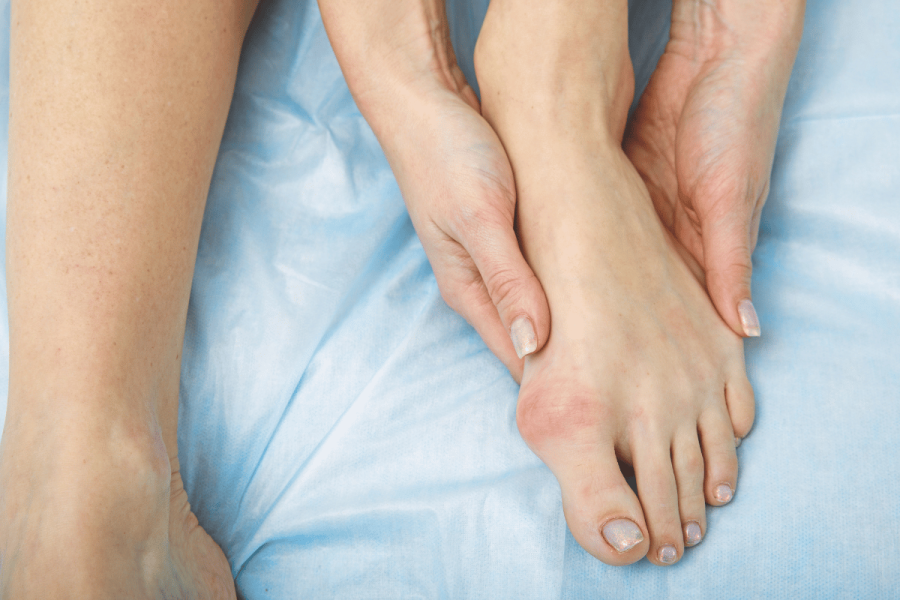
A bunion, or hallux valgus as it is known medically, is a bony lump that forms at the base of your big toe, located on the inside edge of the big toe joint, also known as the metatarsophalangeal joint.
‘Typically, bunions are formed when the bones in that part of the foot move out of place, i.e. when the top of your big toe is pulled towards the other toes and this forces the joint to stick out,’ says Mr Nazir, who is also known as “the UK bunion king”.
Bunions are often painful, red, swollen and tender and cause problems when wearing certain footwear. ‘Further work is needed in order to establish the exact cause of bunions but often it is either a congenital bunion or an acquired bunion,’ he adds.
‘Bunions typically develop gradually over time and are progressive in nature, meaning they will worsen without treatment. Initially, a bunion may present as a small bump at the base of the big toe, protruding from the side of the foot. As it progresses, the bony prominence can become more pronounced, leading to discomfort in footwear, redness and inflammation. Over time, as the joint becomes increasingly misaligned, the big toe may begin to overlap or underride the adjacent toes, causing further complications and painful symptoms.
‘A bunion is more commonly seen in women than men and often has a hereditary component. Other contributing factors include wearing narrow or high-heeled footwear, which forces the toes together and places undue pressure on the big toe joint.’
If you notice a bunion starting to develop, it’s advisable to consult a podiatrist or a foot surgeon specialising in bunion surgery. They can provide expert advice and recommend conservative treatments, such as custom orthotics, toe splints and/or guidance on suitable footwear.
‘While splints and orthotics may help slow the progression of a bunion, they cannot correct the deformity,’ warns Mr Nazir. ‘If your symptoms worsen, become painful, or prevent you from wearing your preferred shoes, it is time to consult a bunion specialist.’
Some people are more prone to developing bunions because of arthritis, rheumatoid arthritis, or osteoarthritis. And the hormone changes that occur during pregnancy and menopause can also impact joints and cause bunions to occur or worsen.
Bunion surgery options
‘Bunion surgery has come a long way from the old traditional bunionectomy,’ says Mr Nazir. ‘Though there are many types of bunion surgery, I typically suggest any of these options’:
- Minimally invasive bunion correction: Also known as keyhole bunion surgery, which is carried out under local anaesthetic and is suitable for most bunions with good bone quality and little to no arthritis visible on X-rays. The recovery is much quicker and will not require a cast. There are also typically less complications and much less post-operative pain.
- Scarf and Akin osteotomy: This is recommended for mild to moderate bunions, particularly in cases with very slim bones or osteopenia. The Lapidus procedure is used for severe bunion deformities accompanied by midfoot arthritis or significant hypermobility (less commonly performed).
- Big toe joint fusion: Reserved for cases involving arthritis and a bunion deformity of the big toe (rarely required). The best approach will depend on the severity of the bunion and the patient’s unique needs. The procedure typically involves making a small incision over the bunion, followed by removing or repositioning the bones to improve alignment. Recovery times for bunion surgery can vary based on the specific procedure and the extent of the correction.
Hammertoe
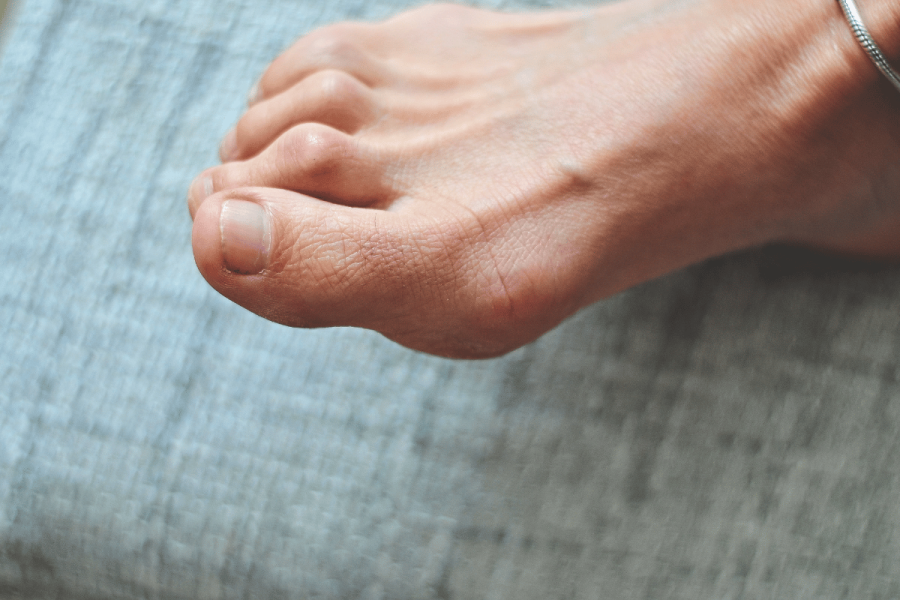
A common foot condition, hammertoe causes your toe joints to point up instead of lying flat, and can look unsightly in sandals. It can also cause pain and discomfort when wearing footwear and walking.
‘Hammertoe is a deformity of the muscles and ligaments of the proximal interphalangeal joint (that is, the closest joint to the foot) of any of the four toes, excluding the big toe,’ explains Mr Nazir. ‘The name comes from the fact that it causes the toe, or toes, to bend into a shape that looks like a hammer. It can be caused by ill-fitting footwear, a muscle imbalance or usually a combination of factors.’
The good news is, however, that there are steps you can take to correct hammertoes in their infancy. ‘Initially, hammertoes are flexible and can be corrected with simple measures; however, if left untreated, they can become fixed and require surgery.
In order to correct hammertoe in the early stages it’s important to wear shoes that fit properly and give your toes enough space,’ explains Mr Nazir. ‘You can also use inserts or pads in shoes to help reposition toes and relieve pain, and taping or splinting the toes can help. There are also exercises that can be done to stretch and strengthen the toes.’
So at what point should you resort to surgery? ‘Surgical intervention may be necessary for a severe hammertoe and this is an effective way to relieve pain and improve toe function,’ adds Mr Nazir. ‘It’s important to speak to a podiatric surgeon in order to assess your specific needs, however normally if the hammertoe is causing pain or discomfort then surgery can address both of these, relieving pain and also improving the aesthetics of the foot.’
Plantar fasciitis
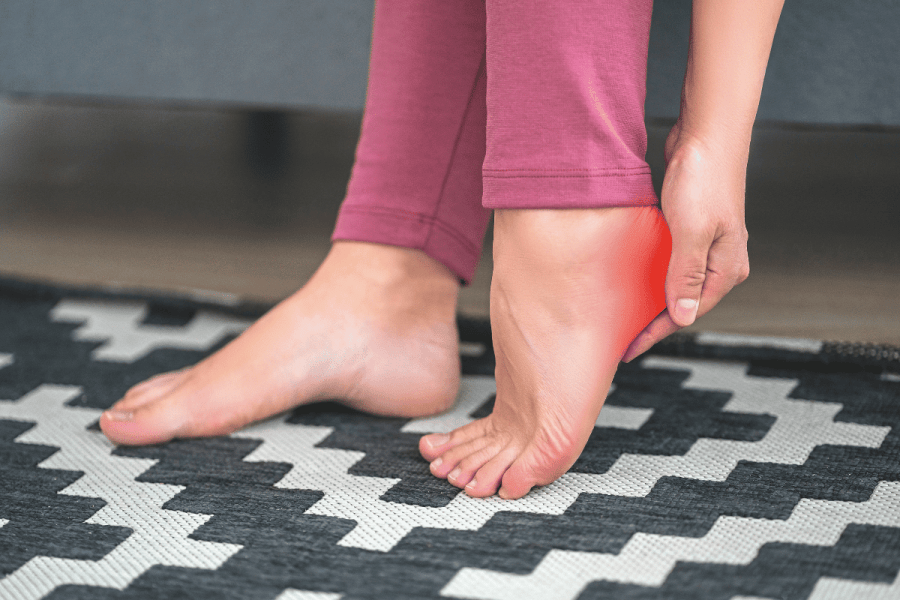
If you’re suffering from a pain in the bottom of the foot around the heel and arch, which is worse when you first start walking after resting but gets better once you’ve been moving for a while, then it’s likely you could have plantar fasciitis.
‘This is a biomechanical overuse condition caused by repetitive stress to the plantar fascia, which results in degeneration at the attachment to the calcaneus [heel],’ explains Mr Nazir. ‘I think that plantar fasciitis is becoming more common, largely due to lifestyle factors such as increased high-intensity exercise such as running, and also because of obesity.
‘It can be extremely disabling and if it doesn’t get better you may need physiotherapy or to use insoles or splints. In severe cases, if these measures don’t work then other treatments such as steroid injections can help.’
Verrucas
Verrucas are warts on the feet, usually on the soles. They can be transferred to another person through contact with wet surfaces, for example in swimming pool changing rooms.
‘Verrucas will usually have a tiny black dot under the hard skin and they can be painful,’ explains Mr Nazir. The good news is verrucas are relatively easy to treat.
‘There are a number of over-the-counter options for treating verrucas,’ says Mr Nazir. ‘However, you need to be patient because these can take up to three months to complete. They can irritate the skin and do not always work. A medical practitioner may be able to freeze the wart off; this is a relatively quick procedure, and the verruca usually goes away within a few weeks afterwards.
‘If you’re worried about a growth on your skin or have a verruca that keeps coming back, then you should seek medical advice. In some cases, stronger medicines are required or surgery to remove the verruca using a scalpel or laser.’
Athlete’s foot
This is a fungal infection that usually begins between the toes and will manifest in itching.
‘Athlete’s foot is common for people whose feet have been sweating a lot or confined within shoes that don’t let the feet breathe,’ says Mr Nazir. ‘The first sign is usually an itchy, scaly rash and the condition is contagious and can be spread on floors, towels and clothes.’
‘It can be treated with antifungal medication, usually in the form of a cream,’ explains Mr Nazir. ‘However, one of the best ways to avoid it is to take preventative measures, such as wearing socks and footwear that allow air to circulate and making sure you dry your feet properly after washing.’