
Whatever you think about it, good or bad, artificial intelligence is here to stay and it’s helping us look younger for longer
Words: Katy Sunnassee | Images: Shutterstock
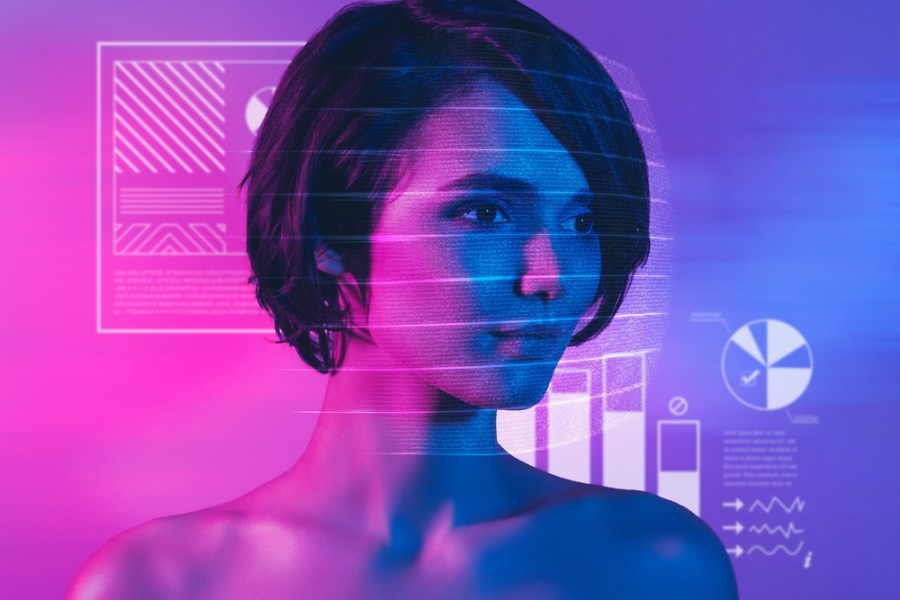
You’ve probably heard of artificial intelligence helping doctors diagnose illness or power driverless cars, but did you know it’s quietly transforming our beauty routines too? From apps that analyse your skin in seconds to personalised serums designed with data, AI is making beauty more personal than ever.
Haircare brands Kérastase and Function of Beauty now use algorithms to analyse texture and scalp condition, creating blends designed to nourish, thicken and repair. Additionally, apps such as Perfect Corp’s YouCam and ModiFace (used by L’Oréal and Boots) allow virtual make-up try-ons that also assess your skin’s undertones and texture. No more mismatched foundations or wasted lipstick shades – you can see what works before you buy. British favourites No7 and Charlotte Tilbury now offer these tools online and in store, too.
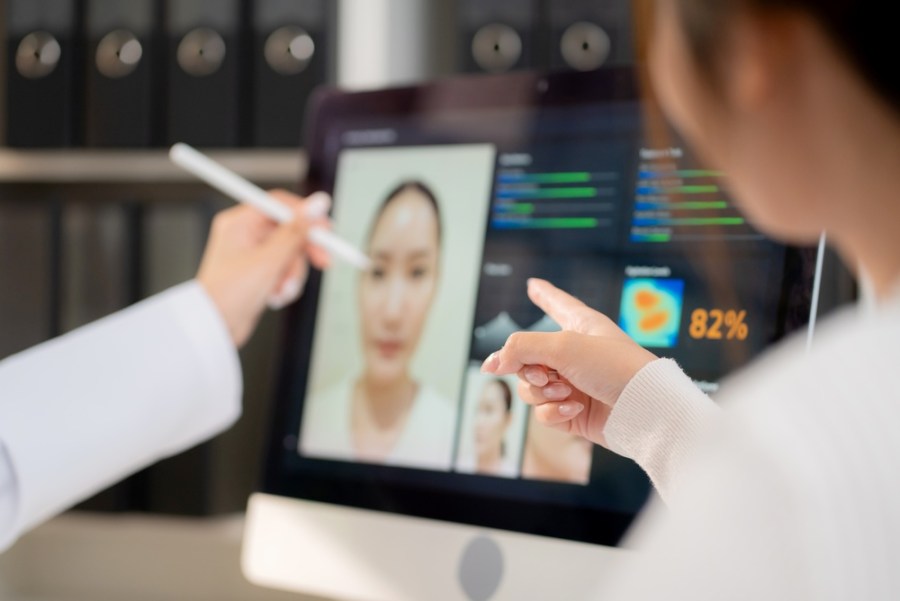
Skincare-wise, you can snap a selfie and instantly discover what your skin needs thanks to AI-powered analysis tools such as the Olay Skin Advisor and L’Oréal’s Skin Genius, which use sophisticated algorithms to study your photo, assessing hydration levels, pigmentation, pores, fine lines and more. Within seconds, you get a tailored overview of your skin’s “age” and the products most likely to benefit you.
And this is good news in midlife, when our skin can often feel as though it’s changing rapidly.
‘Women in perimenopause and menopause often feel like their skin has changed overnight,’ says advanced aesthetics doctor and menopause expert, Dr Shirin Lakhani (elite-aesthetics.co.uk). ‘Products that worked for years suddenly cause redness, dryness or breakouts. Traditionally, it could take months of trial and error to work out what your skin needs, but AI-driven diagnostic tools are shortening that journey dramatically,’ says Dr Lakhani.
‘By analysing high-resolution images of your skin, including texture, hydration levels, pigmentation, vascular changes and collagen loss, AI can provide a far more objective picture than the naked eye, and is already incorporated into skin analysers. This means we can tailor treatments and skincare routines based on what your skin actually needs, rather than relying on guesswork, which is particularly valuable during menopause, when fluctuating oestrogen levels affect the skin’s barrier, elasticity and overall resilience,’ she explains.
‘With AI, we can monitor these changes more closely, adjust treatment plans in real time and support the skin through hormonal shifts rather than reacting after the fact.’
And this is helpful for us in midlife as our skin can change rapidly with the onset of menopause. Many women begin to see significant shifts in their skin post 40. Collagen and elastin levels decline, cell renewal slows, and falling estrogen can make the skin feel thinner, drier and more reactive. These changes often mean products or treatments that once worked suddenly stop delivering the same results. ‘If AI can be used in order to obtain a greater understanding of how ingredients behave on different skin types, then this will help women to navigate a faster and more effective pathway to optimal skin health,’ says Dr Jessica Western, cosmetic doctor at Dr Leah Skin Clinics (drleah.co.uk).
‘AI is especially useful for women during menopause because skin can fluctuate dramatically during this time due to the hormone changes that are occurring. AI tools that monitor hydration, texture and oil levels in real time can help women to stay ahead of those changes instead of reacting after problems appear,’ adds Dr Western.
AI is also making true personalisation possible. Instead of picking from dry, normal, or mature formulas, you can now order one that’s made just for you. British brand Skin + Me uses dermatologist expertise with AI-driven skin analysis; simply upload a photo, answer a few questions, and receive not just a product recommendation from the existing range, but a personalised cream that evolves each month as your skin does – nifty!
Across the pond, US pioneers Proven and Atolla use AI to blend serums that change along with your environment and hormones. You can expect more of these adaptive, subscription-style skincare systems to appear in UK stores soon.
AI in aesthetic medicine
Going even deeper than creams that sit at a surface level, the aesthetics market is also being transformed by AI. ‘Artificial intelligence is already being used to help improve the planning of cosmetic surgery, where it leverages data analytics of previous surgeries to help predict any potential complications,’ says Dr Dan Marsh, co-founder of The Plastic Surgery Group (theplasticsurgerygroup.co.uk).
‘Now, AI can provide 3D imaging technology to create detailed models of patients anatomy to help envisage the planned and expected outcome. There’s no doubt that as this and other AI advances related to cosmetic surgery become more sophisticated and readily available, they will be used to support and enhance the patient journey further, says Dr Marsh.
Traditionally, consultations have relied on before-and-after images and verbal descriptions, leaving much to the imagination. But now Adoreal’s 3D visualisation software allows patients to visualise how they would look through hyper-personalised 3D visualisations of potential results for both face and body using AI, providing clarity, confidence, and control like never before, and ultimately redefining how patients approach aesthetic procedures.
A survey from Adoreal revealed that 25 per cent of prospective patients cited poor surgical outcome as their biggest concern, ranking above all other worries, including recovery time (24 per cent), pain (19 per cent), and safety risks (11 per cent). Despite this, more than 70 per cent of patients are actively considering a procedure within the next year, with nearly half intending to move forward in the next three months.
‘With software such as this from Adoreal, we can move beyond vague descriptions and actually show patients a realistic representation of what’s possible. This is a true game-changer; not just for consultations, but for the entire aesthetic journey,’ says Adrian Richards, founder of iQonic Aesthetics (iqonicaesthetics.com).
Want to age-proof your skin? These are the underground beauty trends dermatologists wish you knew
Final thoughts
But a word of caution: while AI is powerful, it’s wise to choose your tools carefully. Stick with reputable brands that comply with UK GDPR privacy standards, clearly explain how your data is used, and avoid overpromising “miracle” results. And while AI can complement professional care, it shouldn’t replace expert medical advice, especially if you have a skin condition or are undergoing hormone therapy. ‘AI advances are impacting all areas of life and so it is inevitable that they will play a part in the beauty and wellness industries too. Whilst lots of these advances sound incredibly exciting, it’s always important that this data is interpreted properly by a qualified and experienced practitioner who understands the skin and its specific needs. This will help to ensure patient safety and the most effective results,’ says Dr Western.
Dr Lakhani agrees: ‘AI is by no means about replacing the expertise of a clinician, it’s about enhancing it. The human element is still absolutely vital. What AI offers is a new level of insight and precision that allows us to really transform personalised skincare,’ she adds.
But as AI becomes more integrated into our routines – recommending serums, tracking results, even syncing with smart mirrors – it’s turning beauty into something dynamic and personal. This isn’t about chasing youth, it’s about using intelligent tools to support healthy, confident ageing. Beauty that understands where you are in life. And that, surely, is the smartest kind of beauty there is.
Top trending AI beauty tools to try…
- L’Oréal Skin Genius – A free online tool that analyses your selfie to assess firmness, texture, pores and more, then recommends skincare tailored to your goals.
- Skin + Me – British dermatologist-designed, AI-assisted skincare that evolves with you. Ideal for addressing menopause-related skin changes.
- No7 Virtual Consultation – Uses AI to match your skin concerns to their pre-existing range of skincare products. No selfie needs to be uploaded, it’s simply question based.
- Kérastase Hair Diagnostic Tool – Smart online system that recommends shampoos and treatments based on your hair’s density, texture and scalp health. Questions only – no photo upload required.
- Adoreal’s 3D Visualisation – The Adoreal app offers cutting-edge 3D imaging so you can visualise potential surgery outcomes for full-body visualisation, before you even go under the knife. You need to create an online account.