

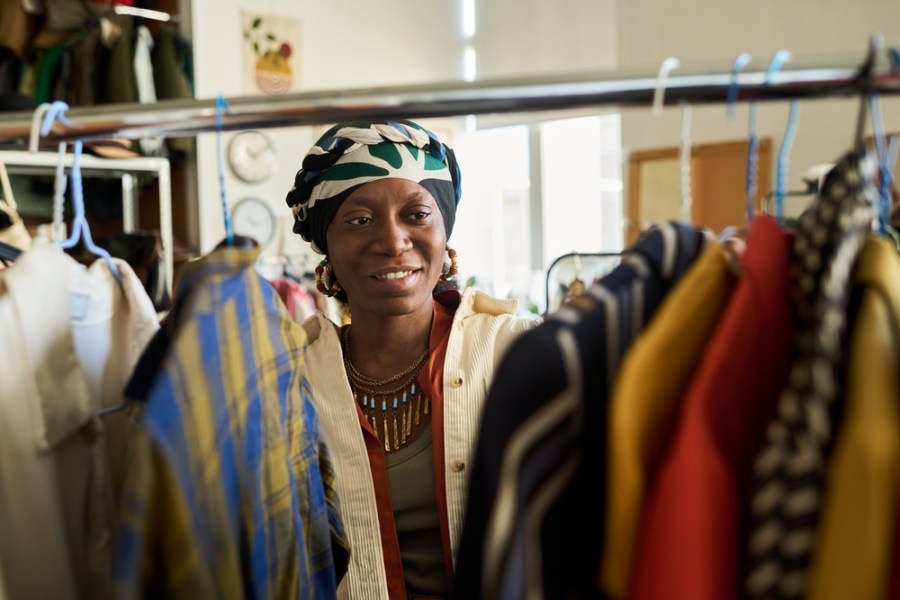
If you’re a magpie for discounts and bargains, you’re probably no stranger to second-hand shopping – but the real hidden gem isn’t on the rack. Research shows that thrift stores and charity shops can boost your health and wellbeing too
Words: Amy Dowrick | Images: Shutterstock
Whether you’re a thrifting pro or volunteer at your local charity shop, doing your bit for sustainability doesn’t have to be a solo job – and research is showing that getting involved in second-hand communities can boost a lot more than profits.
In a report by the Charity Retail Association in 2024, charity shops have a positive impact on people’s wellbeing – and on top of funds raised for charities, every pound spent on operating charity shops generates an additional £75.3 billion in social value.
“The value of charity shops goes much further than income generation – charity shops really do improve people’s lives,” says Paul Newell, Head of Retail at charity Saint Francis Hospice. “They are an enormous benefit to the community – to the people who volunteer in the shops and the people who support the shops by donating and buying preloved goods.”
The report found that 49% of a charity shop’s social value is linked to giving back to others and the planet – and 29% of its value is about creating a sense of community.
“It’s well known that charity shops are fantastic places to find affordable clothing and homeware, but this report has allowed us to dig deeper into the impact that charity shops also have on people’s wellbeing and the importance of charity shops to communities,” says Robin Osterley, Chief Executive of the Charity Retail Association.
So, while shopping in thrift stores makes life much more affordable, it’s the sustainability that it promotes and the community it creates that allows it to play an important role in improving our wellbeing.
And when people were asked about what charity shops meant to them, it was being able to give back to others, doing something good for the planet and opportunities to socialise that were among the top responses.
How can second-hand shopping boost wellbeing?
Improves mental health and lowers stress levels
The positive impact that second-hand shopping has on a community goes beyond the shopping hauls. In boosting our wellbeing, compassion and friendliness, our self-esteem and emotional health is all positively impacted.
And for those suffering from climate anxiety and wanting to do their bit for the planet, many of us might find that it gives us that extra nudge.
Almost one in three UK adults feel that charity shops are important to society because of the sustainability factor – with 40% of us considering the environment as an important factor when we shop now more than ever, according to research conducted by Censuswide.
And as news feeds get clogged with environmental panic and doomscrolling is at an all-time high, feeling connected to an organisation that is actively playing its part in making things better, whether through shopping or volunteering, is an easy way to feel more positive about these issues. Even if playing a small role, being part of a community can feel like you’re doing your bit too.
Alleviates financial anxiety
Second-hand shops sell anything from affordable clothing and décor to kitchenware and toys – but while a reduced-price tag will play its part in reducing financial strain, it’s not just benefiting shoppers.
Just over four in ten (42%) respondents of the Censuswide survey said that second-hand stores and charity shops provide jobs and volunteering opportunities in the community at a time when the UK is facing recession, which in turn has a knock-on effect on employability-related stress, financial burdens as well as isolation.
Reduces social isolation
Visiting a second-hand store or charity shop offers regular contact with other shoppers or volunteers, helping decrease loneliness and isolation.
Regular face-to-face contact can be particularly beneficial for older or retired adults too and feeling more socially connected can positively impact depression and reduce stress.
Boosts healthy ageing
According to a study in 2019, charity shop volunteering was found to contribute to a positive perception of ageing – especially in challenging experiences of transition, such as bereavement and unemployment.
Volunteering can provide purpose, structure, agency and belonging for those experiencing problems later in life – and communities can offer support by providing access to psychological and social resources when coping with transitions.
So whether it’s for the environment or to feel part of your community, engaging with second-hand businesses can lead to hugely positive transformations for your emotional wellbeing and lifestyle.
“We are entering an unprecedented period when the power of ‘good’ is being recognised and valued by modern society perhaps like never before,” says Anna Phillips, Head of Charity Property for Foot Anstey. “Charities in the UK are an incredible force for the positive and charity shops often form their most accessible public face.”