


Sleep support, cognitive function, muscle recovery and more: a nutrition expert explains why the type of magnesium you take could make a bigger difference than you think.
Words: Amy Mica Marsden. Images: Pexels.
Social media can influence us in many ways – it can steer us in what to wear, what to listen to, what to eat… and what supplements to take.
Magnesium has been trending all year, and it doesn’t look like it’s set to stop soon. But what is it for, and why is this essential micronutrient so popular at the moment?
Magnesium is abundant in our bodies, with the average adult body containing around 25 grams naturally. However, we do still need to boost the amount ourselves – whether through diet or supplementation.
In fact, the NHS recommends that men aged 19-64 aim to get 300mg of magnesium from diet or supplement per day, while women in the same age group should aim for 270mg.
The safe upper limit for magnesium from supplements alone is recommended at 400mg daily for adults, though there is no real upper limit from food.
What is magnesium for?
According to the National Institutes of Health Office of Dietary Supplements, magnesium is needed for more than 300 enzyme systems that regulate biochemical reactions in the body.
In other words, it helps our body produce the chemical reactions it needs to function and is essential for healthy muscle and nerve function, blood glucose control, healthy bones, and blood pressure regulation, among other things.
If you become deficient in magnesium, you may experience symptoms such as low appetite, nausea, vomiting, fatigue and weakness – and you’re more likely to be deficient if you have a pre-existing condition such as type 2 diabetes, Crohn’s disease, or kidney problems.
Why are there varieties of magnesium?
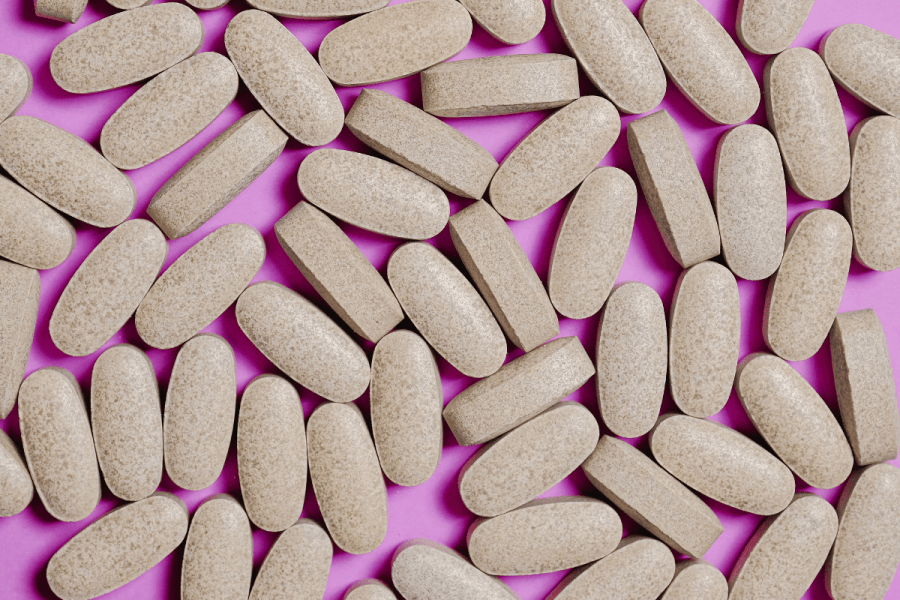
You may have noticed that there are many different types of magnesium supplements on offer, all with varying health claims.
‘Magnesium is magnesium is magnesium,’ says nutrition therapist, best-selling author and award-winning health and food expert, Ian Marber. ‘What it’s attached to creates the difference.’
‘The compound that it’s attached to is sort of its guide – so, for example, when it’s attached to glycine, it becomes magnesium glycinate,’ he explains.
The different compounds attached to the magnesium affect properties like its absorption, its efficiency, and its effects – with some more effective than others.
To get the low-down on this essential micronutrient, we asked Ian which 4 types of magnesium he recommends – and why.
Which magnesium?

Magnesium Glycinate
Best for relaxation, stress, and helping with anxiety
‘Magnesium Glycinate has a particular affinity for the central nervous system,’ says Ian. ‘It tends to be well-tolerated without giving digestive problems, so it’s quite good for people with sensitive digestion.’
For a restful night, you should aim to take magnesium Glycinate in the evening, around 30 minutes to an hour before you intend to sleep.
However, if you’re more interested in its stress-busting properties, try taking it in the morning with breakfast – it is better absorbed with food.
And what if you want both effects? Try splitting your daily dose and taking half in the morning and half at night.
Try: Solgar Magnesium Glycinate Capsules, £15.99

Magnesium Citrate
Best all-rounder
If you have no particular concerns other than upping your magnesium intake, citrate could be a good option as it absorbs easily.
‘If someone had no specific needs and wanted to include magnesium as part of a sensible supplementation regime, I’d always suggest they went for magnesium citrate,’ advises Ian.
Something to be aware of is the effect magnesium can have on the gut. It can loosen stools, which means that a higher dose can be useful for treating constipation.
To minimise this effect, Ian recommends splitting the dose: ‘I often suggest, if someone is taking it for general support, to take 200mg in the morning, 200mg in the evening.’
Try: Solgar Magnesium Citrate Tablets, £15.60

Magnesium L-Threonate
Best for cognitive support
One of the newer types of magnesium to hit the market, L-Threonate has become popular lately for its concentration-boosting benefits.
‘The thing about L-Threonate,’ says Ian, ‘Is that threonine [the amino acid the magnesium is bound to] passes through the blood-brain barrier.’
‘The blood-brain barrier is a sieve which effectively stops things going over that shouldn’t, but Threonate actually gets through, so therefore this has a higher interaction with brain activity [meaning it] can be good for general cognitive support.’
Ian suggests it’s better to take L-Threonate as-and-when you need a concentration boost, rather than daily, for a more noticeable effect.

Magnesium Malate
Best for boosting energy production and supporting a natural energy-yielding metabolism
If you’re often feeling sluggish or you need an energy boost at certain times, magnesium malate might be for you.
‘It’s good for daytime energy [and also] post-gym recovery, because it slightly relaxes muscles,’ advises Ian.
Be mindful when you take Magnesium malate, as its energy-boosting properties may keep you awake if taken later in the day.
Ian Marber is a nutrition therapist and author of The GLP-1 Handbook – Eating Well When Taking Weight Loss Medication. Follow him on Instagram here.