


If you’re hoping to reduce your screen time and put an end to distractions, writer Amy Mica Marsden gives her thorough review of the Brick that’s sweeping social media.
Words and cover image: Amy Mica Marsden. Other images: Shutterstock
It’s a resolution that an estimated 1 in 4 Brits (and 50% of Americans) made at the start of the year: reduce screen time and live a more ‘offline’ life.
I was one of those millions of people who, come January 1st, decided to finally take control of the amount of time I was spending on my phone and reclaim my life.
The supposed silver bullet in my arsenal of weapons against the dreaded doom scroll? A £54 ($59) square of magnetic plastic.
Brick, the device which aims to free you from your phone, is the brainchild of two college students who decided they needed to get unhooked from their devices.
Fast forward to now, and Brick has become somewhat of a phenomenon of the digital age.
What is Brick?
Physically speaking, Brick is exactly as previously described: a square piece of plastic with a magnet attached, so you can put it anywhere you want.
It comes with an app, within which you can choose up to 50 apps and websites to either block or allow. To activate the block, you simply tap your phone to the Brick and say goodbye to your apps.
The only way to then UNblock those apps is to physically bring your phone back to wherever you keep the brick – preferably somewhere out of reach.
It functions on the principle of adding friction (sometimes also called ‘friction-maxxing’) to everyday life to combat the laziness that comes with modern-day convenience, and make it easier to activate our senses of self-discipline and willpower.
Think about it – how often have you set time limits on your apps, only to automatically hit ‘ignore’ and carry on scrolling when the notification arrives? Brick aims to make it just that little bit harder to bypass.
Scrolling life away
As with many of us who’ve desperately tried a hundred different methods to kick so-called phone addiction, I was initially sceptical.
Would that extra step of having to stand up and walk a few paces really prevent me from using my phone? And even if it worked in the short term, would it actually do anything to permanently change my scrolling habits?
I’ve tried turning notifications off on the worst offending apps, changing my phone screen to black-and-white, physically putting my phone in another room, and even deleting the apps I use most often — but none of it made any difference beyond the initial week or two of motivation.
And so, come January 1st, I turned to Brick.
My life with Brick
I originally used Brick with an ‘all or nothing’ mindset: I blocked practically every app and website I ever used, for as much time as possible.
And at first, it was fantastic. I got so many chores done! I did so much reading! Painting! Writing! I went on more walks, and my kitchen has never been cleaner.
But much like a caffeine addict craving their next cup of coffee, I found myself thinking about my phone almost more than I had before.
I was staying up later, scrolling frantically when I unblocked my phone at night, and I was missing important messages from friends.
Increasingly, I found myself sneaking into my (sparkling!) kitchen to unblock my phone, just for a little hit of whatever app I found myself drawn to.
And once it was unblocked, that was game over for my free time. Of course I couldn’t just use my phone for ten or twenty minutes after work – that was the whole reason I needed help in the first place.
So, after a month of dwindling Brick time, I re-strategised.

The turning point
The Brick app doesn’t have much on it, kind of in keeping with the whole ethos of the device. It doesn’t need much.
But there was one tool on there I hadn’t really been utilising, and when I noticed it, that’s when Brick really came into its own: the scheduling tool.
I used it to set blocks on my phone at set points in the day. An hour blocked out right after work so I wouldn’t be tempted to immediately open my phone and lose the evening. I blocked out another hour later in the evening, after dinner, so I could spend some time engaging in hobbies, as I had right at the start.
And the biggest lifesaver for me: I made sure to schedule my phone to Brick at bedtime, to save me from nighttime scrolling.
At first, it was difficult. But after a month or two, I found I wasn’t yearning for my phone half as much. It was gradually getting easier to enjoy time away from my device, and now it’s become second nature.
I don’t have to fight my willpower to unbrick when I think of something I want to search, watch, or check.
And it’s given me a sense of routine I’ve never had before, too. Now, I get so sleepy at the exact time my phone blocks itself at night, and I just… go to sleep. In fact, increasingly, I get tired even before that time – and I listen to my body. The health benefits are invaluable to me.
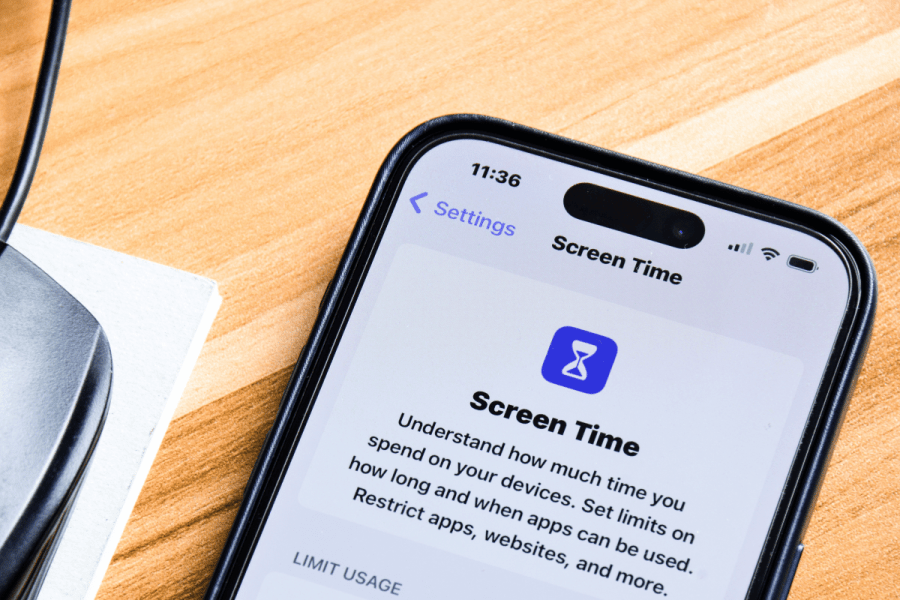
Real talk: Does Brick really help?
In short, my answer is: yes. I know there are likely people bemoaning this ‘trendy’ tool, hoping the fad will die down when people realise they’ve wasted their precious money on a gimmick.
But, in my opinion, Brick is not that.
As with anything, you get out what you put in. Brick is a tool, but it is not a silver bullet. It’s not going to do everything for you, and if you’re really addicted to your phone, you’re going to have to do some personal work outside of that.
This is evidenced by my results: my screen time has reduced by about 30-40% since I started using it. I do still use my phone, but I like to think it’s less of a compulsion now, and I’ve reclaimed a lot of my evenings and weekends.
I can say now, nearly five months in, that Brick is not a gimmick. It’s become part of my routine, part of my life, and I can’t imagine parting with it any time soon.