

As the number of women having babies in their fifth decade goes up, fertility experts reveal how you (and your partner) can increase your chances of conceiving in your 40s, from ditching plastic food containers to throwing out your air fresheners.
Words: Katy Sunnassee. Images: Shutterstock
Paloma Faith shocked her fans late last year by announcing she had become pregnant with her third child at the age 44. Yet she’s far from alone – Brazilian supermodel Gisele Bundchen had her third child last February, also at the age of 44, and Sienna Miller is celebrating baby number three after getting pregnant at 43.
In fact, each year in the UK more fortysomethings become pregnant than teenagers, and in the US, recent figures show that births among women aged 40-44 has jumped 127 per cent since 1990. In fact, the US birth rate for women aged 45 and older increased by 450 per cent, while teen births dropped by 73% in the same period.
So why are women delaying motherhood? The reasons are complex. Some couples can’t afford the cost of childcare and housing; some women can’t risk stepping away from their career, while others don’t now meet a partner until later in life.
And some couples try to conceive for years, only having their miracle child – either naturally or via IVF or egg donation – in their 40s.
Yet it seems that becoming an older mother has benefits that can’t be ignored. Obstetrician, gynaecologist and holistic fertility expert, Dr Larisa Corda, author of The Conception Plan (theconceptionplan.com), says: ‘Older parents bring with them the gifts of wisdom, time and quite often more stability.
‘In addition to this, they have also been shown to live longer and maintain better overall cognitive function in later life.’
Yet getting pregnant in your 40s can be a challenging process. ‘Fertility is a complex puzzle, and most often comes down to our reproductive biology or luck – and sometimes a combination of both,’ says Jenny Wordsworth, founder of Ovum (https://startwithovum.com), doctor-created fertility supplements.
She recommends seeing your GP or a fertility specialist if you’re above 40 and have been trying to conceive for three months or more. Also seek medical advice if your cycle is absent or irregular to confirm whether you’re still ovulating.
‘It’s common to hear that fertility drops off a cliff after 35, yet in reality, the change is more like a slow taper than an abrupt end. By your early to mid-30s, egg quantity and quality begin to decline, but that doesn’t mean pregnancy after 35 is impossible,’ says Jenny.
‘Women are born with all the eggs we will ever have and because we can’t repair them as we age, the quantity – and more importantly, the quality – of those eggs declines over time,’ says Jenny.
‘In our 20s, egg loss is gradual but by our 30s, the decline accelerates. However, what is of utmost importance is egg quality. As women age, eggs are more prone to chromosomal imbalances, increasing the likelihood of ovulating an unhealthy egg.’
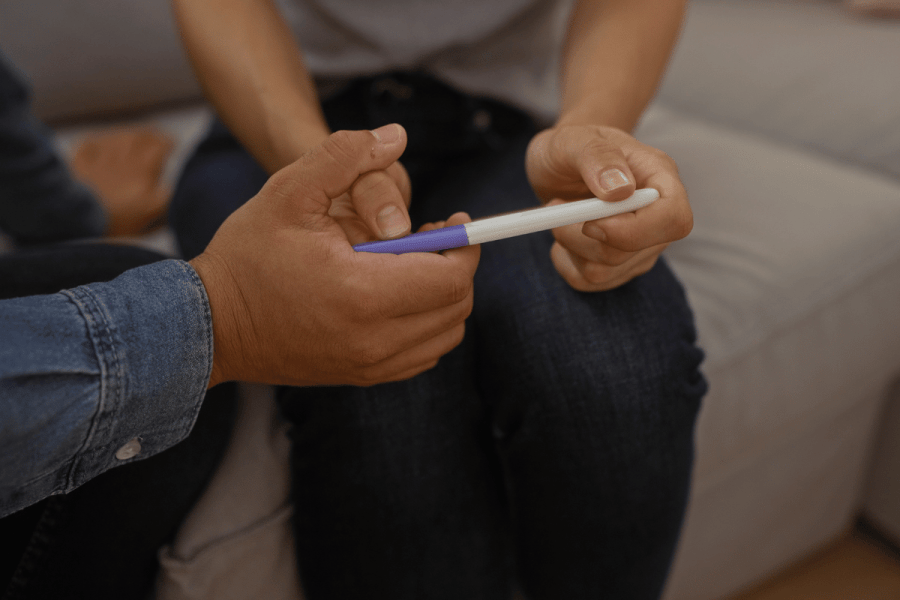
The risk of miscarriage rises from 20 per cent to 35 per cent between ages 35 and 39, and to above 50 per cent by age 45.
‘The challenge with ageing, and trying to conceive over 40, isn’t just having fewer eggs but having fewer healthy ones that can lead to a viable pregnancy,’ says Jenny.
But there is still hope. ‘Age, of course, has an impact on all of our biological processes, including reproduction,’ says Dr Corda. ‘But the rate and speed at which age affects each person is different and I believe can be influenced by how well we programme our bodies for health and longevity.’
*For more information visit startwithovum.com and theconceptionplan.com
10 steps to increasing your fertility naturally
Ovum CEO Jenny Wordsworth and Dr Larisa Corda reveals the simple lifestyle changes that could have a big impact on your ability to conceive
Improving your fertility is a case of boosting your overall health and wellbeing. ‘It’s important to realise that conception is far more than just a mechanical process of sperm meets egg,’ says Dr Corda.
‘The entire environment you cultivate on the inside to prepare for fertilisation, is so vitally important and this takes time and commitment. There is a whole process of preparation that ideally needs to occur beforehand, that contributes and influences conception.’
EAT WELL
There is some evidence to suggest that following the Mediterranean diet is best for fertility. Eating a well-rounded diet rich in fruits, vegetables, lean proteins such as fish and soy, whole grains and healthy fats will always serve you well. Opt for balance and moderation, avoid extremes.
SLEEP WELL TOO!
Sleep influences both hormonal balance and reproductive health. Studies have shown that inadequate sleep, particularly fewer than seven hours per night, can impair ovulation and menstrual cycles, making it more difficult to conceive. Chronic sleep deprivation may elevate levels of stress hormones such as cortisol, which can suppress the pituitary gland and cause cycle irregularity.
LOWER STRESS
Stress doesn’t cause infertility, but it doesn’t help either. Stress can impact sleep, our overall health and environment for ovulation and pregnancy, so reducing and managing it through various self-care methods is going to help.

EXERCISE REGULARLY
Regular moderate exercise (150 minutes a week) such as light strength training, swimming, and yoga has been shown to positively impact fertility in women.
Women who maintain an exercise routine have been found to have a shorter time to conception than those who lead more sedentary lifestyles.
However, research shows that excessive endurance sports or vigorous exercise for more than 60 minutes a day may impede conception. Overtraining and extreme endurance activities for men can lead to lower testosterone and impaired sperm production.
AVOID SMOKING OR VAPING
Smoking is known to accelerate the depletion of ovarian follicles, bringing on menopause one to four years earlier. Women who smoke are more likely to require double the number of IVF attempts and have higher rates of miscarriages and ectopic pregnancies. Men who smoke have significantly reduced sperm quality and function.
AVOID ALCOHOL
NICE guidelines advise that both women and men trying to conceive should avoid alcohol altogether, as even moderate drinking can negatively affect fertility and increase the risk of complications in early pregnancy.
SAY NO TO CANNABIS
One study found that ovulatory women who used cannabis had a 70 per cent higher risk of infertility. For men, there’s evidence that smoking cannabis is linked to lower sperm counts too: around 29 per cent lower than those who’ve never used it.

MINIMISE ENVIRONMENTAL EXPOSURES
Endocrine-disrupting chemicals (EDCs) can interfere with hormonal balance and potentially lead to reduced fertility.
Higher exposure to air pollution has been related to lower fertility rates. People living near major roadways, where pollution is highest, have been found to take longer to conceive and face higher risks of infertility. Air pollution has also been shown to impact sperm health, leading to lower sperm quality and even damage to sperm DNA.
At home, swap plastics for glass and metal; store food and drink in glass or steel containers – never heating food in plastic; minimise the use of perfumed and fragranced products and avoid processed and packaged foods.
USE SUPPLEMENTS
The NHS recommends taking 400mcg of folic acid and 10mcg of vitamin D when you’re trying to conceive (a methylated version of folate is best), but it can be very hard to ensure you get the exact doses you need, on a daily basis, to support egg quality or sperm health from diet alone. Food supplements can ensure you’re taking the right nutrients to best support the quality of your eggs or sperm.

What men can do to help
Leading male fertility nutritionist Melanie Brown (melaniebrownnutrition.com) on the surprising way men’s health impacts pregnancy
It’s always been believed that men can father children at any age, but this is usually with much younger women whose good eggs do most of the heavy lifting. When it’s with older eggs, it’s not as easy.
Male factors are involved in around 40-50 per cent of infertility cases, but it’s still not recognised as much as female infertility, and it isn’t spoken about as often.
Older fathers-to-be can find their sperm count declines, the size and shape of their sperm changes and the sperm’s ability to move (motility) is also affected.
The DNA in the heads of male sperm cells is more likely to undergo fragmentation and acquired mutations in the genetic material carried by sperm can affect the sperm’s ability to fertilise an egg, and the health and viability of a resulting embryo.
Research has shown that older fathers are also at a higher risk of passing on accumulated genetic mutations in their sperm DNA, which may be associated with a slightly increased risk of conditions in children such as autism, schizophrenia, and even some childhood cancers.
Checking sperm quality is therefore an important part of a couple’s conception journey. People don’t realise that reproductive health is also a barometer of wider health. In the long-term, it could be linked to cardiovascular disease and cancer risk.
Male obesity is a huge problem for male infertility and also impacts the health of the pregnancy itself; it’s been linked to higher rates of recurrent miscarriage, as well as pregnancy complications such as preeclampsia.’