


Could the secret to living longer be less about what you eat and more about when you eat? Dr Avanti Kumar-Singh explains how combining intermittent fasting with Ayurvedic wisdom may help improve gut health, stabilise blood sugar, boost energy and encourage healthy ageing.
Words: Avanti Kumar Singh. Images: Shutterstock
In recent years, the practice of “intermittent fasting” has taken the medical world by storm, as if to imply that it is a new discovery. Although the scientific evidence to support it may be new, the practice itself is not. Fasting is one of the most ancient healing practices in human history, and it remains part of virtually every major religion in the world.
The benefits of fasting were documented as early as 600 BCE in the first Ayurvedic texts – specifically, the Sushruta Samhita. More recently, studies show that the nutrient deprivation achieved through time-restricted eating protocols like intermittent fasting have significant improvement on chronic conditions, including obesity, diabetes, cardiovascular disease, cancer and cognitive decline, all of which are closely linked to ageing.
When we look at the physiology of consumption, we see that we are either retaining energy (feeding) or eliminating toxins (fasting). When we eat more food, more energy is ingested than can be immediately used. Some of this energy must be stored away for later use. Insulin is the key hormone involved in the storage of food energy because it rises when we eat, signalling to the body that we should store some of the energy away.
This process goes in reverse when we fast. Insulin levels fall, signalling the body to start burning the stored energy because no more is coming in through food. So, the body only really exists in two states: the fed state and the fasted state. Either we are storing food energy or we’re burning it – it’s one or the other.
If feeding and fasting are balanced, then there’s balance within. And there are many benefits of fasting, including increased energy and mental clarity; improved brain health from brain cell renewal and repair; lowered blood sugar, insulin and cholesterol; increased growth hormone; reduction of inflammation; and weight and body fat loss.
It’s important to point out the difference between intermittent fasting and what I call Ayurvedic rhythmic fasting. Intermittent fasting involves cycling between periods of eating and fasting, mainly emphasising when to fast. Ayurvedic rhythmic fasting, on the other hand, is a rhythm of fasting and eating that emphasises both when to fast and when to eat.
And here’s the key: you must fast when your digestive fire is lowest and eat when your digestive fire is highest. When done according to the path and strength of the sun, this approach to fasting not only stimulates autophagy, but keeps your body and digestive fire aligned with nature so it can efficiently retain nutrients and eliminate toxins to maintain a balanced gut microbiome.
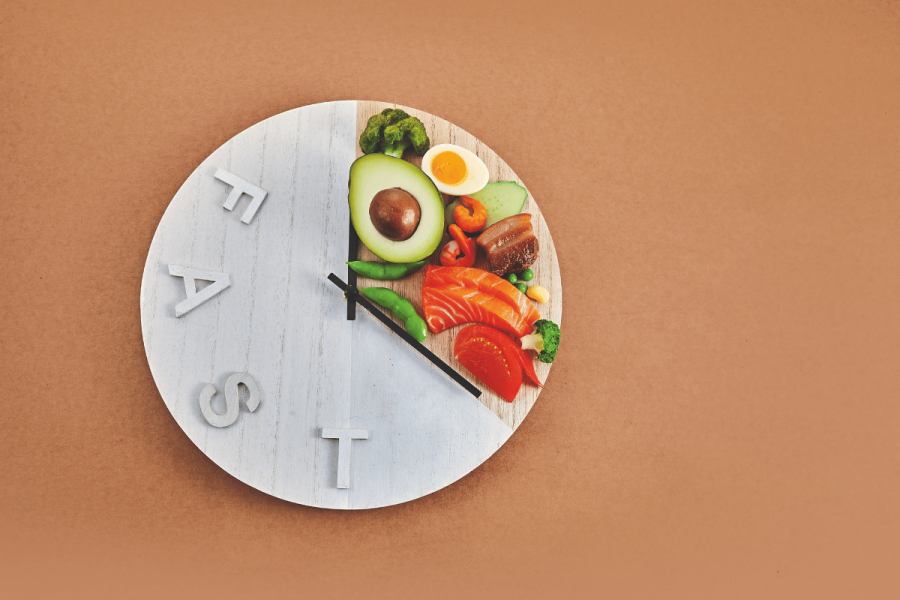
Here are some guidelines to getting started with Ayurvedic rhythmic fasting:
Eat during the day.
Your largest meal should be between 10am and 2pm, and it should include harder-to-digest foods such as protein, raw vegetables and fruits, and grains. In the morning and in the evening, eat smaller meals that include easily digestible foods such as soups, stews and cooked vegetables.
Fast during the night.
Fasting should start within one hour of sunset, ideally by 8pm latest. Don’t break your fast until at least 12 hours later, so around 8am the next day.
Chew everything well
This Ayurvedic saying reminds us to always support the digestive fire with mindful drinking and eating. By “chewing” drinks slowly, you allow time for the digestive enzymes in saliva to mix with the liquid. This starts the digestive process in the mouth and aids the absorption of nutrients from drinks. “Drinking” solid food is a reminder to chew it thoroughly until it becomes almost liquid before swallowing.
By breaking solid food into smaller pieces, it’s easier for the stomach and intestines to process. It also slows down eating, giving the brain time to receive signals of fullness and reduce the tendency to overeat.
Eat in order
The order in which different foods are eaten in a meal is important for maintaining steady glucose levels, which supports longevity by sustaining stable energy levels, reducing inflammation, improving cognitive function, aiding in weight management, and, most importantly, reducing the risk of diseases such as heart disease, diabetes and obesity, which are associated with chronically elevated blood glucose and the resulting insulin resistance.
It’s amazing to think that something as simple as changing the sequence in which you eat the food on your plate can have such a significant effect on health and longevity. It is preferred that you eat the different foods on your plate in the following order: fibre, protein and fats, then carbohydrates. Eat fibre first. Fibre slows the absorption of sugar into the blood and makes you feel full longer. Cooked vegetables are a great source of fibre, so eat them first. Remember that raw vegetables are harder to digest than cooked vegetables.
Eat protein and fats second. Although they cause an increase in blood glucose, they help control the spike caused by carbohydrates. Eat carbohydrates last. By eating fibre, protein and fats first, the glucose spike caused by carbohydrates is more controlled because the absorption of sugar into the blood is slowed down.
Do food combining
In Ayurveda, food combinations can either aid or inhibit digestion. Improper food combinations weaken the digestive fire and are difficult to digest, and, when left undigested, they become toxins. This can lead to an imbalance, which if left uncorrected will cause symptoms, illness and chronic disease. Here are two food combinations to avoid:
1. Don’t eat fruits with other foods. This slows the digestion of fruit and can cause fermentation in the gut. Instead, eat them alone.
2. Dairy with other foods. It should not be combined with sour or salty foods, fish, meat, nightshades (tomatoes, potatoes and aubergine), or melon. All these combinations weaken the digestive fire.
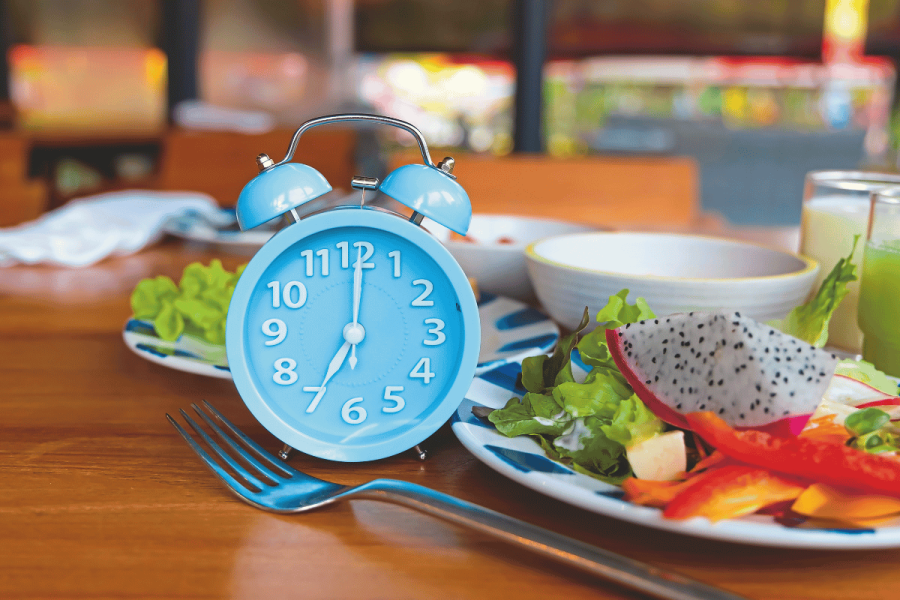
Your daily fasting practice
Creating a consistent routine to stimulate autophagy (cell death) requires some planning and adjustments. Here are seven steps to help you establish a sustainable habit:
1. Eat during the day when you’re awake and with the path of the sun through the sky.
2. Lunch, between 10am and 2pm, should be your largest, hardest-to-digest meal.
3. Fast during the night when you’re asleep.
4. Start with a 12:12 pattern. Fast for 12 hours overnight and eat during a 12-hour window during the day.
5. Build up to a 14:10 (fast for 14 hours overnight and eat for 10 hours during the day) or 16:8 pattern (fast for 16 hours overnight and eat for eight hours in the day) 1-2 times per week.
6. Go slow to allow your body to adjust each step of the way. Consistency is the key. After a week, increase your fasting to 2-3 times per week. After two weeks, increase your fasting to 3-4 times per week. After another two weeks, increase your fasting to 4-5 five times per week. After another two weeks, increase your fasting to 5-7 seven times per week.
7. Remember to be flexible and make your routine work for your lifestyle and health needs.
Read more in The Longevity Formula: Ayurvedic Principles to Reduce Inflammation, Increase Cellular Repair & Live with Vitality (£12.99, Sounds True). Find out more at avantikumarsingh.com.