
From bottled water and plastic tea bags to microwaving leftovers, these everyday habits can affect how much plastic we ingest — and could be quietly damaging our health. We asked an expert for advice on how to reduce our exposure.
Images: Shutterstock
Since the invention of plastic, it’s been hailed as a versatile, useful material and used in everything from food packaging to clothes, furniture, electronics, and more.
But in recent years, scientists have become increasingly concerned about the hidden harm that plastics pose to our health — and how widespread they are.
A new study published in Nature has found that contrary to previous belief, many microplastics are still chemically active when they interact with water (which makes up about 60-70% of the human body). This reaction can lead to the production of volatile molecules in the body, which could have damaging effects on our health.
Co-author of the study, Wei Min, told NBC News that these molecules ‘do show immediate biological consequences’. ‘Proteins get damaged. Cells get damaged,’ he said, though more research is needed into the true effects of these molecules and damage over time.
What are microplastics, and where do they come from?
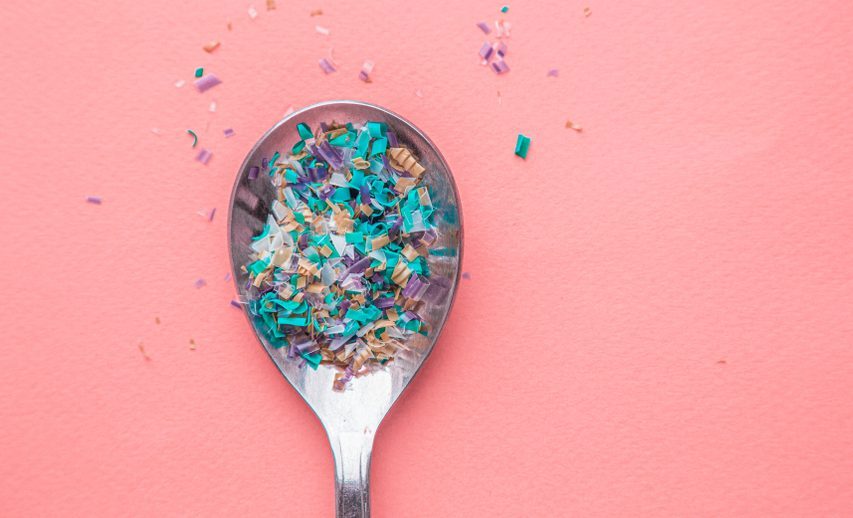
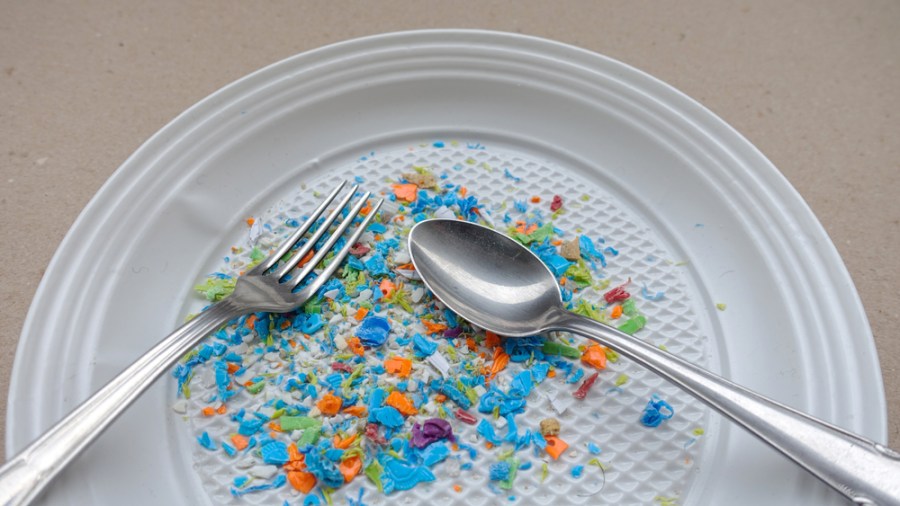
‘Microplastics are tiny plastic particles that can enter the body through food, water, and the air we breathe,’ explains Dr Jennifer Nuovo, Chief Medical Officer for Blue Shield of California’s Promise Health Plan. ‘Researchers have detected microplastics in our blood, lungs, brain tissue, and other organs and believe this may be contributing to inflammation and disruption of normal cell functions’
In a story published last year, Blue Shield of California discussed microplastics also being linked to ‘potentially higher rates of dementia, infertility, antibiotic resistance, and increased risks for stroke and chronic diseases like diabetes.’
‘The evidence around what this means for our long-term public health is still evolving, but research definitely indicates that microplastics are not only harmful to the environment, but also human health,’ said Nuovo.
Some of the biggest culprits for microplastic exposure in our homes come from plastic packaging, and especially when we heat up plastic containers – for example, leaving bottles of water in hot cars, microwaving plastic food containers, or preparing hot food using plastic tools.
Some more common culprits for microplastics in our everyday life, according to Nuovo, include:
– Bottled water
– Plastic tea bags
– Ultra-processed foods such as chicken nuggets
– Prepackaged seafood
– Fast food
– Shellfish, filter-feeding marine life (mussels, oysters, shrimp)
– Sea salt
Reducing microplastics in the body
There is no medically proven way to remove microplastics from the body (beyond its natural elimination processes), Nuovo tells us. However, research on the topic is increasing. For example, researchers in South Korea theorized earlier this year that a kimchi-derived probiotic may be able to help sweep dangerous nanoplastics out of the body — however, more evidence is needed before this effect can be confirmed scientifically.
We also don’t know exactly how much microplastic the average human has inside their bodies, or how long it sticks around before getting expelled – if at all.
‘The human body is amazing and does a pretty good job of eliminating foreign substances through our digestive system, but we’re finding that some of these particles are so small that they’re nestling in our tissue and bloodstream,’ says Nuovo. ‘There is no detox for that.’
The best strategy when it comes to microplastics for now, she advises, is to focus on removing as much future exposure as you can.
Though it’s nearly impossible to avoid microplastics altogether, Nuovo recommends some of the following strategies to try and limit the amount of microplastics we are ingesting:
– Whenever possible, use glass or stainless-steel items for any kind of food storage container.
– Stop microwaving your leftovers in plastic containers! Use a glass or ceramic dish and cover the food with a lid or a paper towel.
– If you are a water drinker, avoid bottled water and go with tap water and some kind of filtration system whenever possible.
– Perform an audit in your kitchen and throw out (recycle!) all the plastic kitchenware you can find, and swap them out with reusable and natural alternatives (such as wood or stainless steel)
While trying to eliminate microplastics entirely is an unrealistic goal, Nuovo says there are other things people can do in their lives and their communities that could help in the long run.
‘People can make a difference by participating in things like beach cleanups, trash collection on your daily walk, driving less to preserve roads and tires (and your sanity!),’ she says.
‘Choose and cook fresh foods as much as possible, limit takeout as much as possible. Fresh foods bypass industrial processing and don’t go through factory lines, plastic conveyor belts, or heavy industrial shredding. Washing foods also helps.’