
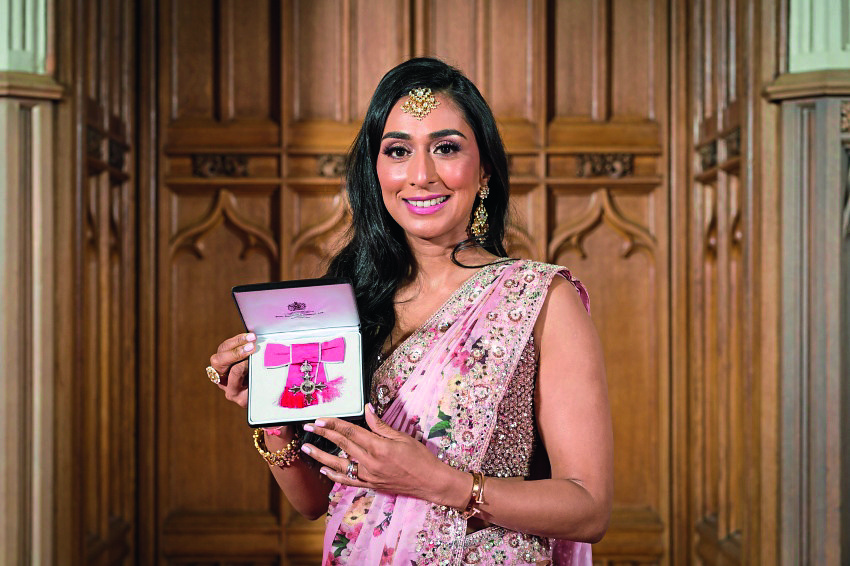
Lavina Mehta, MBE, reveals how she’s feeling better than ever after reaching menopause at 46 years, thanks to her clever lifestyle hacks to ease symptoms – and how you can use exercise, nutrition and stress management to feel good and thrive too
Words: Angela Kennedy | Images: Shutterstock & Lavina Mehta
Looking back, I first noticed signs of perimenopause in my late 30s but I didn’t join the dots until a few years later. I now know I had brain fog, an alarming symptom for me as my grandmother had Alzheimer’s disease. I worried about early onset Alzheimer’s – and I was used to relying on my brain, so it really affected my confidence. My children asked why I kept forgetting things? I’d just kicked off a new career as a personal trainer, appearing on TV and radio – so I really needed my brain to work! Then, I started experiencing major anxiety and friends noticed, asking if everything was OK? My sleep became disturbed – I’d wake up and struggle to drop off again, which only fed my anxiety. At 40, my periods became erratic – they’d always arrived like clockwork before. However, it wasn’t until watching the documentary Davina McCall: Sex, Mind And The Menopause that I ended up sobbing with relief as what I’d been experiencing was explained – I was in perimenopause.
The next day, I announced on Instagram: ‘I’m 42 and I’m in perimenopause’. I was inundated with messages from women suffering in silence. It was a real eye-opener. It gave me the passion to help women navigate this stage of life. Many people still don’t know that South Asian women can reach menopause five or six years earlier than the average white female – which lines up with me hitting menopause at 46. While women of African or Caribbean descent may reach menopause two years sooner. So, I want to highlight that women of different ethnicities can have very different experiences of menopause.
One big difference for me was that HRT didn’t work for me – even though it has been and is brilliant for many women, with so many telling me they felt incredible after taking it. I tried it for 15 months in three variations and dosage tweaks. But I just didn’t feel good and had additional symptoms of bloating and headaches. Searching for an alternative, I found research showing positive results for lifestyle changes managing menopause symptoms. It worked for me – and you can feel better with lifestyle changes too, whether you are taking HRT, or not.
Fighting the tide
It’s essential for women approaching perimenopause and beyond menopause to protect bones, brain, heart, mental health and long-term health through disease prevention. You can do this with simple lifestyle solutions. Did you know, meeting the government guidelines for exercise [at least 150 minutes of moderate intensity activity a week] can reduce your risk of dementia by up to 30-40 per cent? All women can benefit from strength training to maintain muscle mass and bone density to reduce risk of osteoporosis, and to avoid insulin-resistance which is common in mid-life. It’s also incredible for lifting your mood and alleviating anxiety. But you should exercise for sanity not vanity, meaning for wellbeing and health rather than for a six-pack!
Reducing your stress load is key to ageing well. Walking in nature has been my therapy – get outside to expose your eyes to daylight before midday to jumpstart your circadian rhythm. I always go for a quick walk after the morning school run. It’s exercise, stress reduction and helps with sleep. For anxiety, breath snacks reset your nervous system quickly. It’s been a gamechanger for me. Breathe in for four counts and exhale for six counts, repeating for about a minute. The longer exhale activates your parasympathetic nervous system taking you out of fight-or-flight mode into rest, relax and digest state. It’s a great technique for women in the workplace – as one-in-10 women think about leaving their jobs due to menopause symptoms. In the evening, just having a simple stretch, doing slow breathing or gratitude journaling – these are all backed by science for helping you relax and get deep sleep. And I find cold therapy great for brain fog, belly fat, metabolism and improving mood – just 10-30 seconds of cold water at the end of your morning shower is an instant lift.
Nutrition in perimenopause is about nourishing your body, not restricting it. More diversity on your plate is important for a healthy gut microbiome. Eat home cooked and less processed. Being veggie, I focus on protein to build muscle and fibre – I eat eggs, edamame, tofu, tempeh, beans, lentils, Greek yoghurt and kefir. While it won’t suit everyone, intermittent fasting helped me with blood-sugar levels, energy and weight management. Give yourself at least 12 hours overnight of not eating to rest your gut. Cutting out late-night snacks helps with belly fat reduction too.
Try these 7 herbs to help manage menopause symptoms
Coming back stronger
Social connection is so essential for midlife women. I want women to celebrate this phase and I’m getting some familiar faces (women and men) together for a first of its kind menopause party to share hope and inspiration that menopause is a new beginning rather than an ending, because now I’m in menopause, I feel great! But it’s not been a breeze – I’ve gone through the normal stages of declining hormones, battling belly fat and brain fog. I did a body-tracker analysis after my lifestyle changes and my stats were incredible.
My muscle mass has increased, body fat lowered, I have the strength of a 21 year-old, and my metabolic age is the lowest the machine could go! So, I want to shine a light on how important lifestyle choices are for ageing well – and that you can thrive during perimenopause and beyond.
Discover exercise snacks and health hacks to ease your menopause symptoms in Lavina’s book The Feel Good Fix (£18.99, Penguin). Find out about Lavina’s menopause party at instagram.com/feelgoodwithlavina or join her free workouts on Youtube.