
From massage and mindfulness to rest and routine, these simple ayurvedic-inspired practices may help ease the menopause transition
Words: Jo Webber | Images: Shutterstock
We all know too much stress can be harmful to our health. How you manage – or don’t manage – the stresses and strains of life can have a knock-on effect on how you experience menopause. From an ayurvedic perspective, there needs to be as much emphasis on reducing stress at this time of life as there is on balancing hormones.
This makes sense when you think that the stress response is also managed by hormones, such as adrenalin and cortisol. When you’re stressed, your body’s resources, which should be used for producing sex hormones such as oestrogen, are diverted towards making stress hormones. And to make things worse, the surge of adrenaline caused by stress can directly trigger hot flushes and irritability.
Tips for menopause symptoms relief
Try ayurvedic massage
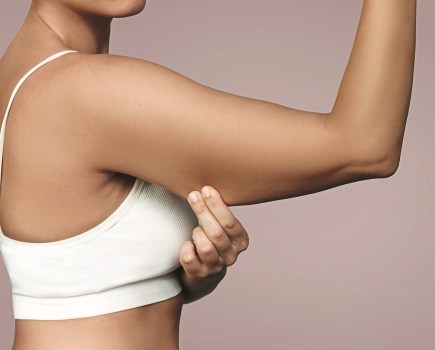
Massage can be very helpful in supporting both perimenopause and post-menopause. Regular self-massage or professional massage with warm oil can help improve circulation as well as calm your nervous system and prevent dry skin.
It’s best to massage first thing every morning. If time is short, focus on your head and soles of feet. You can also do the massage in the evening. Aim for 10-15 minutes.
- Use cold-pressed, organic oils. Sesame oil is a good one. Warm the oil first by putting the bottle in hot water for a few minutes.
- Cover yourself in 50ml of oil, top to toe. Use the open palms of your hands and flat fingers, and work from the centre of each limb, outwards. Use linear strokes on your arms and legs, and circular ones around your joints, scalp and navel. Be gentle on your chest and stomach, but be more vigorous on your limbs.
- Leave the oil on for 10 minutes. Try to leave the oil on when you’ve finished, then wash it off in a hot bath or shower. Dry yourself with an old towel.
NB: Don’t massage when you’re not well, have a full stomach or during your period.
Vaginal douching
Also known as uttara basti, this involves using herbs such as triphala, shatavari, aloe vera, raspberry leaf, rose and liquorice, boiled in water then cooled to make a cleansing or nourishing decoction to be used internally. Although vaginal dryness is common around menopause, some people experience increased vaginal discharge.
Indeed, vaginal discharge and infections are the second most common symptoms after vaginal dryness. Douching with herbs can be very effective. This is seen as the single most essential ayurvedic practice for women, from menarche to menopause and beyond. With proper guidance, this is a simple practice to use at home for self-care.
12 essentials menopause symptoms relief diet tips
Vaginal steaming
Made popular by Gwyneth Paltrow on her blog Goop, vaginal steaming or yoni steaming involves sitting or squatting over steaming water that contains helpful herbs such as those listed in vaginal douching. Chamomile and oat straw are also very helpful to use with steam. From an ayurvedic perspective, steam has the qualities of being hot, subtle and spreading.
Adding different herbs can enhance these properties to support localised vaginal issues in menopause. This practice helps reduce stagnation in the pelvis, for example, and can also alleviate dryness. It is important to find support to learn how to use this technique correctly, but with proper guidance it’s a simple practice to use at home.
Rest and restore
Signs of perimenopause, such as your periods becoming irregular in your 40s, mean it’s time to look at how you are managing stress. It’s important to really pay attention to your energy levels so you don’t overdo it, and to find effective ways to cope with life’s stressors. Doing so will help you transition smoothly through menopause.
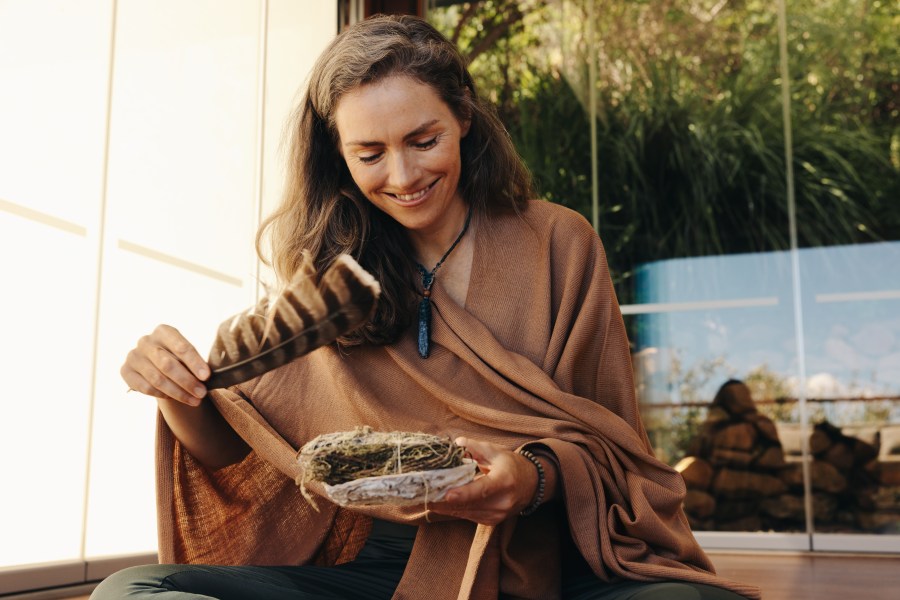
Daily practices that help you find inner calm, mindfulness and connect to nature can help. Now is the ideal time to start delegating more, both at home and work, and to set aside an hour for yourself each day. It’s especially important to rest during your period when you’re in perimenopause, as this keeps you in balance and minimises signs of anxiety, dryness, and insomnia, which are associated with the vata body type in ayurveda. Finally, a daily routine, with meals and bedtime at similar times each day, is very helpful in keeping vata energies balanced, too.
Tuning into your cycle
Women have very clear monthly rest-activity-rest cycles due to the menstrual cycle. It is, however, often ignored and there is a bizarre expectation that rather than rest-activity-rest, it should be activity-activity-activity throughout the month.
In recent years, there have been fascinating developments in viewing the menstrual cycle as a self-care tool to support women, which can be of great help during perimenopause when you are still cycling. A leading voice on this topic is the Red School (redschool.net), which talks about framing a woman’s cycle as a potential guide to emotional and spiritual empowerment.
Your cycle can be divided into two phases:
- First half – expansive: You have expansive energy after menstruation and leading up to ovulation. This is a time of being super productive, sociable and feeling good.
- Second half – introspective: The second half of the cycle, after ovulation, is where your energy starts to decline. You can feel overloaded and vulnerable, as the natural focus is to become quiet and still. This increases towards menstruation, which is why it’s important not to have too much going on in the days or week before your period.
The more you can tune in to and harness this natural cycle while still menstruating, the more you’ll be able to tune in to your needs as you transition through menopause. The Red School goes further by saying that menopause has become ‘buried in a culture in denial of cyclical life. A culture obsessed with constant production, consumption, growth and doing’. Because menopause interrupts the current cultural momentum it is often portrayed as a “problem”.
Instead, the founders of the Red School recognise the need to reframe menopause as an initiation that can deliver women to ‘a place of great meaning and power, a sense of inner coherence and belonging’. This is very much aligned with the ayurvedic view of women moving from a time of achieving and accomplishment to a new era of clarity, insight and wisdom from which society could benefit.
Joanna Webber is a fully qualified ayurvedic practitioner (BSc Ayurveda, MAPA) and hatha yoga teacher. She is co-founder of Ayurvedic Academy (theayurvedaacademy.com) and loves to weave together the sister sciences of ayurveda and yoga. She has three children and lives in Somerset, where she spends her spare time foraging and wild crafting. Find her at instagram.com/the.ayurveda.academy.