

The age-old debate of cardio vs weights. Are you a cardio queen? Or a lady that lifts? Whether you prefer doing cardio or lifting weights, there are benefits from both…
Words: Katy Sunnassee | Images: Shutterstock
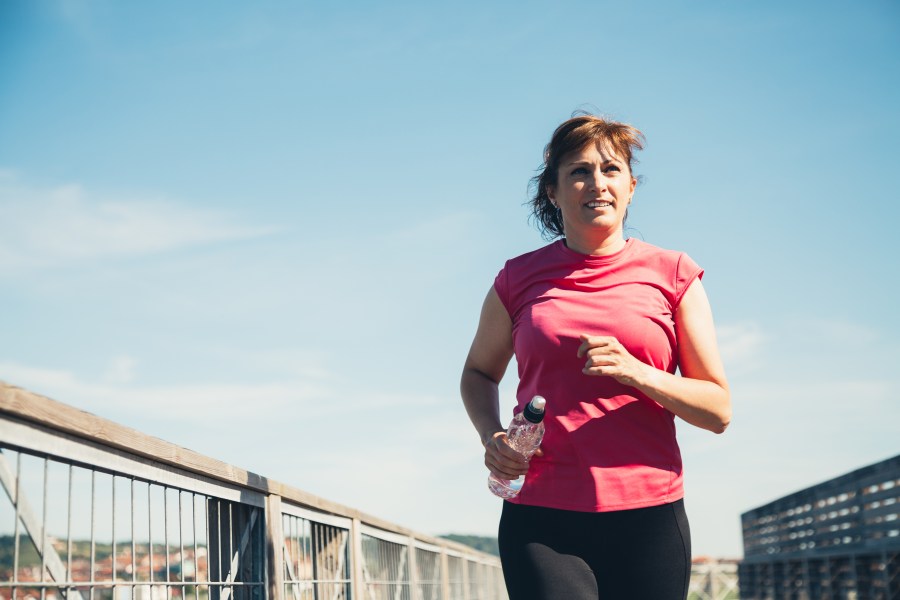
Cardio, short for cardiovascular, training is where you’re predominantly using your own bodyweight and doing something repetitive, such as running, dancing or swimming, which gets your heart pumping. ‘Any type of exercise or fitness class where you’re moving, breathing hard and your heart rate increases, is almost certainly a cardio classic,’ says Tony Goldingay from fitness company Sweatband (sweatband.com). ‘Aerobic exercise relies almost exclusively on oxygen to power you, and it can be sustained over a longish period of time,’ he adds.
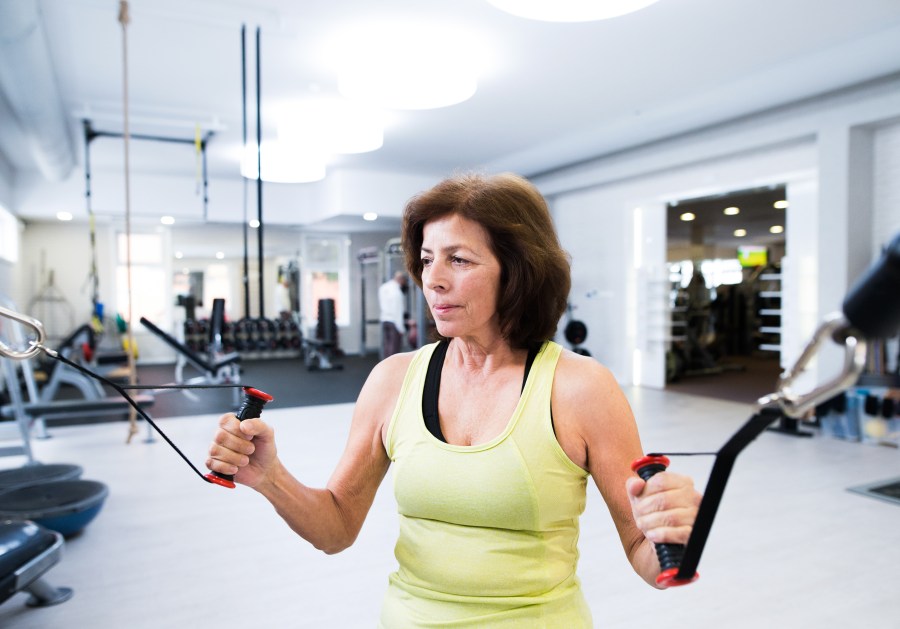
The opposite of aerobic exercise is anaerobic, where you do short, sharp movements such as weights or a sprint for 10 seconds. ‘Weight training is an anaerobic form of exercise, relying heavily on glucose and requiring less oxygen than its cardiovascular counterpart – but it uses a heck of a lot more energy in a shorter window,’ says Tony. ‘Any type of exercise where you are lifting, moving or shifting something that is weighted with resistance counts as weightbearing.’
Best of both worlds?
But while weightlifting might start out as anaerobic, no one stays in that state for more than about 10 seconds, so you’ll soon switch into aerobic mode if you’re doing a class, such as BodyPump, or any other sustained weights workout. ‘Classes that involve resistance, such as Pump or even a Spin class, can count as both cardio and resistance, as you’re pushing against the weight – of the pedals in the case of a Spin class – and getting the best of both worlds,’ says Nolan Sunnassee, Essex-based one-to-one strength and conditioning coach (evo-fit.co.uk).
‘However, it depends on your starting level of fitness. If you’re overweight and haven’t exercised in a long time, cycling on a static bike gives you a resistance workout for your legs, as well as the cardio element of getting your heart pumping. But if you’ve already built up good fitness through cycling, then each time you do it it’s much more about the cardio, and not so much about building muscle,’ says Nolan. The same is true for any type of exercise.
So, which workout format is best overall? It depends on your desired outcome. Let’s take a look at the pros and possible cons…
Weight training
Pros
You boost your metabolism
A comment often heard is that “cardio is king”, due to its superior calorie burn per hour. However, your metabolism is working all the time – even when you’re on the sofa watching TV. ‘One of the benefits of weight training is that it helps raise what’s called your Basal Metabolic Rate (BMR), which means your muscles use more energy – or as most people say, “burn more calories” – when at rest,’ says Tony. This means that doing a weights session will have benefits for your body long after you’ve finished exercising.
It can prevent injuries
‘Although you may think you’d do yourself more harm, that’s only the case if you lift too heavy too soon, and with poor form,’ says Nolan. ‘While it is true the heavier you lift, the more you’ll challenge your body, including losing weight and changing your shape, it’s crucial you don’t overload your muscles and joints without having the right form, otherwise you could exacerbate any niggles or create a new injury,’ he adds. If you start out with low weights and build up, you’ll be less likely to injure yourself.
You’ll strengthen your bones
Any weight-bearing exercise that puts load through your body will be help strengthen your skeleton, reducing or avoiding osteoporosis. ‘The more force applied, the greater the signal for your body to adapt and strengthen,’ says Nolan. ‘Your tendons, ligaments, nervous system and bones all get strengthened. Bodyweight exercises are an excellent starting point for learning to perfect technique, before trying heavier loads,’ he adds.
Cons
You can injure yourself
While weight training, done correctly, can be a great way to avoid future injuries as it helps strengthen your tendons, muscles and ligaments, when done incorrectly it can exacerbate injuries or create new ones. This is why it’s crucial to work with a well-qualified personal trainer who has qualifications in strength and conditioning. ‘A good PT isn’t just someone there to motivate you, and neither should they be working out alongside you as they can’t be monitoring your every move and make sure you have correct form,’ says Nolan. ‘A good PT ought to prescribe exercises that make sense for you and your body, taking into account your previous injuries.’
You can overdo it
Too much weight training without the correct rest and diet can be worse for you than never stepping foot in a gym, says Tony. ‘After a period of eight-to-10 weeks of consistent training it’s important to have a “de-load” week – where you do no or very little weight training. This helps you recover and rest, which is important for long-term health,’ he says. If your body is tired, don’t push through weight training as you’ll take longer to recover.
If you’re still pre-menopause, you’ll have more energy at different times in your cycle, so in the few days before, and during, your period, choose Pilates, walking or stretching over heavy weights, as your body can be running lower on energy. ‘It’s important not to always push through but to tune in to what your body is saying. Once your period is over, this is a great time to start training more fully as your energy will be rising,’ says Nolan.
Cardio
Pros
It’s often cheaper
Unless you have the space at home you’ll probably need to head to a gym to do decent weight workouts – and the average cost of a gym membership in the UK is £40 a month. With cardio, though, you can get an effective workout in just fitness gear and a decent pair of trainers. Of course, there are smaller pieces of kit you could invest in, such as dumbbells, but nothing beats a good old walk, which costs nothing!
You’re protecting your heart
Whatever cardio you do, your heart will be getting a good workout. ‘Benefits include increasing the amount of blood that can be pumped around your body more effectively, lowering your resting blood pressure and heart rate, and increasing your body’s ability to remove waste products – all these things reduce your risk of heart attacks and strokes,’ says Nolan.
If you’re new to exercise, don’t overdo things and strain your heart. And if you experience any chest pain, get checked out by your GP.
It helps you detox
Sweating is good for you! But you needn’t have a sauna to benefit, as any type of cardio will help you get a sweat on. ‘Regular intense exercise improves this process. You can be exposed to hundreds of chemicals daily, from your environment, food, water and cosmetics. To remove these toxins, your body must use resources such as the tripeptide glutathione. However, you only have limited amounts, especially if you don’t get enough from your diet. Not having sufficient resources to remove toxins from your body means they get stored in fat tissue. Regular sweating helps remove these toxins,’ says Nolan.
Cons
It could lead to fat gain
While cardio can use up energy and lead to weight loss for some, for others, going too hard with training could lead to storing of fat. If you’re in your mid-40s or over and are doing class after class of mainly aerobic work, and yet struggling to shift weight, this could apply to you. ‘One of the reasons people don’t lose weight from doing lots of cardio is due to excess cortisol, as exercise is essentially a stress on the body,’ says Nolan. ‘The reason this becomes a problem at midlife is due to shifting hormones. Decreasing sex hormones – including testosterone, which helps you maintain muscle – coupled with increased cortisol, can lead to insulin resistance, the result of which is increased fat storage,’ he adds.
‘Rather than cut out cardio completely, I’d advise doing only one-to-two sessions a week and adding in more weight training. It’s better to reduce the cardio and increase the resistance work as you get older, as the benefits of weight-bearing exercise are not only for stronger muscles and bones, but reducing fat, too, especially around your middle,’ says Nolan.
It’s easier to plateau
While cardio gets you fit, once you’ve adapted and your body finds it easier, it’s difficult to progress unless you increase the duration and/or frequency. ‘Any type of exercise will be hard to begin with, if you’re new to it, so you’ll usually get immediate muscle-building benefits whatever you do,’ says Nolan. ‘But, once you’re used to a particular workout, for example if you do the same class week after week, your body adapts. The way to get stronger or slimmer is to either work out for longer, do more reps or use heavier weights,’ says Nolan.
In conclusion…
‘Your goals and targets will impact the exercise type that will yield the best outcomes for you but, in general, you’ll benefit from a varied and personalised plan that includes aspects of both weightlifting and aerobic exercise,’ says Tony.
‘It’s definitely helpful to have elements of both cardio and weightlifting in your weekly routine,’ adds Nolan, ‘although over age 40, you’re better off not overdoing it on the cardio and favouring more weights-based training, as it not only helps you prevent losing muscle and bone mass, but also avoid too much weight gain around your middle.’