

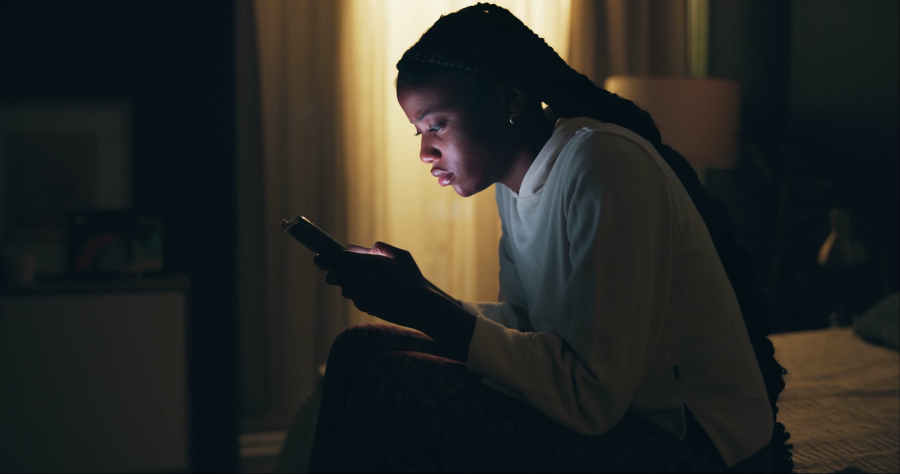
Everyone does it. A sneaky bedtime scroll until silly o’clock in the morning – but some psychologists have started comparing the effects of it to gambling addiction. If scrolling is starting to take you into the early hours, it’s time to learn how to stop – here’s how
Words: Amy Dowrick | Images: Shutterstock
With the average person checking their phone 55 – 144 times a day, you’re bound to be catching yourself in a doomscroll more often than you’d like to admit. But keeping updated with the news, watching ASMR reels on Instagram or simply browsing Facebook marketplace can become a relentless cycle of consumption – and a toxic habit that many psychologists compare to smoking, drinking and gambling. But what makes it so destructive?
“Our phones and the apps on them are constantly fragmenting our attention and causing us to focus quickly on one thing and then switch over to another thing”, says Catherine Price, expert coach on The Guardian’s Reclaim Your Brain newsletter. “In doing so, they’re having a negative impact on our ability to sustain focus and attention.”
And if the content is on the negative side (like a depressing news story or endless troll comments), it can start to cause much deeper damage, inducing stress and anxiety for many. So why do we struggle to resist the urge of the doomscroll if it’s causing so much damage? And how do we learn to control it?
The role of dopamine
“Anything that triggers the release of dopamine will be interpreted by our brains as something that is worth doing again,” says Catherine, who believes that apps such as TikTok have only exacerbated the problem.
“Now you’ve got platforms that are deliberately designed to trigger the maximum release of dopamine, and to make us pay attention to things for shorter and shorter periods of time,” says Catherine. “It can begin to feed you more and more personalised videos that are specifically designed – personally for you – to capture more and more of your attention.”
Psychologist Jade Wu compares it to addiction, and says that doomscrolling mimics gambling behaviours, because we don’t only scroll for bad news, but also for anything uplifting – and uncertainty is a huge dopamine trigger.
“We are hooked by the possibility of good news on the horizon,” she says, comparing it to a gambler playing the slots in the hopes to win. But she also points out that losing, for doom scrollers, means exposure to the same bad news, and the negative psychological and physical effects that come with it.
Why do we doomscroll if it’s bad for us?
“It actually takes conscious effort to train your brain to pay less attention to negative, stressful things, and more attention to sources of positivity,” says Catherine.
And there’s no shortage of negative content to absorb. Professor Barbara Sahakian of Cambridge University sees part of it as a protective mechanism, and our instinct to stay ahead of any threats.
“We all like to keep up with the news and we all like to know what’s going on around us,” she says. “To some extent, that’s a way to protect ourselves if something in our environment is dangerous.”
But it has its negative effects.
“If you spend too much time that way, you induce yourself into a very negative mood and it doesn’t help with your thought processes,” she adds. “If we doomscroll, we can impact our brain by impacting certain brain regions involved in fear, anxiety and depression.”
“Doomscrolling can cause a kind of chronic stress,” she adds. “That can actually change hormones in the brain, including cortisol, which can be associated with mood disorders.”
How to know if you’re doomscrolling
Professor Sahakin suggests asking yourself a few questions to work out if you’re doomscrolling, or just staying informed:
- Are you spending too much time focused on negative information?
- Is it keeping you up late at night?
- Do you start to focus on negative events early in the day – and keep going back to them later?
- Does it affect your thoughts? Are you having trouble concentrating?
- Is it making you feel more anxious, sad and possibly depressed?
- Are you neglecting to do other activities that are good for you?

How to stop doomscrolling
If you’re not happy with your screentime, author and host of The Psychology of Your 20s podcast Jemma Egba shares her top 3 tips on how to place some digital boundaries:
Rethink your screentime
“If you want to change anything, you have to start by changing how that thing shows up in your routine,” says Jemma. “I think one of the big reasons that we have a negative relationship with social media in the news is because we let it be in control rather than having good mental hygiene habits.”
Alongside no screentime in bed, Jemma suggests trying out a social media timer to restrict your usage, such as BRICK (read our review here), which acts as a physical deterrent to stop you accessing certain apps throughout the day.
Follow positive news
“You can also help break the toxic negative cycle that contributes to doomscrolling by rethinking the content you see,” says Jemma. “Make a conscious decision to start following positive news sites or newsletters.”
Start by following pages that push more upbeat content, such as Good News Movement (@goodnews_movement), and sites like The Good News Network and positivenews.com.
Turn it off
Perhaps a no-brainer, but get off your phone and just go outside.
“Being outside and returning to the environments that we are meant to be in is so important when you are feeling crippled by anxiety and frustration,” says Jemma. “You’ve got to clock out; you’ve got to take a step back.”