
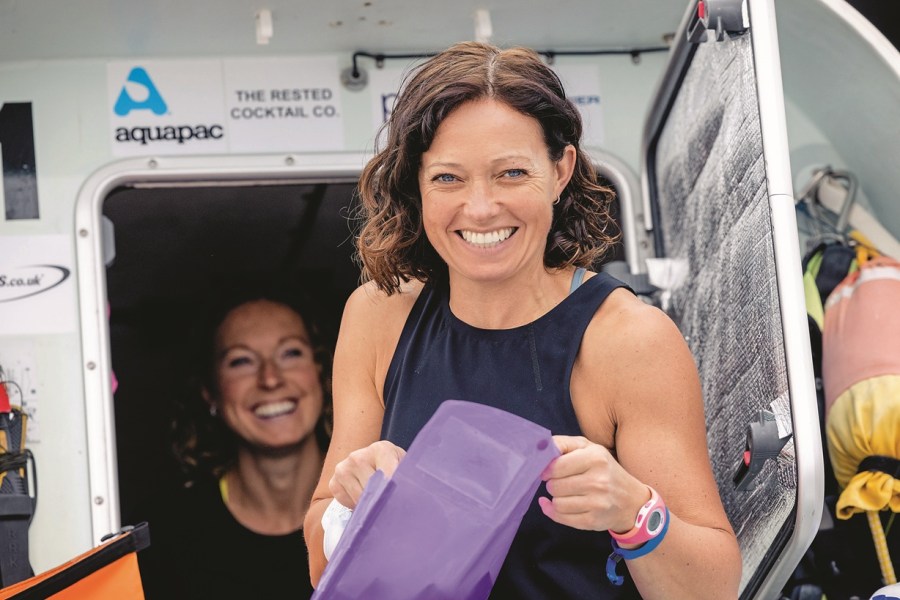
Felicity Ashley was at the peak of her fitness when she was diagnosed with stage 3 bowel cancer, just months after rowing the Atlantic. Here’s how she found the strength to face what came next.
Words: Felicity Ashley. Images: Penny Bird, Jacky Yao, Atlantic Campaigns, Nakul Sunuwar
The World’s Toughest Row, which is a 3,000-mile race from La Gomera to Antigua, pushes you to your limits both physically and mentally. If you’re fond of creature comforts, it may push you over the edge.
Adapting to life on an ocean rowing boat is essential, especially when it comes to the basic “bucket and chuck it” toilet facilities. I mastered this with surprising ease: chatting to my crewmates while balancing on a sliding bucket became as routine as brushing my teeth. That ability to adapt would soon prove invaluable. About halfway through the race, after three relentless weeks at sea, I noticed I needed the bucket more and more during night shifts.
It became a running joke among the crew, earning me the “Mother most likely to need an inconvenient poo on night shift” award. In the context of 12-16 hours of rowing every day, relentless heat, and endless dehydrated rations, a change in bowel habits seemed unremarkable to me at the time.
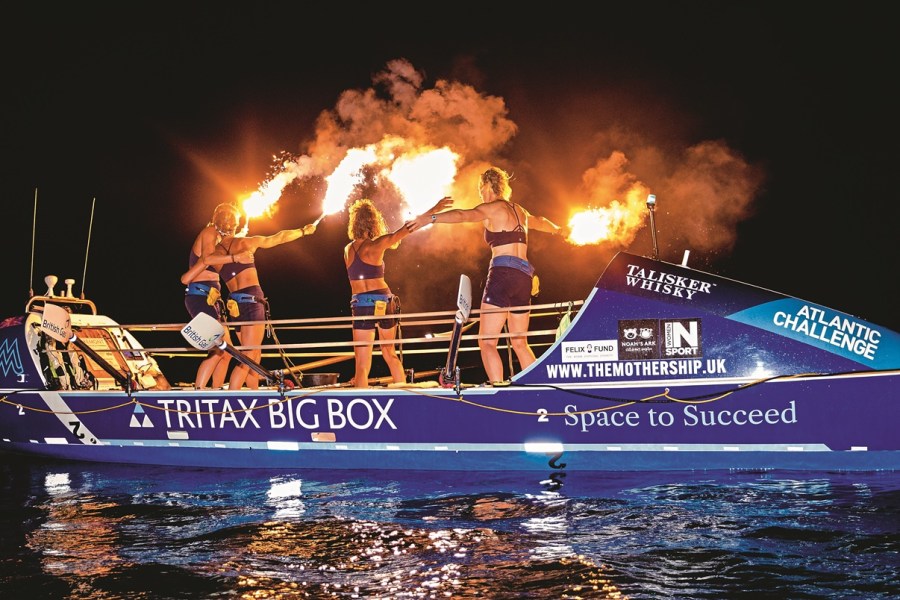
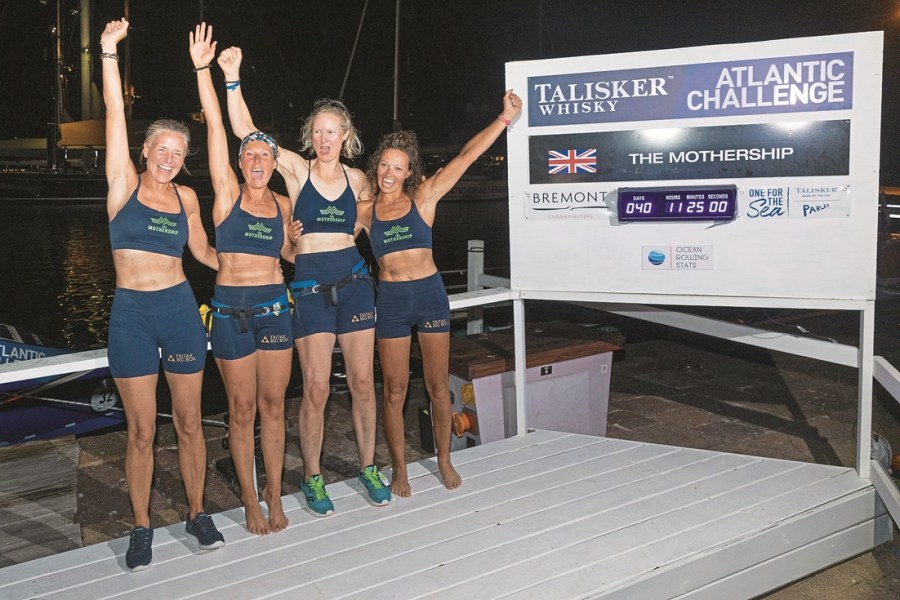
Crossing the finish line on January 21, in 2022, with my crew “The Mothership” was pure elation. Forty days after leaving La Gomera in the Canary Islands, we arrived in Antigua – exhausted but triumphant, flares held high. I felt invincible.
Unwanted news
Back home, life resumed its usual chaos, juggling work with three young children. My body bounced back quickly; the 10kg I’d lost returned with remarkable ease, and most aches faded. But my frequent trips to the toilet persisted, now accompanied by uncomfortable stomach cramps.
Then, a few weeks later, I noticed blood in my stools. Thanks to awareness campaigns by Dame Deborah James and a fellow rower, Ed, I knew this was a red flag for bowel cancer and booked a precautionary GP appointment. On May 20, 2022, three weeks after seeing my GP, I had a colonoscopy, which was scheduled, ironically, on the same day as the World’s Toughest Row awards celebration.
I opted out of sedation so I could drive later to the awards. Lying on the hospital bed, I became aware of a sudden commotion. The endoscopist asked whether I could see the screen. I nodded. He pointed and said, bluntly: ‘That’s a tumour. You have cancer.’
In that moment, my world tilted on its axis. How could I have cancer? I’d just rowed the Atlantic. I looked and felt so healthy. My thoughts raced to my family: my husband, my children, my parents.
Dad was already battling terminal kidney cancer. How would I tell them? Amidst the shock, a kind doctor offered words that would become my anchor: ‘You’re strong. Approach this with the same grit and determination that got you across the Atlantic, and you’ll get through it.’
She couldn’t have known how much I needed to hear that. Rather than tormenting myself with ‘Why me?’, I started to think, ‘Why not me?’ That mindset shift became my mantra.
Navigating treatment
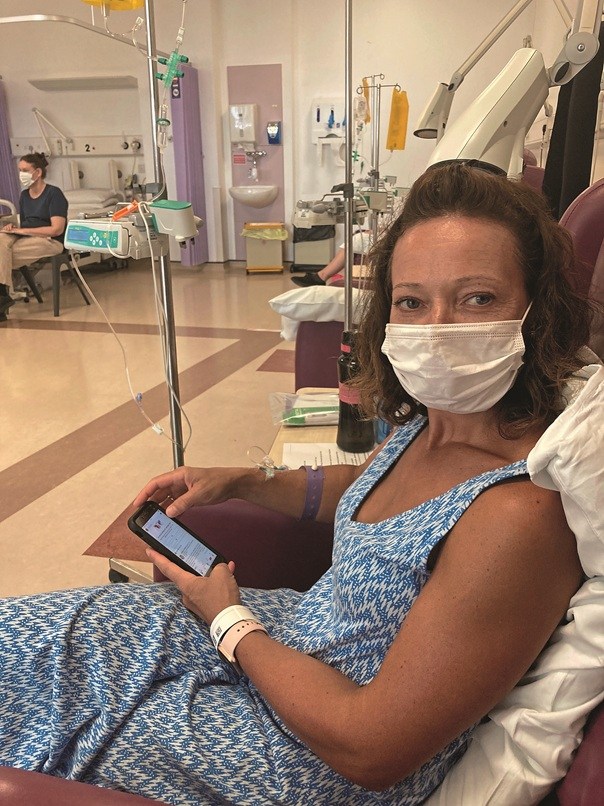
Three weeks after my diagnosis, I underwent surgery to remove the tumour and surrounding lymph nodes. The cancer had spread – stage 3 – so six cycles of chemotherapy followed, aiming to eradicate any remaining cells and reduce the risk of recurrence.
Cancer treatment is a rollercoaster. There were days when exhaustion overwhelmed me, when “chemo fog” forced me to crawl to my bed after tucking in my children. But exercise became my lifeline. Always part of my identity, it was something familiar I could cling to in a very unfamiliar world.
Even gentle walks or runs in the countryside helped me reclaim a sense of control and maintain my mental health. Nature became my sanctuary, restoring both body and mind. I knew that keeping myself fit and strong would give me the best possible chance of beating the cancer, and withstanding the debilitating effects of the treatment.
By November, almost exactly a year after setting off for the Atlantic, I completed my treatment. I may not have had the same strength or fitness as before, but my resolve was fiercer than ever. Cancer would always be part of my story, but I was determined it wouldn’t define me, let alone reduce me.
Everest and beyond
My cancer journey isn’t over. I’m now three years into a five-year monitoring period, and so far, so good. My oncologist advised me to celebrate at three years and throw an even bigger party at five. I took his advice to heart, but added my own twist.
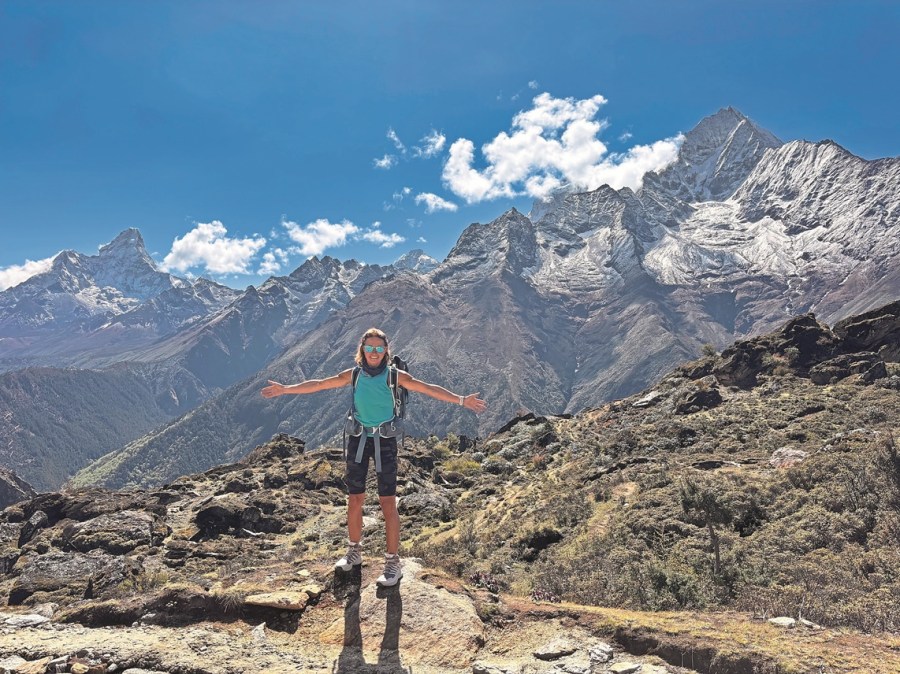
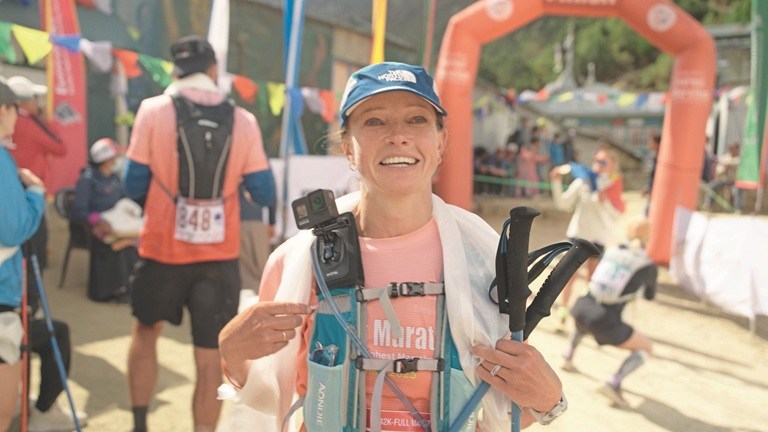
In May this year, to mark the third anniversary of my diagnosis, I completed the world’s highest marathon: the Tenzing Hillary Everest Marathon. The gruelling event began with a 10-day trek to Everest Base Camp at 5,364 meters, followed by the marathon itself. It was my way of proving to myself that I hadn’t just survived, I’d come back stronger.
It was a celebration of life and health in one of the world’s most awe-inspiring places, and a message to others facing similar challenges: there is light at the end of the tunnel. Cancer doesn’t have to stop you from having hopes and dreams. Crossing the finish line, I was choked with emotion: pride in what I’d achieved, and immense gratitude for having the health and opportunity to do it.
We can let challenges knock us down, or we can find the positives and rise stronger. My cancer diagnosis has become a catalyst for positive change, giving me a new purpose: to share my story and inspire others facing their own storms.
After treatment, I left my corporate career to become a professional speaker and, now, an author. My book, Stronger Than The Storm, is a deeply personal account of how an ordinary woman navigated extraordinary adversity and came out stronger. If there’s one thing I hope my journey shows, it’s that resilience isn’t just for the select few.
We all have it within us to adapt, endure, and thrive – even when life takes us somewhere we never expected to go.
Stronger Than The Storm (£14.99, Inspired By Publishing) is out now. Find out more about Felicity at felicityashley.com.