
Personal trainer Kate Rowe-Ham, author of Owning Your Menopause, shares some strength training benefits, as well as why lifting weights is crucial for feeling great
Words: Kate Rowe-Ham | Images: Shutterstock and Sophie Mitchell
I want to encourage every woman over the age of 35 to start thinking about preparing for the next stage of life by adding weights to their exercise regime. It is never too late to start and, by doing so, you can help combat age-related muscle loss and boost your heart, joint and bone health, while also reducing body fat and increasing the ability to burn calories more efficiently.
Many women are concerned about bulking-up when lifting weights, but I can assure you this won’t happen. When you place your muscles under pressure from lifting, this causes tiny tears in your tissue, and when the muscle tissue repairs, it builds stronger, leaner muscle. While this might sound odd, these little tears contribute to healthy muscle growth.
As for which weights to use, you can do many exercises with little or no equipment such as press-ups, pull-ups, planks, lunges and squats (see my workout), which use your own body weight as resistance. Resistance bands are inexpensive and can help increase the intensity of moves, or use free weights such as dumbbells.
When lifting heavy, seek advice from a PT and also go for fewer repetitions with the heaviest weight you can manage. This is time efficient while still challenging your muscles, and will help improve bone density, which is essential during menopause.
5 moves for beginners
Do each of the moves 10 times, with a 20-second gap between each exercise. Also aim to do the routine every day or at least five days a week.
Lunge
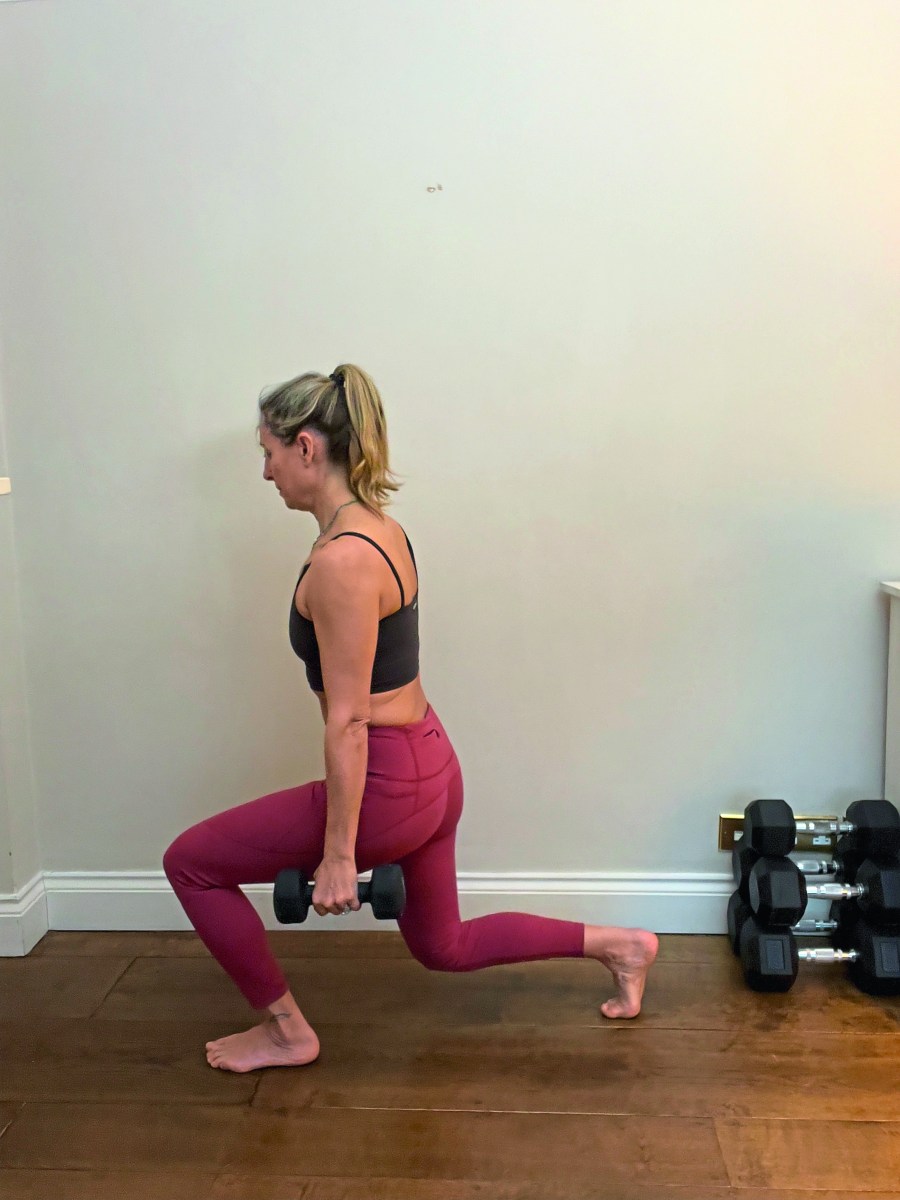
- Start with your legs split wide apart, one in front of the other. Have your feet parallel as if on a train track.
- Keeping your knees over your toes (avoid bowing them inward), bend your front knee and go as low as you can over your front foot so you feel the work in your glute/bum muscle on the same side.
- Squeeze your bum muscle to come back up to standing.
- Do 10 on your left leg then switch and do 10 on your right.
Squat
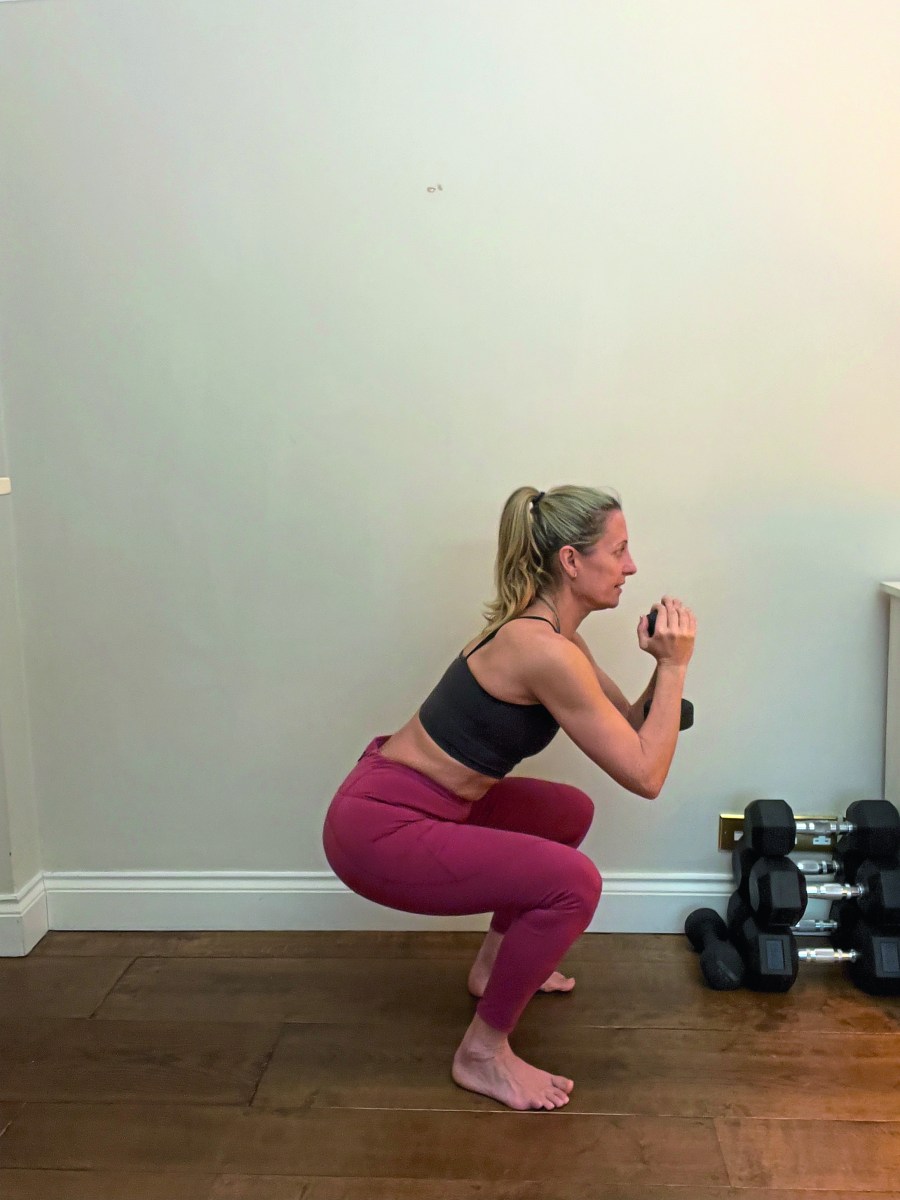
- Stand with both feet wide and with toes turned out to ’10 to 2’, holding a single weight with both hands with elbows tucked in.
- Slowly sit back into a deep squat, as if going to sit on a chair. Keep your head and chest up.
- Hold for 3 seconds then squeeze your bum and thighs to come back up to standing.
- Make it more difficult by pulsing three times at the bottom of every squat. Or use the heaviest weight you can manage. Repeat 10 times.
Plank taps
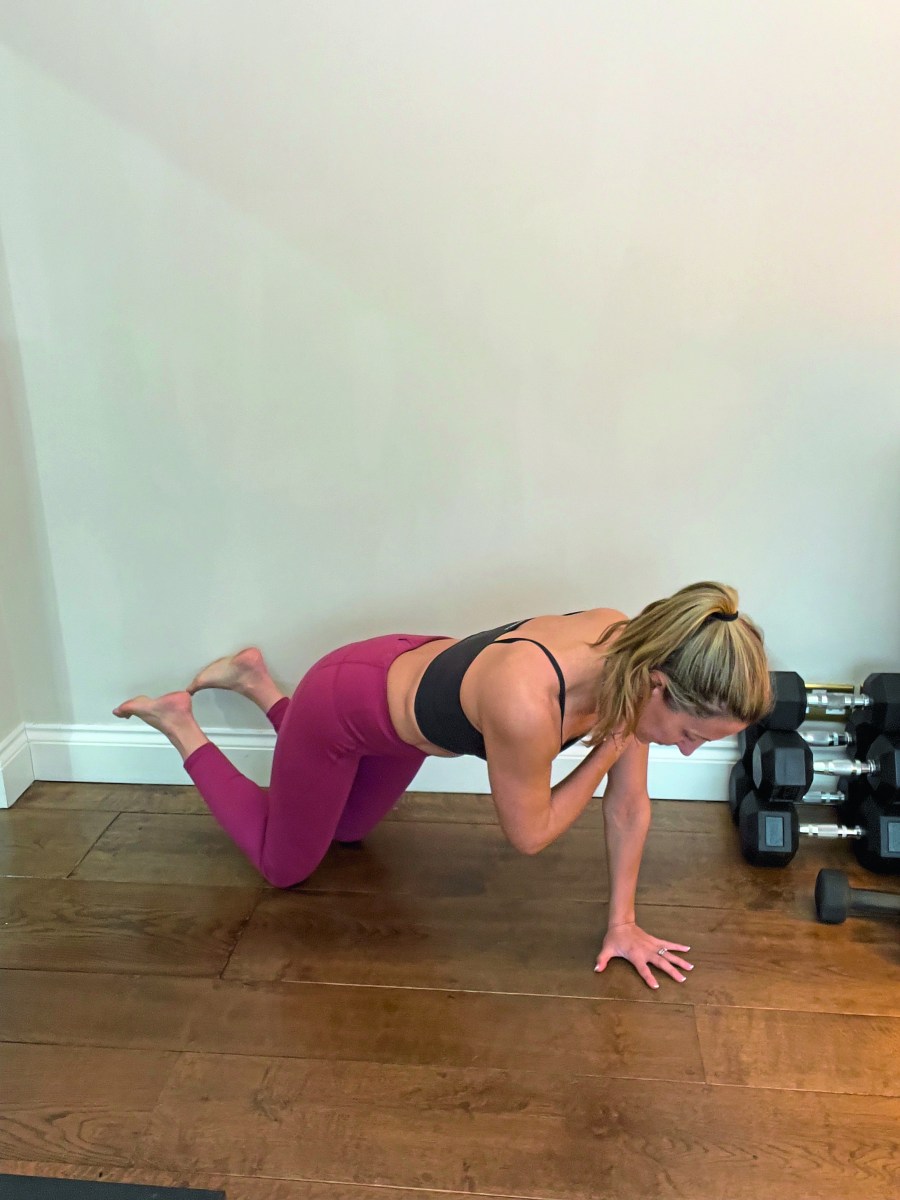
- Get onto all fours but lift your feet up off the floor so just your knees and hands are touching the floor.
- Tap one hand up to the opposite shoulder then place back down. Try not to let your shoulders or hips dip, but keep them level throughout the move.
- Tap the other hand to the opposite shoulder. Do 10 on each side, alternating smoothly.
Here’s how taking your workouts outside can improve not just your fitness but your mental health too
Bent-over row
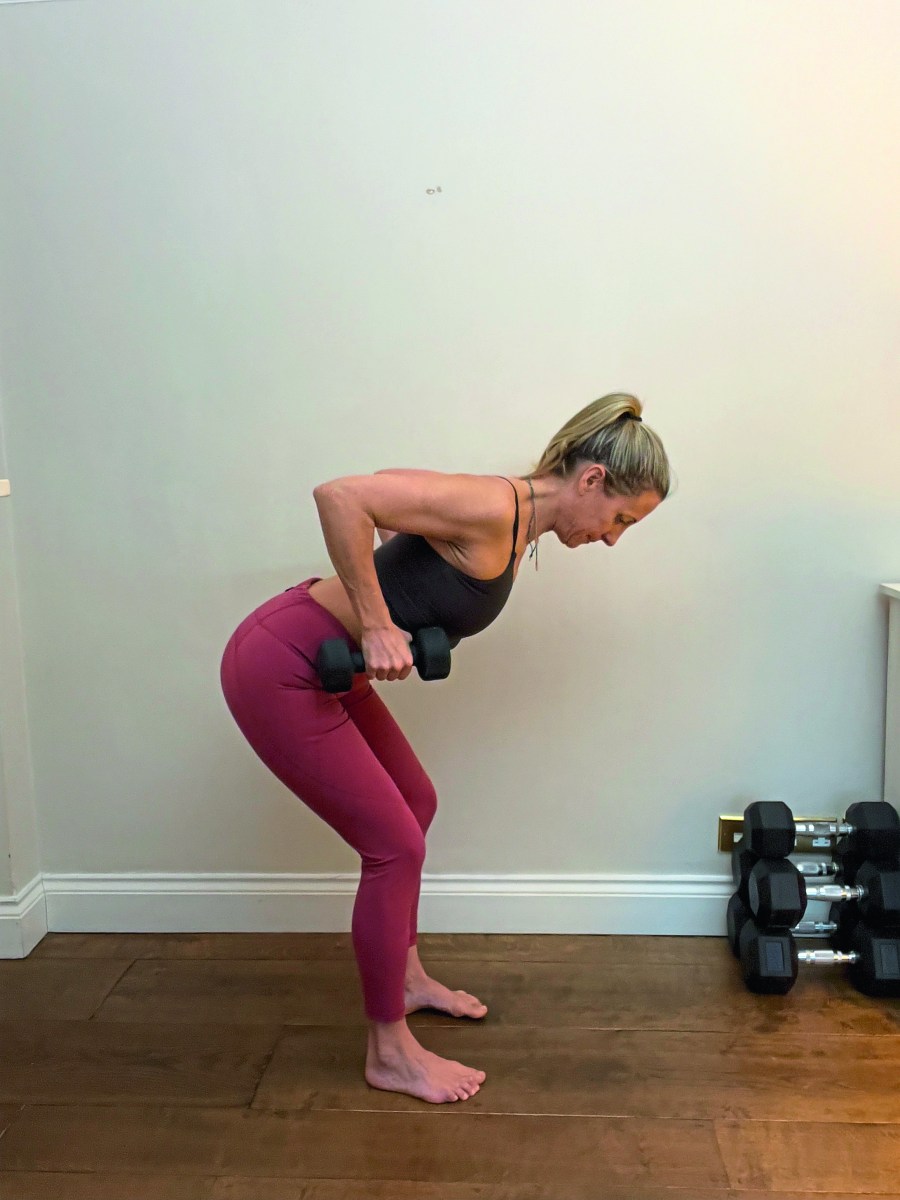
- Stand with feet hip-width apart, a weight in either hand. Hinge forward at the hips and keep your back straight, holding the weights close to your thighs.
- Keeping your body still, pull both weights up towards your waist, keeping your elbows tucked in. Lower back down and repeat 10 times.
Overhead press
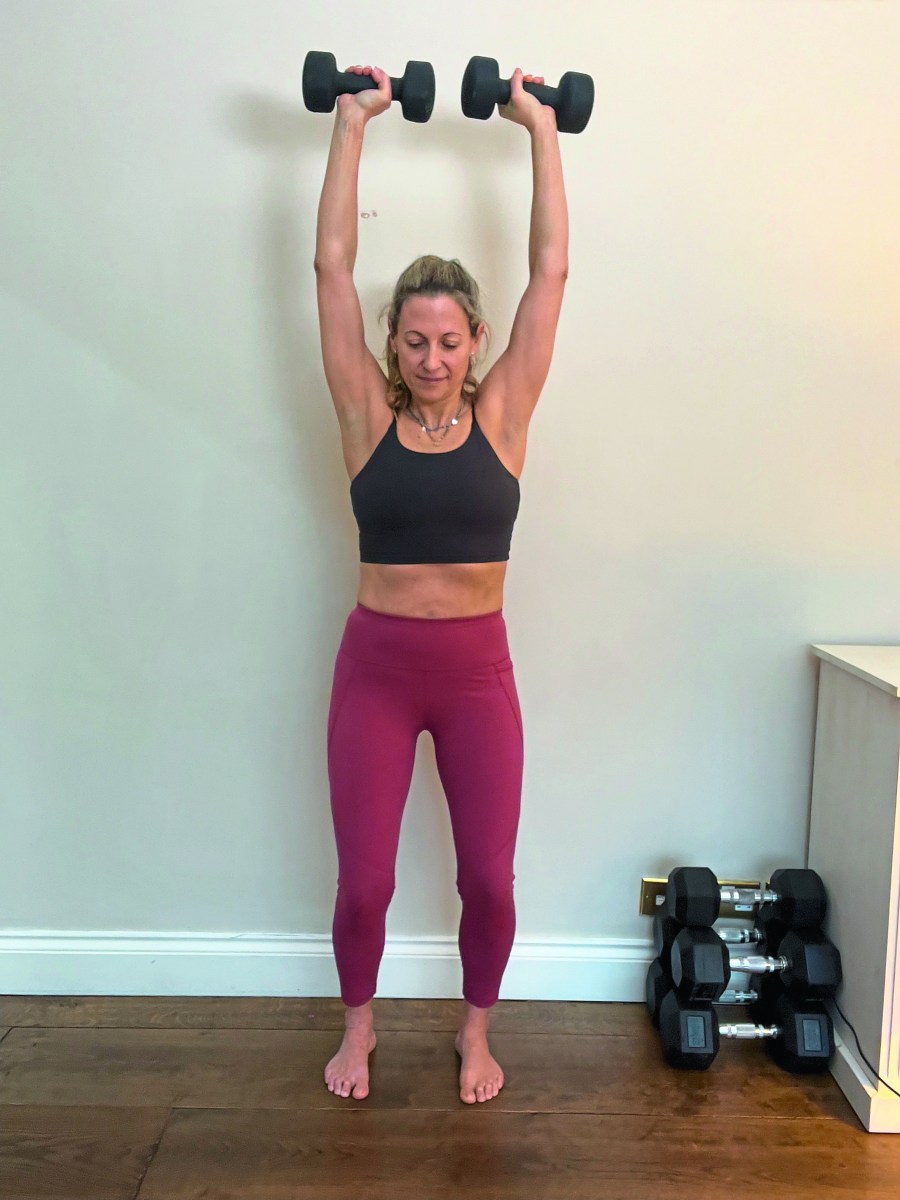
- Stand with feet hip-width apart, with a weight in either hand, holding them both out to the sides, elbows at right angles so the weights are in line with your temples.
- Keeping your core tight, quickly push both hands up to the ceiling without locking your elbows, then lowering at half the speed
that you pushed the weights up. Repeat 10 times.