



Struggling with a difficult colleague? Dr Sarah Davies, psychologist and author of Narcissists at Work: How to navigate difficult people and workplace toxicity, breaks down how to deal with narcissists in the workplace while staying professional and in control.
Words: Amy Mica Marsden. Images: Shutterstock. Headshot: Victoria Mitchell Photography
They’re confident and charming – but speaking with them regularly leaves you feeling drained, depleted, and questioning your own capabilities.
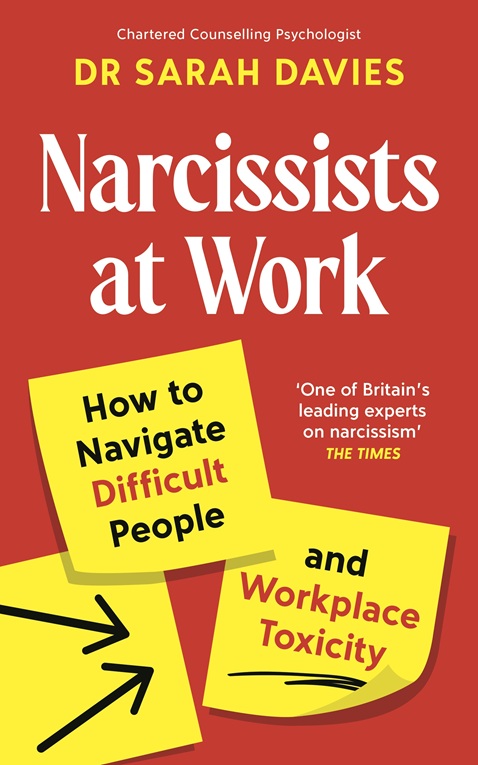
If this sounds familiar, you might be dealing with a narcissist in the workplace, says Dr Sarah Davies, chartered psychologist, narcissism expert and author of new book Narcissists at Work: How to navigate difficult people and workplace toxicity.
It is thought that Narcissistic Personality Disorder (NPD) might affect up to 7.7% of men and 4.8% of women in the US. In an ideal world, we would be able to avoid a narcissist the moment we notice – but in the world of work and other close relationships, it’s not always so simple.
‘Narcissism in the workplace is surprisingly easy to miss, particularly because narcissistic individuals are often charming, confident, and highly capable of making a strong first impression,’ says Dr Sarah.
‘What tends to emerge over time, however, is a pattern of behaviour that feels increasingly uncomfortable or destabilising.’
How to spot a narcissist at work
Not all narcissists sound and act the same, but Dr Sarah explains the key signs that could point to NPD in the workplace.
- They have an exaggerated sense of self-importance – they’re always taking credit for others’ work and overestimating their own contributions
- They have a genuine lack of empathy – disregarding colleagues’ or employees’ stress levels, office hours and more
- They’re envious or competitive – you may notice them putting you down, undermining you, or trying to diminish your achievements
- They violate boundaries – they overstep professional lines, make inappropriate demands of your time, or don’t adhere to agreed processes
- They manipulate or gaslight you – they make you question your memory of events, your own competence, or leave you feeling confused.
- They’re volatile – they’re often ‘hot and cold’; sometimes charming, but prone to outbursts or sulking when things don’t go their way. They seem unable to accept feedback.
According to Dr Sarah, though, the most valuable tool in spotting a narcissist is how they make you feel.
‘If you regularly leave interactions feeling worse about yourself than when you started, that is worth paying attention to,’ she explains. ‘Usually, people gain more confidence in work, but if you’re feeling the opposite, that’s usually a sign not to ignore.’

5 ways to deal with a narcissist at work
Dr Sarah reminds us that one key thing to remember is that you cannot change a narcissist’s behaviour – no matter what you do.
However, she outlines 5 steps you can take to lessen the effects that dealing with a narcissist can have on your mental health and your work life.
- Set clear boundaries – and stick to them.
‘They need to be clear, consistent, and communicated calmly. eg. ”I’m not available for calls after 6pm” is a boundary. The key is that you hold your boundary – if you say you’re not available… don’t be.’
- Manage their emotional access
‘Limit the amount of personal information you share with a narcissistic colleague or partner. The more they know about your vulnerabilities, fears, or insecurities, the more material they have to use against you.’
- Document everything
‘Especially in a professional context, keep records of interactions, agreements, and incidents. This protects you if situations escalate and prevents the gaslighting that can so easily distort your sense of reality.’
- Stick with people you trust
‘One of the most insidious effects of prolonged exposure to narcissistic behaviour is the erosion of self-trust and self-worth. Investing in relationships with people who are genuinely kind and honest is important.’
- Take care of your nervous system.
Chronic exposure to narcissistic dynamics is genuinely stressful on a physiological level. Sleep, movement, time in nature, and practices like mindfulness or breathwork are not soft additions – they are essential tools for maintaining your resilience when you cannot immediately remove yourself from the situation.

What not to do when faced with a narcissist
Just as important as knowing how to deal with a narcissist is knowing what not to do.
‘Don’t try to out-argue them,’ suggests Dr Sarah. ‘Logic and reason are rarely effective with narcissists because the goal of a narcissistic confrontation is rarely about facts… it is about control.’
She also recommends taking care not to let a narcissist isolate you from your colleagues and support networks, not sharing any personal information with them that could be weaponised against you, and not ignoring your own instincts. ‘If something feels wrong,’ she says, ‘it probably is.’
Above all, make sure you stay professional and carefully consider the impact of your own actions. If a narcissist is genuinely affecting your mental health and wellbeing, it may be time to consider speaking with HR – or, if worst comes to worst, looking for another job.
‘I always advise people to approach it carefully rather than reactively,’ says Dr Sarah. ‘HR exists to protect the organisation, not the individual – that is a reality worth holding. However, that does not mean it is never the right step.’
Narcissists at Work: How to navigate difficult people and workplace toxicity by Dr Sarah Davies (Souvenir Press, £14.99) is available now.